ISLAMABAD/ WASHINGTON/TEHRAN/JERUSALEM/DUBAI – Prime Minister Shehbaz Sharif Saturday reiterated Pakistan’s strong condemnation of the continued Israeli attacks on Iran, including the latest attacks on civilian infrastructure.
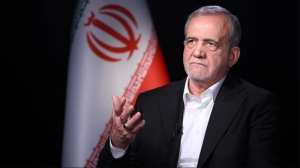
The prime minister held a telephone conversation with President of the Islamic Republic of Iran Dr. Masoud Pezeshkian, PM Office Media Wing said in a press release.
He apprised the Iranian President of the diplomatic outreach efforts currently being undertaken by him, the Deputy Prime Minister as well as Field Marshal Syed Asim Munir, to engage the US, brotherly Gulf and Islamic countries, to create conducive environment for peace talks.
He briefed the Iranian president on the strong endorsement of Pakistan’s peace initiative and expressed the hope that a viable path towards ending hostilities could be found collectively.
The prime minister reaffirmed Pakistan’s solidarity and support for the brave people of Iran, in these challenging times. During their detailed conversation, that lasted over one hour, the two leaders held extensive discussions regarding the ongoing hostilities in the region and peace efforts.
The prime minister also offered condolences on the loss of over 1900 precious lives and prayed for recovery of the injured and displaced. While appreciating the prime minister’s sincere diplomatic efforts, the Iranian president shared his perspective on the ongoing hostilities perpetrated by Israel against Iran.
He stressed upon the need to build trust in order to facilitate talks and mediation. In this regard, he praised the prime minister for Pakistan’s supportive role for peace.
The prime minister thanked the Iranian president and assured him that Pakistan would continue to play a constructive role for bringing peace and stability in the region.
US Vice President JD Vance said Saturday that Washington will continue the war in Iran for “a little while longer,” with the goal being to “neuter” the Islamic Republic for a “very, very long time.”
Asked on the “Benny Show” podcast about rising gas prices due to the war, Vance said the US has “accomplished the vast majority of our military projects” and claims that one could even argue the objectives have actually been met already.
“The president’s going to keep at it for a little while longer to ensure that once we leave, we don’t have to do this again for a very, very long time,” Vance says, in a rare acknowledgement that the military gains made by the US will not be permanent.
“This country is threatening us in all these ways. They’re still trying to build a nuclear weapon. We need to neuter them for a very, very long time, and that’s the purpose,” he adds.
In Abu Dhabi, the firm Emirates Global Aluminium (EGA) reported significant damage and multiple injuries from an Iranian attack at a facility it operates.
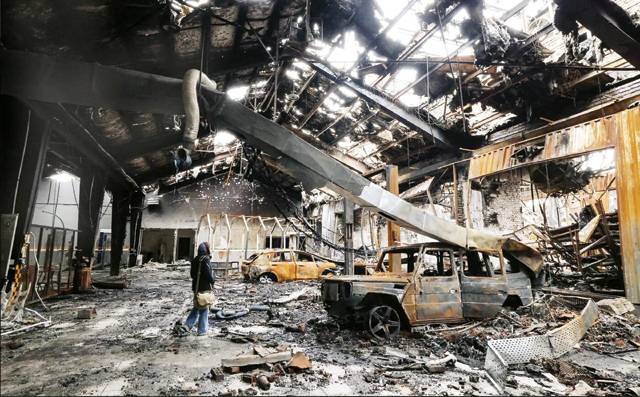
In a statement, EGA said its “Al Taweelah site sustained significant damage during the Iranian missile and drone attacks at Khalifa Economic Zone Abu Dhabi,” where authorities reported a fire earlier in the day caused by falling debris from an intercepted missile.
“A number of EGA employees were injured. None of the injuries are life threatening,” the statement says.
The Israeli Air Force bombed the headquarters of Iran’s Marine Industries Organization, which is tasked with the production of naval weapons and vessels, the military said.
The strike in Tehran overnight, carried out following intelligence provided by the Naval Intelligence Division, “deepens the damage to the Iranian terror regime’s naval capabilities, with a particular impact on its ability to produce advanced maritime weapons,” the IDF says in a statement.
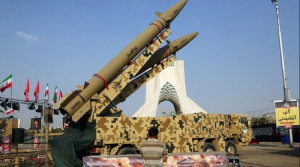
The military said the MIO headquarters is responsible for “research, development, and production of a wide range of naval weaponry, including surface and sub-surface vessels, manned and unmanned equipment, as well as engines and weapons.” The IDF says it also struck other sites used by Iran to develop weapons and air defense systems during the wave of strikes.
A man was killed and several others were wounded by an Iranian ballistic missile fired at central Israel late Friday, the sixth attack that Iran launched on the country throughout the day.
The missile carried a cluster bomb warhead, spreading bomblets over a wide area.
A bomblet impact in Tel Aviv killed a 52-year-old security guard who was not in a bomb shelter at the time.
The victim was named as Vyacheslav Vidmant. Vidmant was employed by the Tel Aviv municipality to secure residential buildings that had been evacuated in the same location after a deadly Iranian attack on the first day of the war killed 32-year-old Mary Anne Velasquez de Vera.
Vidmant — who, according to the Home Front Command, was the only person in the area not in a bomb shelter at the time of the impact — was hit by shrapnel, reportedly some 20 meters from where the submunition hit.
The USS Tripoli, carrying 3,500 US sailors and Marines, arrived in the Middle East, US Central Command announced in a post on X Saturday, as the Pentagon weighs next steps in the war with Iran.
“U.S. Sailors and Marines aboard USS Tripoli (LHA 7) arrived in the U.S. Central Command area of responsibility, March 27,” CENTCOM said.
CNN reported earlier this month that the Pentagon would be deploying a Marine Expeditionary Unit to the region.
Such units have traditionally been used for missions like large-scale evacuations and amphibious operations that require ship-to-shore movements, including raids and assaults. They also have a ground and aviation combat component and some units are trained for special operations.
One source familiar with the deployment previously told CNN that the MEU’s presence gives commanders additional options for a range of contingencies.
Satellite imagery shows smoke rising from Saudi Arabia’s Prince Sultan Air Base, as a US official said at least 10 US service members were wounded in an Iranian attack on the facility.
No service members were killed but at least two had shrapnel wounds considered not life threatening, and several other service members were “impacted,” another US official said.
A refueler tanker aircraft was also damaged, according to the first source.
The residence of Nechirvan Barzani, president of the semi-autonomous northern Kurdish region of Iraq, in the city of Duhok was targeted today, causing damage but no casualties, an official with the regional government tells the Associated Press.
The official, who speaks on condition of anonymity because he was not authorized to comment publicly, says the residence was empty at the time.
No group has claimed responsibility for the attack.
Iraqi Prime Minister Mohammed Shia al-Sudani condemned the attack in a phone call with Barzani, calling it a “heinous” act, according to a statement from his office.
Meanwhile, IDF Spokesman Brig. Gen. Effie Defrin said that “within a few days” the military will complete targeting all of the “critical” assets of Iran’s military production industries.
“This means we will destroy most of the military production capabilities, and it will take the regime a long time to restore them,” he says in a press conference.
Iran’s defense industry is extensive, with numerous military bodies and private companies manufacturing weapon systems — or components — including ballistic missiles, air defenses, naval weapons, cyber capabilities, and even spy satellites.
The Israeli Air Force has so far targeted thousands of assets of Iran’s military industry amid the war, or around 70%, and the IDF assesses that it is now close to having targeted around 90% of the key sites used to develop weapons that threaten Israel.