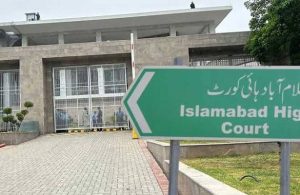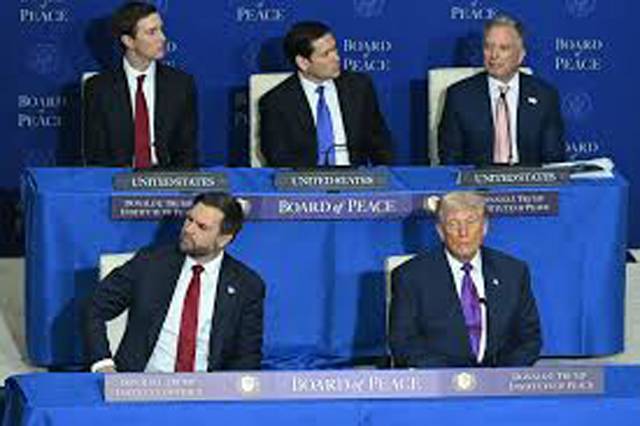
WASHINGTON/TEHRAN – President Donald Trump is sending a negotiating team led by Vice President JD Vance to Islamabad, Pakistan, this weekend to engage with the Iranians.
Special envoys Steve Witkoff and Trump’s son-in-law Jared Kushner are also involved with the negotiations.
“I can announce that the president is dispatching his negotiating team led by the Vice President of United States, JD, Vance, special envoy Witkoff and Mr. Kushner to Islamabad for talks this weekend,” White House press secretary Karoline Leavitt told reporters in the White House briefing room.
Leavitt said that the first round of talks will take place on Saturday morning local time.
“Vance has played a very significant and a key role in this since the very beginning,” Leavitt later added. “Of course, he’s the president’s right hand man. He is the vice president of the United States. He’s been involved in all of these discussions.”
Leavitt also nodded to China’s role in securing a ceasefire agreement: “With respect to China, there were conversations that took place between top levels of our government and China’s government.”
Asked about security risks of the vice president traveling to Pakistan, Leavitt said the White House fully trusts the United States Secret Service “to do their job to keep the vice president and the president’s negotiating team safe.”
The White House sought to offer clarity on what the US and Iran have already agreed to, suggesting that after a first plan was deemed “unserious,” a second proposal was viewed as a “workable” starting point for intense negotiations set to begin this weekend.
The 10-point plan that the Iranians had initially pitched was “fundamentally unserious, unacceptable, and completely discarded,” White House press secretary Karoline Leavitt said. Then, in the hours before President Donald Trump’s 8 p.m. ET deadline, Iran “put forward a more reasonable and entirely different and condensed plan,” she said.
Trump and his team, she said, viewed the alternative plan as a “workable basis on which to negotiate” and that it could be aligned with the administration’s 15-point proposal, suggesting there is a disconnect between Iran’s public proclamations and what it is telling Trump’s team privately.
Negotiators will work to merge those frameworks into an agreement over closed-door talks starting in Islamabad Saturday.
“The president’s red lines, namely, the end of uranium enrichment in Iran have not changed,” Leavitt said.
The White House sought to offer clarity on what the US and Iran have already agreed to, suggesting that after a first plan was deemed “unserious,” a second proposal was viewed as a “workable” starting point for intense negotiations set to begin this weekend.
The 10-point plan that the Iranians had initially pitched was “fundamentally unserious, unacceptable, and completely discarded,” White House press secretary Karoline Leavitt said. Then, in the hours before President Donald Trump’s 8 p.m. ET deadline, Iran “put forward a more reasonable and entirely different and condensed plan,” she said.
Trump and his team, she said, viewed the alternative plan as a “workable basis on which to negotiate” and that it could be aligned with the administration’s 15-point proposal, suggesting there is a disconnect between Iran’s public proclamations and what it is telling Trump’s team privately.
Negotiators will work to merge those frameworks into an agreement over closed-door talks starting in Islamabad Saturday.
“The president’s red lines, namely, the end of uranium enrichment in Iran have not changed,” Leavitt said.
President Donald Trump has “floated” the idea that the US should earn revenue from the Strait of Hormuz, and it will be discussed over the next two weeks, White House press secretary Karoline Leavitt said.
“It’s something that will continue to be discussed over the course of the next two weeks. But the immediate priority of the president is the reopening of the Strait without any limitations, whether in the form of tolls or otherwise,” she told reporters during the White House press briefing on Wednesday.
White House press secretary Karoline Leavitt said Wednesday that Iran has assured the White House that it is allowing traffic through the Strait of Hormuz, despite reports of Tehran once again closing the waterway.
“This is a case of what they’re saying publicly is different,” she said during a press briefing, though she acknowledged that it may “take time” for ships to begin crossing the waterway again. “Privately, we have seen an uptick of traffic in the strait today.”
Leavitt added that President Donald Trump’s willingness to negotiate with Iran is contingent on the Strait of Hormuz remaining open “with no limitations or delays” and that any closure would be “completely unacceptable” to him. Leavitt later clarified that the US would consider Iran charging tolls to cross the strait as a limitation.
“So long as the Strait of Hormuz remains open with no limitations or delays, these extraordinarily sensitive and complex negotiations will take place behind closed doors over the course of the next two weeks,” she said.
Iran has effectively shuttered the strait throughout the last month of the war, choking off oil shipments from the Persian Gulf and triggering a global energy crisis.
The speaker of the Iranian parliament is alleging that three clauses of Iran’s 10-point proposal – described as an agreed framework for negotiations – have been violated before talks with the US have even started.
Mohammad Bagher Ghalibaf claimed that Iran’s call for a ceasefire in Lebanon has been ignored, that a drone entered its airspace in violation of a clause prohibiting such a move, and that Iran’s right to enrichment has not been recognized.
“In such situation, a bilateral ceasefire or negotiations is unreasonable,” he said.
Iranian Foreign Minister Abbas Araghchi said today the terms of the two-week Iran–US ceasefire are “clear and explicit,” arguing that Washington must choose between upholding a ceasefire or pursuing what he described as “continued war via Israel.”
“The Iran–U.S. Ceasefire terms are clear and explicit: the U.S. must choose — ceasefire or continued war via Israel. It cannot have both,” Araghchi said in a post on X.
He also referenced the situation in Lebanon, writing: “The world sees the massacres in Lebanon.”
“The ball is in the U.S. court, and the world is watching whether it will act on its commitments,” Araghchi added.
Iran’s Islamic Revolutionary Guard Corps (IRGC) warned it will respond if “aggressions” against Lebanon do not immediately cease, the state-run Islamic Republic of Iran Broadcasting (IRIB) reported earlier today.