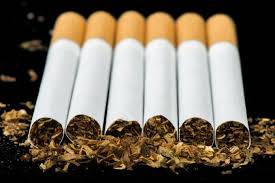
The federal government has announced a nationwide crackdown on the sale of illegal cigarettes, stepping up efforts to curb the growing illicit tobacco market in Pakistan.
Speaking at the launch of a research report by Oxford Economics, Minister of State for Finance Bilal Azhar Kayani said provincial governments will intensify enforcement operations to eliminate untaxed cigarette brands from the market.
He termed the crackdown “unavoidable,” warning that the unchecked illegal trade is causing significant losses to the national exchequer, undermining the documented economy, and discouraging compliant taxpayers.
Kayani noted that several illegal cigarette manufacturing units have already been shut down, while raids against retailers involved in selling illicit products are ongoing across the country.
According to the report titled “An Economic Assessment of the Illicit Cigarette Market in Pakistan,” illicit cigarettes now account for more than half of the country’s tobacco market, highlighting the scale of the challenge.
The study estimates that around 43.5 billion illicit cigarettes are consumed annually, placing Pakistan among the largest illegal cigarette markets globally. While total consumption has remained stable at approximately 80 billion sticks per year over the past decade, legal sales have increasingly been replaced by untaxed products.
The report identifies sharp increases in excise duties as a major factor behind this shift. Between the first quarter of 2022 and the second quarter of 2023, real excise taxes rose by 107%, widening the price gap between legal and illegal cigarettes. Illicit products remain about 36% cheaper on average, encouraging consumers to switch.
Speaking at the event, Andrew Logan highlighted the risks of abrupt tax hikes, noting that Pakistan’s experience demonstrates how quickly consumption patterns shift when affordability gaps and enforcement weaknesses emerge.
On the supply side, the report states that around 64% of illicit cigarettes are produced domestically, particularly in Azad Jammu and Kashmir and Khyber Pakhtunkhwa. The remaining 36% are smuggled, mainly through routes via Afghanistan, with links to brands originating from the United Arab Emirates and South Korea.
The report underscores that porous borders, organized criminal networks, and weak enforcement mechanisms continue to fuel the illicit trade.
It concludes that addressing the issue will require a coordinated, long-term strategy combining predictable taxation policies with stronger enforcement across borders, supply chains, retail markets, and nationwide track-and-trace systems.