TEHRAN/WASHINGTON/ DUBAI/ISLAMABAD – Iranian Foreign Minister Abbas Araqchi said on Friday the Strait of Hormuz was open following a ceasefire agreement in Lebanon, while US President Donald Trump said talks could take place this weekend and he believed a deal to end the Iran war would come “soon”.
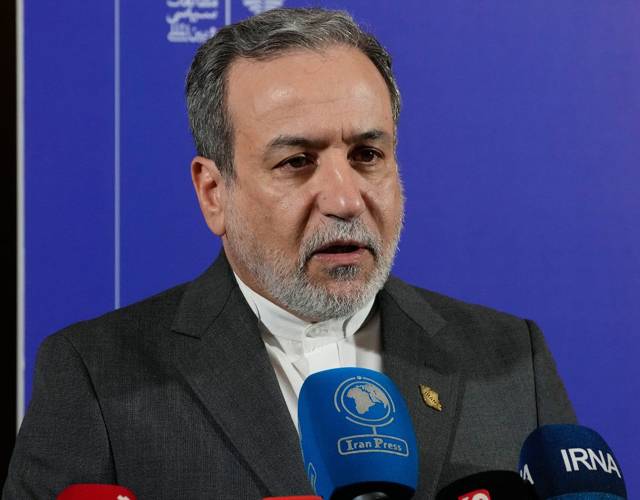
Araqchi said in a post on X the strait was open for all commercial vessels for the remainder of the US-brokered 10-day truce that was agreed on Thursday between Israel and Lebanon to halt fighting between Israeli forces and Iran-backed Hezbollah.
Shortly after Araqchi’s statement, Trump posted on Truth Social: “IRAN HAS JUST ANNOUNCED THAT THE STRAIT OF IRAN IS FULLY OPEN AND READY FOR PASSAGE.”
But statements from both sides left uncertainty over how quickly shipping could resume. Trump said a U.S. blockade of ships sailing to Iranian ports – announced after talks with Tehran last weekend ended without agreement – would remain until “our transaction with Iran is 100% complete”.
Iran responded sharply, with Foreign Ministry spokesperson Esmaeil Baghaei warning that Tehran would take “necessary reciprocal measures” if a maritime blockade continued.
Trump told Reuters on Friday the U.S. will work with Iran to recover its enriched uranium and bring it back to the United States as part of any deal to end the war. Tehran’s nuclear programme has been a key sticking point in talks so far.
A senior Iranian official told Reuters that differences between the two sides remained, that “no agreement has been reached on the details of the nuclear issues,” and serious negotiations were required to overcome differences.
He said Tehran hoped that a preliminary agreement could be reached in the coming days with mediator Pakistan’s efforts, with the possibility of extending the ceasefire to “create space for more talks on lifting sanctions on Iran and securing compensation for war damages.”
U.S.-Israeli strikes on Iran began on February 28, triggering Iranian attacks on Gulf neighbours and reigniting the Israel-Hezbollah conflict in Lebanon. A two-week ceasefire between the U.S. and Iran expires next week.
The BBC’s US partner, CBS News, is reporting that US officials may return to Pakistan for further talks with Iran within days. Citing “several people familiar with the deliberations”, CBS says that the Trump administration is looking at sending senior officials back to Pakistan to renew talks with Iran.
These negotiations could resume as soon as Monday, it says.
US President Donald Trump believes a deal can be reached with Iran in the next day or two. “The Iranians want to meet. They want to make a deal. I think a meeting will probably take place over the weekend. I think we will get a deal in the next day or two,” he tells Axios in a phone interview.
US officials familiar with the negotiations tell Axios that while progress has been made, major gaps between the US and Iran remain.
Trump reiterates his demand for Israel to stop bombing Lebanon. “Israel has to stop. They can’t continue to blow buildings up. I am not gonna allow it,” he tells Axios.
Also, US President Donald Trump claimed that Iran has “agreed to everything”, including the removal of enriched uranium from the country. Speaking by phone to CBS, the BBC’s US partner, Trump says that the removal of the material would not involve American ground troops, while also saying that “we’ll be getting it together [with the Iranians]”. “We’ll go down and get it with them, and then we’ll take it,” he says. “We’ll have an agreement and there’s no need for fighting when there’s an agreement.”
The uranium would then be brought to the United States, he says.
When the US and Iran called a temporary ceasefire last week, enriched uranium emerged as a point of contention, with Iran’s National Security Council (SNSC) saying that the truce outlined an “acceptance of [uranium] enrichment”, despite US claims to the contrary.
US President Donald Trump tells AFP there are “no sticking points” left for a peace deal with Iran, adding that an agreement is “very close.”
Trump’s comments came after a series of social media posts in which he touted progress on reopening the Strait of Hormuz and ending Iran’s nuclear program.
“We’re very close. Looks like it’s going to be very good for everybody. And we’re very close to having a deal,” Trump says in a brief telephone call with AFP from Las Vegas.
“The strait’s going to be open, they already are open. And things are going very well.”
A first round of US-Iran talks in Pakistan last weekend ended without a peace deal, but Trump has said a second round could happen soon.
Trump has said the core US demand is that Iran should never be able to develop a nuclear weapon, and he said on Thursday that Iran had agreed to turn over its stock of enriched uranium.
Asked what the remaining sticking points for a deal were, Trump replied, “No sticking points at all.”
When asked why he was unable to declare a deal at this point after his string of optimistic posts, Trump said he wanted an agreement on paper.
“I don’t do that, I get it in writing,” Trump adds
US President Donald Trump says that the US will enter Iran at a “leisurely pace” to recover its enriched uranium and bring it back to the US, he says during a phone interview with Reuters.
“Iran has agreed to never close the Strait of Hormuz again. It will no longer be used as a weapon against the World,” Trump said on his Truth Social network, after Iran earlier said the crucial sea passage would remain open during a Middle East ceasefire.
US President Donald Trump denied Friday that any money would be involved in a deal with Iran over its nuclear program, after an Axios report that Washington was considering a $20 billion cash-for-uranium exchange.
“The U.S.A. will get all Nuclear ‘Dust,’ created by our great B2 Bombers – No money will exchange hands in any way, shape, or form,” Trump said on his Truth Social network.
The reopening of the critical oil transit route comes after weeks of disruption during the conflict, and follows a Pakistan-mediated ceasefire that enabled diplomatic engagement in Islamabad. Oil markets reacted swiftly, with Brent crude and US benchmark West Texas Intermediate both falling around 5% amid optimism over easing supply concerns.
Oil prices fell sharply Friday as investors awaited news of a possible extension to the Iran-US ceasefire after US President Donald Trump said a deal was close.
Iran’s foreign minister declaring the Strait of Hormuz completely open for the remaining period of ceasefire is a “step in the right direction”, United Nations Secretary General Antonio Guterres says.
In a statement he says: “We need the full restoration of international navigational rights and freedoms in the Strait of Hormuz to be respected by all parties.”
It adds that Guterres hopes that “together with the ceasefire, this measure will contribute to creating confidence between the parties and strengthen the ongoing dialogue facilitated by Pakistan”.
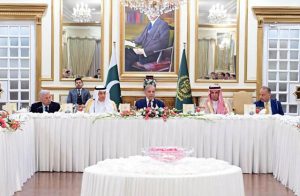
Field Marshal Asim Munir visited iran 15- 16 April and held meetings with Iranian president Dr Massoud Pezeskyan, speaker Mohammad-Bagher Ghalibaf and foreign minister Abbas Araghchi and conveyed them United States president messages, Iranian responded to field Marshal Asim Munir immediately that once ceasefire is announced by Israel in Lebanon, Iran would show flexibility on strait of Hormuz.
Field Marshal Asim Munir on return from Tehran, communicated Iranian messages with United States leadership, which finally persuaded Israel to announce ceasefire in Lebanon.
Meanwhile credible diplomatic sources said both United States and Iranian delegations are expected to arrive in islamabad on Sunday for second round of islamabadTalks, which are likely to begin on Monday.