WASHINGTON/TEHRAN/ TEL AVIV/ISLAMABAD – Iran said on Wednesday it was reviewing a new US proposal, after sources said Washington and Tehran were closing in on a one-page memorandum to end the war in the Gulf while leaving tricky issues such as Iran’s nuclear programme for later.
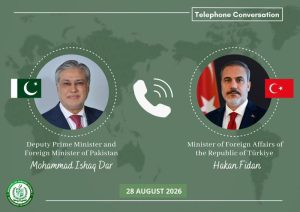
An Iranian foreign ministry spokesperson, cited by Iran’s ISNA news agency, said Tehran would convey its response soon via Pakistan, which hosted the war’s only peace talks and has since served as the main conduit for messages between the sides.
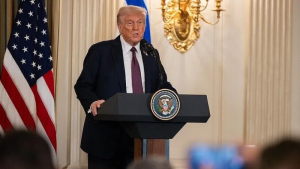
U.S. President Donald Trump said that Iran wanted to negotiate. “We’re dealing with people that want to make a deal very much, and we’ll see whether or not they can make a deal that’s satisfactory to us,” he said at an event at the White House.
A Pakistani source and another source briefed on the mediation confirmed information initially reported by the US media outlet Axios about a proposed 14-point, one-page memorandum that would formally end the war.
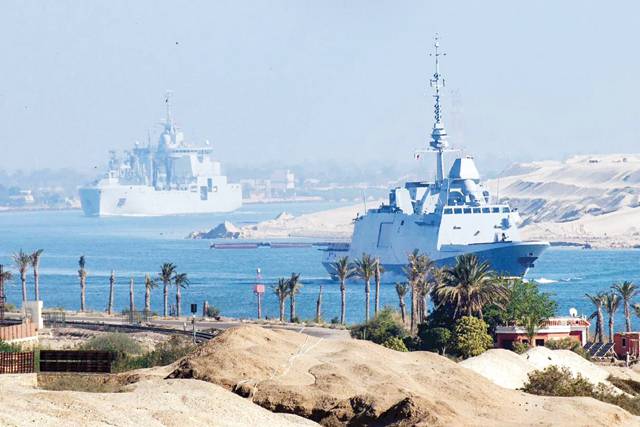
The memorandum would be followed by discussions to unblock shipping through the Strait of Hormuz, lift U.S. sanctions on Iran and agree curbs on Iran’s nuclear programme, the sources said.
The White House reportedly believes it is nearing a one-page memorandum of understanding with Iran aimed at permanently ending the war and laying out a framework for month-long talks on the regime’s nuclear program.
The US expects a response from Tehran within the next 48 hours, according to a Wednesday Axios report, which cited two US officials and two additional sources briefed on the matter.
The MoU consists of 14 points and is being crafted by US President Donald Trump’s top envoys Steve Witkoff and Jared Kushner, together with several Iranian officials.
The MoU will reportedly include a moratorium on nuclear enrichment by Iran and shipment of highly-enriched uranium stockpiles out of Iran in exchange for Washington lifting some of its sanctions on Tehran and releasing billions in the Islamic Republic’s frozen funds, in addition to both sides lifting restrictions around transit through the Strait of Hormuz.
Axios later reported that the document includes a clause stating that the deal “would end the war throughout the region, including in Lebanon.”
Such a clause would mark a significant shift, as the ceasefire reached last month with Iran did not extend to Lebanon, where Israel has been fighting against the Iran-backed terror group Hezbollah. Instead, a separate US-brokered truce was reached there between Israel and Lebanon, as both seek to keep the Lebanese front distinct from the Iranian file.
The plan would also declare an end to the war and trigger a 30-day negotiation period, in pursuit of more detailed agreements pertaining to the Strait of Hormuz, Iran’s nuclear program and US sanctions against the regime.
The US is seeking a moratorium on all uranium enrichment by Iran for at least 12 years, with a provision that would extend the moratorium if Iran were found to have violated it, Axios said. At the end of the negotiated period, the Islamic Republic would be allowed to enrich to the low, civilian-use level of 3.67%, while committing never to seek a nuclear weapon and to submit to enhanced inspections, including snap inspections by the UN.
United States President Donald Trump, in a post on his Truth Social, stated that Operation Epic Fury would come to an end and that the Strait of Hormuz would be “open to all” if Iran agrees “to give what has been agreed to.”
“Assuming Iran agrees to give what has been agreed to, which is perhaps a big assumption, the already legendary Epic Fury will be at an end, and the highly effective blockade will allow the Strait of Hormuz to be OPEN TO ALL, including Iran,” he said. He also issued a stark warning of further escalation if negotiations collapse. “If they don’t agree, the bombing will start, and it will be, sadly, at a much higher level and intensity than it was before,” he said.
Iran would hand over its highly-enriched uranium to be shipped to the US in a potential deal, says US President Donald Trump.
“It goes to the United States,” says Trump in an interview with PBS. He adds that Iran would agree not to use its underground nuclear facilities.
There is a “very good chance of making a deal,” he says. “If we don’t, we’ll go back to our old ways.”
Trump says that it is “unlikely” that he will send his top envoys, Steve Witkoff and Jared Kushner, to Pakistan for talks. “I think we can do it here, and maybe for the final meeting, we’ll have a signing someplace.”
Iran’s Foreign Ministry said diplomatic contacts with the United States remain active through Pakistani mediation, but Tehran has not yet issued a formal response to Washington’s latest proposal.
“Messages are being exchanged through the Pakistani mediator, and reviews regarding the exchanged texts are ongoing,” Iran Foreign Ministry Spokesman Esmaeil Baqaei said, according to Tehran’s state broadcaster Islamic Republic of Iran Broadcasting.
According to Iranian Ministry of Foreign Affairs Spokesperson Esmaeil Baghaei, quoted by the ISNA news agency, Tehran is reviewing a US proposal to end the more than two-month-old war on Iran, and will convey its views to the mediator, Pakistan.
“U.S. plan and proposal remain under consideration, and once Iran concludes its assessment, it will convey its views to the Pakistani side,” said the report.
Pakistan Prime Minister Shehbaz Sharif on Wednesday welcomed the United States’ decision to pause Project Freedom in the Strait of Hormuz, saying it is a step toward regional peace and stability.
In a post on X, the PM expressed gratitude to US President Donald Trump for what he described as “courageous leadership” and a timely announcement of the pause.
“Pakistan remains firmly committed to supporting all efforts that promote restraint and a peaceful resolution of conflicts through dialogue and diplomacy,” the PM said.
Chinese Foreign Minister Wang Yi on Wednesday held consultations with his Iranian counterpart Abbas Araghchi in Beijing, China’s state-run Xinhua News Agency reported.
Araghchi landed in China on Tuesday on a two-day official visit, Iran’s official Tasnim News Agency reported.
The visit comes ahead of US President Donald Trump’s scheduled summit in Beijing with Chinese President Xi Jinping from May 14-15 amid tensions in the Strait of Hormuz, which remains blocked.
This marks Araghchi’s first in-person meeting with his Chinese counterpart since the US and Israel launched strikes against Iran on Feb. 28. The two have held several phone calls during the conflict.