WASHINGTON – The US struck Iran on Friday in response to a drone attack a day earlier on a cargo ship in the Strait of Hormuz. The confrontation marked the most significant test yet to an interim understanding reached a week ago by the two countries to begin working to end their months-long war and reopen the pivotal waterway.
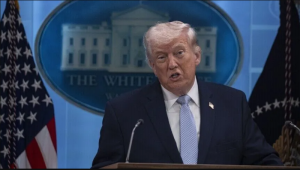
US President Donald Trump said the drone attack violated the ceasefire. The strikes came shortly after Trump told reporters, “You’ll find out,” whether the US would respond.
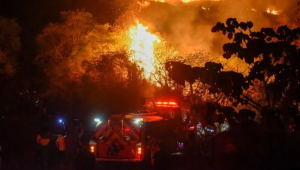
US Central Command said the military struck missile and drone locations and coastal radar sites in Iran.
“I don’t like the fact that they took a shot yesterday, actually four of them,” Trump said at the White House shortly before the US struck back. When asked why there would be strikes when Trump has insisted talks with Tehran are going well, Trump said of Iran: “They’re a little bit different.”
He then abruptly cut off questions, and reporters were ushered out of his office.
Ebrahim Azizi, who heads the Iranian parliament’s national security commission, responded to Trump on social media earlier Friday, saying, “The Strait of Hormuz is governed by Iran, so: Respect the rules” and to “not mistake control for escalation.”
“This is not a violation of the ceasefire; it is ceasefire management,” Azizi wrote.
Friday evening, Vice President JD Vance said on social media that Iran should “pick up the phone” if there are disagreements about the ceasefire agreement. “But violence will be met with violence,” Vance said.
The US strikes on Iran concluded about an hour after US Central Command announced the military action on social media, a US official with knowledge of the situation told the Associated Press. The official spoke on condition of anonymity to discuss an ongoing military operation.
Following the strikes, Iran’s Islamic Revolutionary Guard Corps threatened a “swift and decisive” response, Iran’s state TV reported.
The IRGC claimed it repelled an attack by the US against Sirik Island, which is located on the shores of the Strait of Hormuz, later announcing that it attacked US sites in the Gulf region in retaliation for the American strikes.
“If the aggression is repeated, our response will be broader than this,” the IRGC said, according to a post by state TV on Telegram.
The British military said on Thursday that a container ship was hit by a projectile off the coast of Oman, coming hours after Iran threatened vessels to stop using the route. The United Kingdom Maritime Trade Operations center said no injuries were reported.
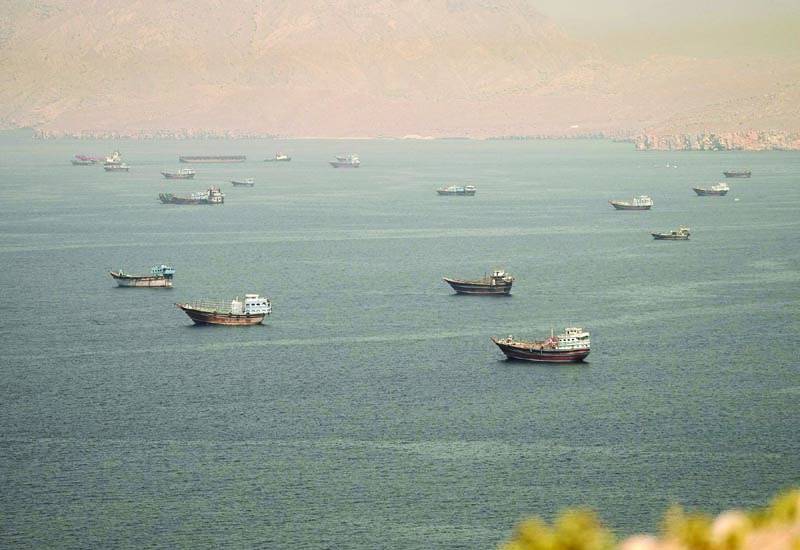
The attack on the cargo ship happened while a United Nations maritime agency was beginning an operation to move stranded ships out of the strait this week, using an alternative route, hugging the shores of Oman rather than sailing through the central part of the strait.
The International Maritime Organization halted the evacuations after the attack and said on Friday that they won’t resume until there are guarantees that the other ships won’t be attacked.
Saudi Arabia on Saturday strongly condemned an Iranian drone attack targeting Bahrain, describing it as a violation of international law and the UN Charter.
In a statement, the Kingdom’s Ministry of Foreign Affairs said the attack “undermined international efforts to restore security and stability in the region.”
The ministry reaffirmed Saudi Arabia’s solidarity with Bahrain and expressed its full support for all measures taken by the island kingdom to safeguard its sovereignty, security and stability.
Bahrain condemned the attacks, its state news agency reported, saying it ”reserved the full right to defend its sovereignty and security.”
Iran said earlier it had carried out strikes against targets linked to US forces in the region, without identifying the targets or saying where they were located.
About 115 ships were able to move out of the strait in recent days, leaving about 500 still in the area, said Arsenio Dominguez, the agency’s secretary-general.
The US and Iran are still negotiating the terms of the deal, including issues such as getting ships through the key strait and addressing the future of Iran’s stockpile of highly enriched uranium. Under the interim deal, the two sides have 60 days to work out the details.
Shipping analysts said the drone strike cast a shadow over what had been a growing stream of trapped vessels finally leaving the Gulf and an increasing flow of tankers carrying crude oil.
“A week of widening commercial confidence in the Strait of Hormuz has hit its first significant test,” said marine data company Windward on X. It said that while the strait remains operationally open with 43 transits recorded after the incident, “the pace of normalization has slowed.”