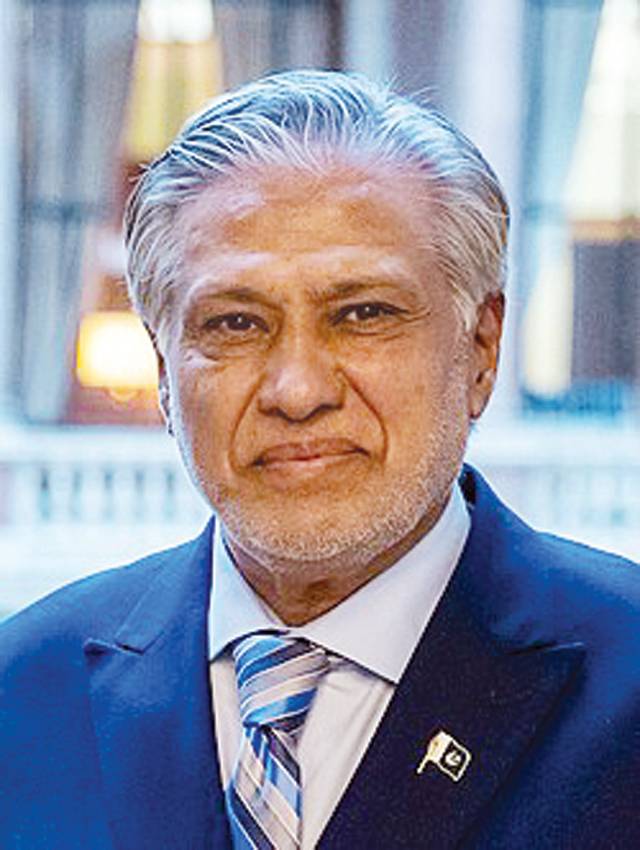
ISLAMABAD – Deputy Prime Minister and Foreign Minister Ishaq Dar yesterday clarified that the recently signed Makkah Joint Defence Agreement among Pakistan, Saudi Arabia and Türkiye was a purely defensive arrangement, aimed at strengthening strategic cooperation, promoting regional stability and safeguarding the three countries against external armed attacks.
In a detailed post on X, Dar sought to provide context and clarity amid growing discussion and interest surrounding what is being referred to as the “Makkah Accord” following its signing in Makkah Mukarramah on Friday, August 7.
He said the agreement reflected the depth of the “brotherly relations” between Pakistan, Saudi Arabia and Türkiye and represented the culmination of years of discussions, consultations and coordination among the three countries. Dar said the agreement was driven by a shared desire to enhance strategic cooperation in confronting multifaceted peace and security challenges and to contribute to regional peace, stability and prosperity. A key aspect of the clarification was that the Makkah Accord would not abrogate, supersede or replace any existing bilateral or multilateral agreements concluded by Pakistan, Saudi Arabia or Türkiye, either with one another or with other countries and international organisations.
Dar said the agreement established a collective-security understanding under which an external armed attack against any one of the three countries would be considered an attack against all three. He linked this provision to the inherent right of individual and collective self-defence recognised under Article 51 of the United Nations Charter.
“The Makkah Accord is purely defensive in nature,” Dar said, stressing that the agreement was not directed against any particular country. He maintained that its sole objective was to further strengthen ongoing efforts by the three countries to promote peace, stability and prosperity across the wider region.
The clarification comes against the backdrop of a rapidly evolving regional security environment in which Pakistan, Saudi Arabia and Türkiye have increasingly sought closer coordination on political, economic and strategic issues.
The three countries have maintained longstanding diplomatic, religious, cultural and people-to-people ties, while their cooperation has expanded in recent years to encompass defence, trade, investment, energy, technology and regional diplomacy.
Pakistan and Saudi Arabia, in particular, have traditionally enjoyed close relations rooted in strong political and religious bonds, while defence cooperation has remained an important component of bilateral ties. Türkiye, meanwhile, has emerged as one of Pakistan’s closest strategic partners, with the two countries maintaining extensive cooperation in defence production, military training, maritime security and diplomatic affairs.