TEHRAN/RIYADH – Iran said on Sunday that it was not engaged in direct talks with the United States and would not initiate negotiations while Washington continued to violate an interim agreement signed in June, as tensions remained high over the closure of the Strait of Hormuz.
Iranian Foreign Minister Abbas Araghchi said messages were nevertheless being exchanged through intermediaries. He also said an agreement between Tehran and Muscat concerning the strategic waterway was in its “final stages”, but stressed that it would not immediately reopen the strait.
According to Mehr news agency, Araghchi said the agreement would determine new shipping lanes to be used once the United States met other Iranian conditions and the waterway was reopened.
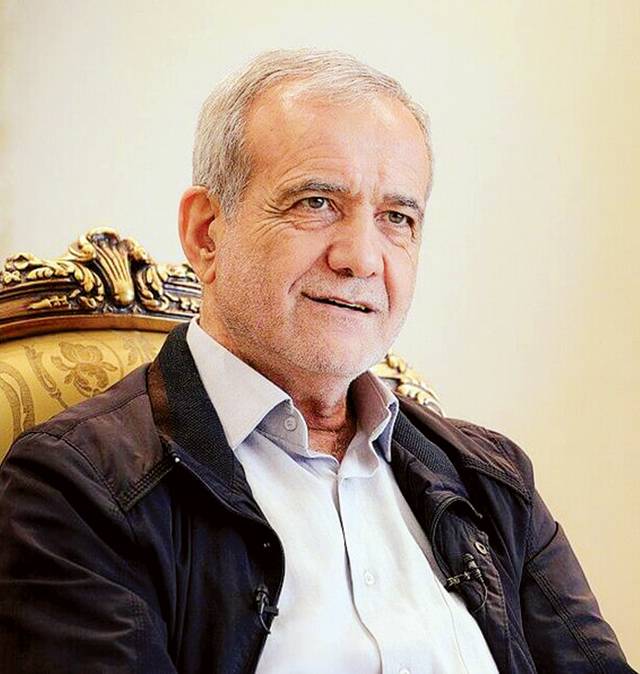
Iranian President Masoud Pezeshkian also met Supreme Leader Ayatollah Mojtaba Khamenei to discuss the country’s economic and defence strategies, state news agency IRNA reported.
Iranian officials meanwhile maintained that the Strait of Hormuz would remain closed until Washington changed its policies. The Islamic Revolutionary Guard Corps (IRGC) said the waterway would remain shut until Iran’s conditions were accepted.
IRGC spokesman Brigadier General Mohebbi said the “enemy” had abandoned its previous war objectives and was now concentrating on reopening the strait. “We will keep the Strait of Hormuz closed until the enemy accepts all our conditions,” he said.
Israeli Prime Minister Benjamin Netanyahu, meanwhile, vowed that Iran would not be allowed to acquire nuclear weapons, regardless of the outcome of diplomatic efforts involving Washington and Arab states.
“With an agreement or without an agreement, as long as I am prime minister, Iran will not have nuclear weapons,” Netanyahu said at a cabinet meeting.Iranian military officials also claimed that the United States and Israel had failed to achieve their objectives in the conflict. Brigadier General Hassan Zadeh, commander of the IRGC’s Mohammad Rasulullah Corps in Tehran, said Iran’s military preparedness and the mobilisation of the Basij had strengthened the country’s regional position.
SAUDI ENERGY FACILITIES TARGETED
The conflict also spilled over into the Gulf, with Yemen’s Houthi rebels claiming responsibility for a drone attack on an Aramco facility in Jazan, Saudi Arabia.
Saudi Arabia’s Energy Ministry said firefighting teams had extinguished a fire at one of Saudi Aramco’s facilities at the Jazan refinery and that there were no casualties.
Houthi military spokesman Yahya Saree said the group had targeted the Aramco refinery with a drone in retaliation for alleged Saudi drone attacks on Yemen’s Saada and Hajjah provinces.
The Houthis later said they had also attacked Saudi-backed forces and military equipment around Yemen’s Red Sea port city of Mokha with missiles and drones. Military sources confirmed attacks in the area, while residents reported hearing multiple explosions.The Jazan refinery, which has a processing capacity of around 400,000 barrels of crude oil per day, was also targeted in July. Recent attacks have caused some production interruptions, although Aramco chief Amin Nasser said last week that operations could be restored quickly and that there had been no material financial impact.
A separate loud explosion was reported in Saudi Arabia’s Jubail region, where regional sources said gas facilities had been targeted and a fire had broken out. The cause and any connection with the Jazan incident remained unclear.
IRAQ MILITIA THREATENS RETALIATION
In Iraq, the leader of Harakat Hezbollah al-Nujaba, Akram al-Kaabi, threatened retaliation for US-Saudi strikes last month against sites belonging to the Popular Mobilisation Forces.
Kaabi said diplomacy with Saudi Arabia was futile and called for a military response. The PMF said at least 20 of its members had been killed and 32 wounded in the earlier strikes.
Saudi Arabia and US Central Command said those attacks targeted militias accused of attacks on American troops and Saudi energy infrastructure.
US ACCELERATES WEAPONS PRODUCTION
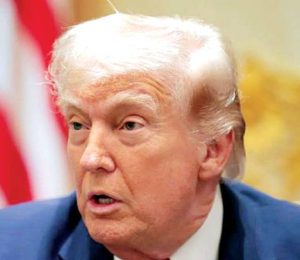
Meanwhile, the administration of US President Donald Trump has ordered the defence industry to accelerate production and delivery of weapons and ammunition amid concerns over depleted stocks caused by the war with Iran.
According to a Defence Department memo cited by The Washington Post, Deputy Defence Secretary Steve Feinberg directed defence companies to submit plans within 21 days to significantly accelerate deliveries and expand production of critical military capabilities.
The United States has reportedly faced shortages of some munitions, particularly Patriot air-defence interceptors. Trump has maintained that the US possesses substantial ammunition stocks and said additional supplies were being manufactured and shipped as required.
The escalating conflict is also threatening regional shipping routes. Iran’s closure of the Strait of Hormuz has disrupted a vital global energy corridor, while Houthi threats have increased risks around the Red Sea and Bab el-Mandeb.
Pakistan has condemned Houthi threats against Saudi Arabia and warned that it reserves the right to defend its maritime interests. Saudi Arabia has also proposed a multinational maritime defence coalition to protect shipping and energy routes in the Red Sea, with 14 countries, including Pakistan, supporting the initiative.
The regional security situation has gained further significance following the defence agreement signed Friday by Pakistan, Saudi Arabia and Turkiye, under which an attack against one country would be treated as an attack against all three.