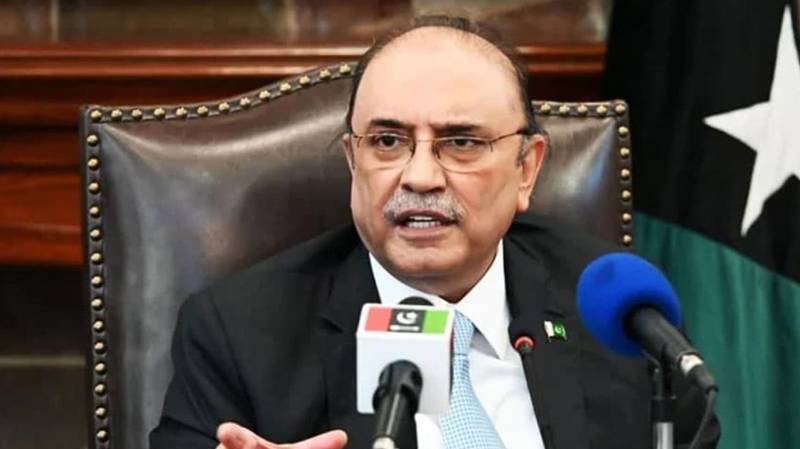
President Asif Ali Zardari has approved the appointment of additional judges to the Lahore, Sindh, Balochistan, Islamabad and Peshawar high courts, along with the confirmation of several additional judges as permanent members of the judiciary.
The president also approved the confirmation of certain additional judges of the Sindh High Court (SHC) and Lahore High Court (LHC) as permanent judges.
In a separate decision, President Zardari approved measures to bring the salaries, allowances and pensions of Supreme Court judges in line with those of judges of the Federal Constitutional Court.
He also approved amendments to the 1997 order governing leave, pensions and other privileges of high court judges.
Separately, the president approved the appointment of Haroon Akhtar as adviser to the prime minister on Industries and Production.
The decisions followed recommendations made at meetings of the Judicial Commission of Pakistan held on July 20 and 21. The commission had recommended the appointment of 19 additional judges, confirmation of five additional judges as permanent judges and an extension for one judge.
The development came a day after the Islamabad High Court (IHC) issued notices to the president and prime minister, through their secretaries, over a delay in approving a summary concerning the appointment of new judges.The court also issued a notice to the Ministry of Law and sought responses by Tuesday.
The notices were issued on a petition challenging President Zardari’s failure to approve the summary. The IHC questioned the federal government about the stage at which the summary was pending and sought an explanation for the delay.
The petition was argued by Zaed Asif Chaudhry on behalf of petitioner Luqman Zafar.
During the hearing, Justice Arbab Muhammad Tahir expressed displeasure over the federal government’s handling of the matter and questioned Additional Attorney General Rashid Hafeez about whether the government was interested in resolving the issue.The judge said the court had expected the federal government to fulfil its responsibility but that this had not happened.
Justice Tahir repeatedly sought details about the status of the summary and asked what was happening with the appointment and confirmation of judges of the higher judiciary.
He observed that the Judicial Commission had approved the confirmation of judges of the Sindh and Peshawar high courts, but those matters had also been delayed.