RIYADH/ISLAMABAD – Saudi air defences intercepted and destroyed a drone allegedly launched by Yemen’s Houthi group towards Makkah before it could enter the restricted airspace of Islam’s holiest city, the Saudi-led coalition said on Wednesday, as fighting intensified across Yemen and the Houthis claimed fresh attacks on Saudi military and oil facilities.
Coalition spokesman Turki al-Malki said the drone was intercepted at around 6:50pm local time on Tuesday, with its wreckage falling south of Makkah. He described the incident as the Houthis’ second attempt to target the holy city, following a ballistic missile launch towards Makkah in July 2017.
Al-Malki said the security of the Two Holy Mosques and pilgrims was a “red line” and warned that the coalition would take measures to deter further attacks.
The Houthis, however, rejected the Saudi-led coalition’s account, with a Houthi official describing allegations that the group had targeted Makkah as a “worn-out lie”. The group has denied targeting the holy city.
The Organisation of Islamic Cooperation (OIC) nevertheless strongly condemned what it described as “heinous attacks” against Makkah and the Madinah region, as well as the continuing attacks against Saudi Arabia. The organisation said such attacks terrorised civilians, violated the sanctity of holy sites and mosques and provoked the sentiments of Muslims around the world.
The OIC said attacks against holy sites, mosques and civilian infrastructure were contrary to Islamic values and international norms, principles and law. It expressed full solidarity with Saudi Arabia and support for measures taken by Riyadh to protect the holy sites, Muslims and the Kingdom’s security and sovereignty.
Yemen’s internationally recognised government also condemned the reported drone attack, describing it as a “terrorist attempt” against the holy city and a violation of Saudi Arabia’s sovereignty and the sanctity of the sacred land.
Pakistan also condemned the reported attempt to target Makkah and reaffirmed its support for Saudi Arabia.
Defence Minister Khawaja Asif said Pakistan would stand by Saudi Arabia “practically and diplomatically” if the situation escalated. He said Pakistan was bound by the trilateral Makkah Defence Alliance with Saudi Arabia and Turkiye, while stressing that the protection of the holy sites was also a religious responsibility.
“There are some worldly agreements, too, and they have their own sanctity and obligations, but protecting the holy sites is our religious duty,” Asif said.
He said there was “absolutely no ambiguity” about Pakistan fulfilling its obligations under the agreement if Saudi Arabia’s territorial integrity came under threat.
Meanwhile, the conflict sharply escalated on Wednesday as Saudi Arabia carried out heavy airstrikes against Houthi positions in Yemen, while the Houthis claimed missile and drone attacks against Saudi targets.Houthi military spokesman Yahya Saree said the group had attacked an Aramco facility in the Red Sea port city of Yanbu and the Khamis Mushait airbase in southern Saudi Arabia. He claimed dozens of ballistic missiles and drones were used against the Yanbu facility and said the attacks were carried out in response to Saudi airstrikes. The claims were not independently verified.
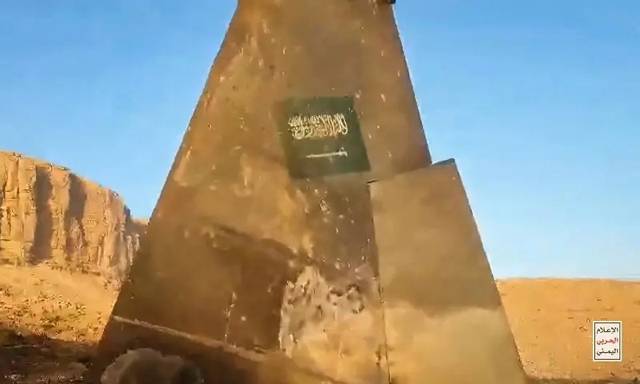
The Houthis also claimed that they had shot down a Saudi F-15 fighter jet over Yemen’s Marib province using a locally manufactured surface-to-air missile. The group released footage it said showed the downed aircraft and its wreckage. Saudi Arabia had not independently confirmed the claim at the time of reporting.
Saree also claimed that Saudi Arabia had carried out more than 450 strikes in Yemen during the week. The Saudi-led coalition has not publicly acknowledged all of the alleged strikes, while the escalation has intensified after a period of relative calm in the Yemen conflict.
On the ground, forces loyal to Yemen’s internationally recognised government clashed with Houthi fighters in the Al-Jawf area near the Saudi border. Government forces claimed to have captured positions and military installations as they advanced against Houthi fighters.
Footage from the battlefield showed soldiers travelling in armoured vehicles and trucks and firing machine guns, artillery and rocket-propelled grenades towards distant targets. Government forces also displayed what they described as abandoned Houthi positions and the bodies of fighters.
The government forces said they had liberated Al-Masariya Hill and Al-Labanat camp and were advancing towards Al-Tebab al-Soud. A commander of the government’s Fifth Brigade said Houthi fighters were retreating on several fronts. The battlefield claims could not be independently verified.
The renewed fighting represents a major escalation in Yemen after years of relative calm. The Houthis have also expanded their military activity along the Red Sea coast and around the Bab al-Mandab strait, a major international shipping route.
The escalation has raised wider concerns over regional energy supplies and global shipping. Yanbu is a major Saudi Red Sea oil-export hub, while Saudi Arabia’s East-West Pipeline provides an alternative route for transporting oil to the Red Sea and reducing dependence on the Strait of Hormuz.
The intensifying conflict comes as the wider Middle East remains engulfed in the US-Iran confrontation. The latest Saudi-Houthi escalation has added further pressure to already strained regional energy and maritime routes.
The Arab League also condemned the attacks against Saudi Arabia, saying they represented a violation of the Kingdom’s sovereignty and territorial integrity and posed a threat to civilians and regional stability. Secretary-General Nabil Fahmy expressed solidarity with Saudi Arabia and called for an immediate halt to the attacks.
The latest developments have therefore opened a new and potentially wider phase in the Saudi-Houthi conflict, with attacks involving drones and missiles, intensified Saudi air operations in Yemen and growing international concern over the reported targeting of Makkah and the possible impact on the security of the region’s most important religious and energy sites.