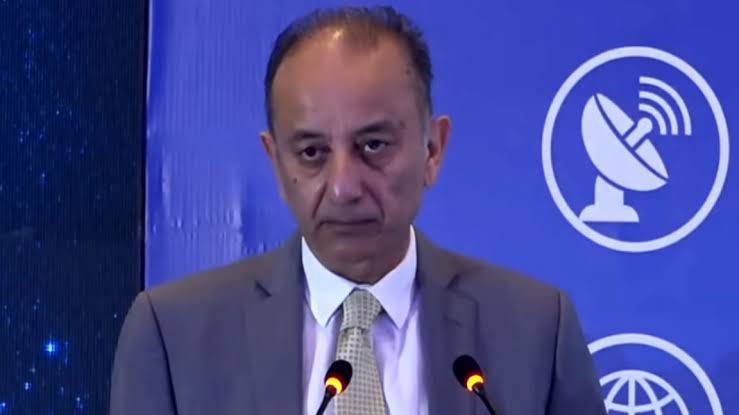
Federal Minister for Climate Change and Environmental Coordination Dr Musadik Malik warned on Friday that climate disasters, technological disruption and widening inequalities in the global economic system were deepening Pakistan’s economic vulnerabilities and threatening to reverse decades of progress made by disadvantaged communities.
Addressing a keynote session at the Institute of Business Administration (IBA), Karachi University Campus, the minister said Pakistan’s economic challenges could not be attributed solely to domestic policy shortcomings, as global commodity cycles, interest rates, geopolitical conflicts and technological developments also influenced the country’s economic prospects.
Highlighting the human cost of climate-related disasters, Dr Malik said repeated floods had devastated communities that had spent generations struggling to escape poverty.
Referring to flood-affected areas of Gilgit-Baltistan, he said some families had taken three generations to improve their economic circumstances, only to lose their homes, livestock, schools, healthcare facilities and other assets in a single devastating flood.
He observed that communities which had gradually established sustainable livelihoods were pushed back into poverty after floods destroyed the foundations of their economic security.
Recalling the experiences of farmers in Sindh and areas bordering Balochistan, the minister said several families had repeatedly returned to their agricultural land despite successive floods because of their attachment to ancestral homes. However, continued losses eventually forced some to abandon farming altogether.
Dr Malik also drew attention to the difficult working conditions in Jacobabad, where extreme temperatures had made outdoor and industrial labour increasingly hazardous.
Citing the example of a furnace worker, he said the man continued working in intense heat despite the risks because he feared his children would go hungry if he stopped earning.
The minister questioned the conventional practice of assessing climate-related losses primarily through gross domestic product (GDP) and financial indicators, arguing that the true impact should also be measured in terms of deaths, displacement, disabilities, disrupted education, maternal and infant mortality, and the destruction of livelihoods.
He cited figures of approximately 6,000 deaths, 20,000 injuries or cases of disability, and between 30 million and 40 million displaced people across five major flood events, highlighting the scale of the humanitarian consequences of climate disasters.
Turning to technological challenges, Dr Malik warned that rapid advances in robotics and automation were transforming industries and could significantly affect workers with low or mixed skill levels.
He said the growing use of artificial intelligence could also disrupt employment opportunities for freelancers, making it necessary for workers to acquire new skills at an increasingly faster pace to remain competitive in the evolving labour market.
The minister observed that the combined effects of climate change, technological advancements, economic policies and geopolitical tensions were creating a complex global crisis that could not be addressed through isolated policy measures.
He expressed concern over the weakening of the rules-based international order and the increasing reliance on unilateral decisions, bilateral arrangements and power-driven trade settlements, which he said were contributing to global economic uncertainty.
Dr Malik also questioned disparities in borrowing costs between developed and developing countries, describing unequal access to international financial markets as a significant challenge for economies such as Pakistan.
Discussing domestic opportunities, the minister cited the rapid expansion of rooftop solar installations as an example of how public participation could help address structural economic problems.
He said the growing adoption of solar energy by households had contributed to reducing demand for imported liquefied natural gas and conventional energy sources, demonstrating the potential of alternative energy solutions.
Emphasising the importance of young people in driving economic transformation, Dr Malik identified solar power, wind corridors and water resources as key areas offering opportunities for Pakistan’s development.
He stressed the need to improve agricultural productivity through modern seeds and technology, expand exports, and strengthen research and innovation to achieve sustainable economic growth.
The minister said universities could play a vital role in developing practical solutions through research, innovation and collaboration with the government and wider society.
He maintained that addressing Pakistan’s economic challenges required a collective effort involving the government, academic institutions and citizens.
Dr Malik urged students to approach interconnected economic, environmental and technological challenges with patience and critical thinking rather than relying on simplistic solutions.