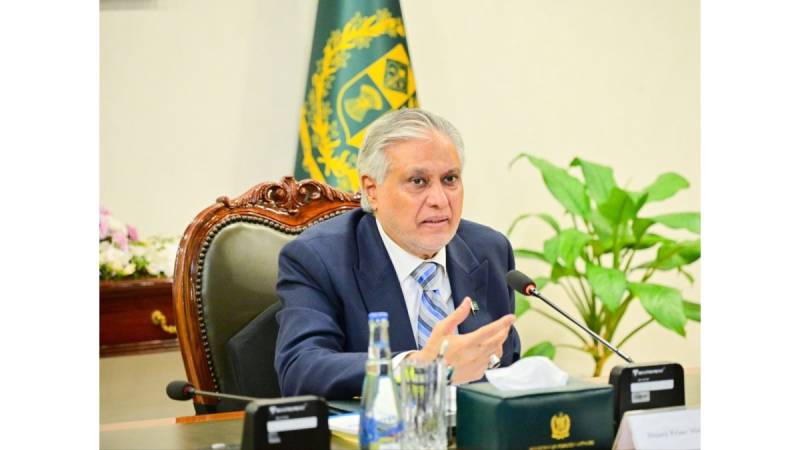
Deputy Prime Minister and Foreign Minister Ishaq Dar has outlined five key priorities for Pakistan’s chairmanship of the Economic Cooperation Organization (ECO), focusing on trade, regional connectivity, economic integration, resilience and human resource development.
Addressing the opening session of the ECO Council of Foreign Ministers, Dar stressed that stronger regional cooperation was essential to addressing shared challenges, promoting economic development and unlocking new opportunities.
He said Pakistan would play an active role in strengthening connectivity among ECO member states and promoting trade and investment through collective efforts.
Expressing concern over tensions in the Middle East, Dar emphasized that disputes should be resolved through dialogue and diplomacy to ensure regional peace and stability.
He said the five priorities of Pakistan’s ECO chairmanship included promoting trade and investment, strengthening regional connectivity, advancing the ECO Trade Agreement, enhancing regional resilience against natural and economic challenges, and investing in human resource development.
On trade and investment, he said Pakistan would support better access to regional markets, stronger value chains and greater private-sector participation, particularly by small and medium-sized enterprises.
Regarding connectivity, Dar said Pakistan would work with member states to improve transport and transit links between Central Asia, South Asia and Pakistani ports on the Arabian Sea. He highlighted the importance of harmonising customs procedures, improving border management and establishing reliable transit systems.
He said the roadmap approved by ECO trade ministers in November 2025 provided a foundation for modernising the ECO Trade Agreement and developing an inclusive, digitally enabled regional trading system.
Highlighting climate-related challenges, Dar called for cooperation in disaster preparedness, early warning systems, sustainable water management and climate-resilient infrastructure.
He also stressed the importance of investing in education, research, innovation and technical training to equip young people with skills required by evolving economies.
The deputy prime minister said the region’s natural resources, energy reserves, agricultural potential and strategic location offered significant opportunities for economic cooperation.
He added that existing regional cooperation mechanisms and previous commitments should be strengthened rather than starting from scratch.
Dar said the success of these priorities would depend on collective efforts by member states, adding that stronger partnerships were essential to achieving sustainable economic progress and delivering tangible benefits to people across the region.