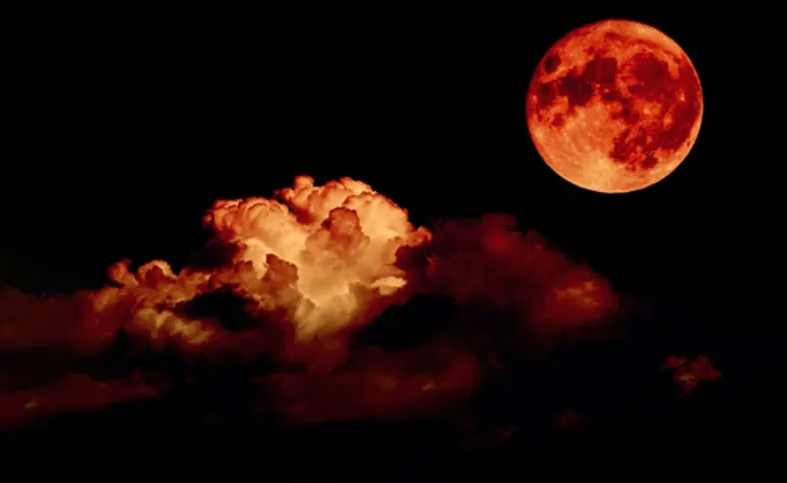
The first total lunar eclipse of 2026 concluded on Tuesday night after being observed across the world, including Pakistan.
In Pakistan, the penumbral phase began at 1:44pm, followed by the partial eclipse at 2:50pm. The total eclipse commenced at 4:05pm, with the moon fully submerged in the Earth’s shadow by 4:34pm.
The celestial event began to recede at 5:03pm, while the partial phase ended at 6:17pm. The eclipse completely concluded at 7:23pm.
Although much of the eclipse occurred during daylight hours in parts of the country, it was partially visible in several cities as the moon rose.
During a total lunar eclipse, the Earth passes between the sun and the moon, casting its shadow on the lunar surface and giving it a reddish hue — a phenomenon commonly referred to as a “Blood Moon.”
Meanwhile, the NASA has highlighted other major celestial events in March. A conjunction of Venus and Saturn is expected on March 8, allowing observers to see the two planets appear close together in the night sky.
Additionally, the vernal equinox will occur on March 20, marking the point when day and night are nearly equal in length and signaling the transition from winter to spring in the Northern Hemisphere.