ISLAMABAD – Pakistan has emerged as a ‘mutual friend’ and ‘potential mediator’ who might soon be hosting American and Iranian officials to finally end the war in the Middle East.
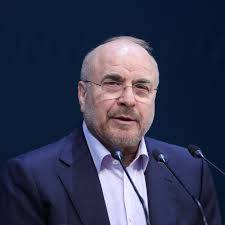
There were rumours yesterday night that Mohammad-Bagher Ghalibaf, Speaker of Iran’s Parliament, has already arrived in Islamabad, while Jared Kushner, former senior adviser to US President Donald Trump, and Steve Witkoff, the US Special Envoy to the Middle East, were expected to arrive today (March 25) for possible diplomatic engagements. There were also media claims that Witkoff too was in Islamabad. There was no confirmation however, from the authorities.
Further unverifiable reports indicated that US Vice President JD Vance was being considered as the likely chief negotiator representing Washington should formal talks proceed, a move seen as potentially more acceptable to Tehran.
Some Iranian officials had signalled strong reservations, saying they would refuse to engage with Steve Witkoff or Trump’s son-in-law Jared Kushner, both of whom had previously led US nuclear negotiations with Iran prior to the outbreak of the current conflict.
JD Vance‘s visit itself could be a huge diplomatic achievement for Pakistan but the US Vice President landing in Islamabad is highly unlikely. He may still be part of the possible talks in some way, even online.
The development comes after US President Donald Trump announced a five-day window for diplomacy, temporarily postponing threatened military strikes on Iranian power plants and signalling a possible shift toward negotiations after weeks of conflict.
Pakistan is actively maintaining contacts with both Washington and Tehran and has emerged as one of the key countries facilitating indirect communication between the two sides.
Officials familiar with the process said Islamabad has been relaying messages between the United States and Iran in recent days as part of ongoing back-channel diplomacy aimed at ending hostilities that have already caused heavy casualties and widespread displacement across the region.
Well-placed sources indicated that an in-person meeting between American and Iranian representatives could potentially take place in Islamabad if both sides agree, underscoring Pakistan’s growing diplomatic relevance in the crisis.
A diplomat described the situation as “talks about talks,” noting that multiple proposals remain under discussion while no formal meeting has yet been confirmed.
Pakistan’s Foreign Office reiterated that the country remains ready to facilitate dialogue. FO spokesperson Tahir Andrabi said Pakistan had consistently supported peaceful resolution of conflicts through diplomacy and would be willing to host negotiations should all parties desire such an arrangement.
He emphasized that sensitive diplomatic efforts often require discretion and urged media outlets to avoid speculation until official announcements are made, reaffirming Pakistan’s longstanding policy of promoting dialogue and regional stability.
Prime Minister Shehbaz Sharif also wrote on X that Pakistan “stands ready and honoured to be the host to facilitate meaningful and conclusive talks for a comprehensive settlement of the ongoing conflict”.
Pakistan is reportedly working alongside other regional intermediaries, including Türkiye and Egypt, in a coordinated effort to encourage negotiations.
Diplomatic contacts among multiple countries have intensified as concerns grow over the broader economic and security implications of the conflict.
Egyptian Foreign Minister Badr Abdelatty held consultations with US, Iranian and regional counterparts, stressing the importance of restraint and maritime security while warning of potential disruptions to global trade routes and energy markets.
The White House has described the situation as “fluid,” declining to confirm Pakistan’s intermediary role but acknowledging that discussions remain sensitive and evolving.
Prime Minister Shehbaz Sharif earlier held a telephone conversation with Iranian President Masoud Pezeshkian, expressing concern over escalating hostilities and urging de-escalation through dialogue.
According to the FO, the PM reaffirmed Islamabad’s readiness to support diplomatic initiatives aimed at restoring regional peace.
Defence Forces chief Filed Marshal Syed Asim Munir spoke with President Donald Trump, reflecting Pakistan’s multi-level engagement in efforts to prevent further military confrontation.
Previously, diplomatic sources hinted that a US delegation could arrive in Pakistan within days for exploratory discussions, although Iranian officials remain cautious due to longstanding mistrust toward Washington. Back-channel efforts are reportedly underway to persuade Tehran to participate in formal negotiations.
President Trump described recent exchanges as “very good and productive conversations,” expressing optimism that diplomacy could lead to a settlement within the five-day period.
The announcement marked a notable change from earlier warnings of military action if Iran failed to reopen the Strait of Hormuz.
Iran, however, has until now publicly denied direct negotiations with the US Iranian Parliament Speaker Mohammad-Bagher Ghalibaf rejected claims of talks, accusing Washington of attempting to manipulate global markets.
At the same time, Iranian Foreign Ministry spokesperson Esmail Baghaei acknowledged receiving messages from “friendly countries” conveying US requests for negotiations, indicating that indirect diplomatic channels remain active.
The crisis carries significant economic implications for Pakistan, which depends heavily on Gulf states for crude oil and liquefied natural gas imports. Iran’s effective disruption of shipping through the Strait of Hormuz, a route carrying roughly one-fifth of global oil supplies, has heightened concerns in Islamabad about energy security, trade flows, and domestic economic stability.
Diplomatic observers note that Pakistan’s balanced relations with both Washington and Tehran, combined with its geographic and political positioning, have enabled Islamabad to present itself as a credible neutral venue for dialogue.
While no formal negotiations have yet been announced, officials describe diplomatic activity as being in “full swing,” with Pakistan continuing to advocate dialogue over confrontation.
Late night, Deputy Prime Minister and Foreign Minister Ishaq Dar held meetings with Chinese Ambassador Jiang Zaidong and British High Commissioner Jane Marriott. “Discussions focused on the evolving regional situation,” the FO said.
The DPM underscored that “diplomacy and dialogue remain the only viable path forward, emphasizing the urgent need for early resolution of the conflict.”
As the five-day diplomatic window unfolds, Islamabad’s mediation efforts are increasingly viewed as a potential pathway toward easing one of the region’s most dangerous crises, reinforcing Pakistan’s role as an active proponent of peace and stability in the Middle East.