ISLAMABAD – Pakistan yesterday accelerated diplomatic efforts to revive stalled peace negotiations between the United States and Iran, as regional tensions remain high and prospects for a lasting settlement hang in the balance.
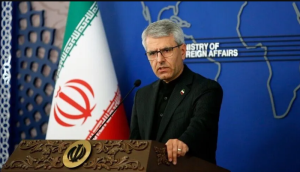
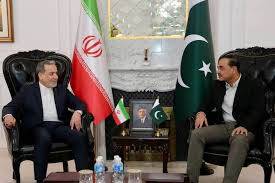
In this context, Iranian Foreign Minister Abbas Araghchi held a key meeting in Islamabad with Chief of Army Staff Field Marshal Syed Asim Munir after returning from Oman. The engagement reflected Islamabad’s continued role as a mediator seeking to bridge differences between Washington and Tehran.
Araghchi’s visit followed high-level discussions in Oman, where he met Sultan Haitham bin Tariq to deliberate on regional security concerns, particularly in the strategically vital Strait of Hormuz, and explore diplomatic pathways to end the ongoing conflict between Iran and the United States. His return to Pakistan marks his second visit within two days, underlining the urgency and intensity of ongoing consultations.
Meanwhile, Iranian Foreign Minister Abbas Aragchi who made six hours stopover in Islamabad on Sunday held meetings with his Pakistani counterpart/ DPM Ishaq Dar and Chief of the Defence Forces Field Marshal Asim Munir on Sunday.
Credible sources told The Nation that Aragchi who returned from Muscat after meeting Omanese King, took Pakistani DPM/ FM Ishaq Dar and CDF Field Marshal Asim Munir into confidence about his talks in Oman.
Talks continued over working dinner hosted by CDF/COAS Field Marshal Asim Munir in the honour of Iranian Foreign Minister at the army house.
Sources said Aragchi discussed Omanese proposals with CDF Field Marshal Asim Munir and DPM Ishaq Dar on joint control of Strait of Hormuz with Oman. Iran and Oman jointly shares part of the strait of Hormuz.
Iranian Foreign Minister Abbas Aragchi, after meeting Pakistani military leadership left for Tehran from where he would travel to Moscow on Monday where he is expected to meet Russian President Putin and would discuss Iranian nuclear enrichment issues.
Iranian foreign minister can return on Thursday to Islamabad after completing his Moscow tour after which there might be some breakthrough on talks with United States officials.
On Russia’s visit Iranian foreign minister will discuss the issue of enriched uranium with Russian leadership.
After Moscow Abbas Araqchi will head back to Tehran and debrief his leadership about the talks held in all three countries and then return to Pakistan, provided his leadership decides.
Foreign Minister Seyyed Abbas Araqchi held separate telephone conversations with his Saudi, French and Qatari counterparts while flying from Muscat to Islamabad.
Dr Araqchi briefed the Saudi, Qatari and French foreign ministers on the objectives of his current visits and the consultations held to de-escalate tensions and completely stop the aggression imposed on Iran by the US and the Zionist regime.
Pakistan’s mediation efforts have gained further significance following a decision by President Trump to cancel a planned visit by his envoys, including Steve Witkoff and Jared Kushner, who were expected to travel to Islamabad for indirect talks. The cancellation dealt a setback to the fragile diplomatic process, with Washington expressing dissatisfaction over Tehran’s proposals.
Despite this development, Pakistani officials have indicated that backchannel contacts remain active, though delicate. Islamabad continues to engage both sides in an effort to narrow significant gaps, particularly over contentious issues such as the US blockade of Iranian ports and security arrangements in the Strait of Hormuz, a critical artery for global oil supplies.
Iran has maintained that meaningful negotiations cannot proceed unless the United States lifts restrictions on its ports. At the same time, Tehran is exploring alternative mechanisms, including proposals related to maritime transit and toll systems in the Strait, in consultation with regional stakeholders such as Oman.
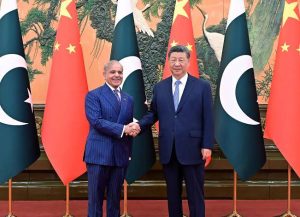
Over the weekend, Araghchi held separate meetings with Prime Minister Shehbaz Sharif and Deputy Prime Minister and Foreign Minister Ishaq Dar, where discussions focused on regional stability, diplomatic coordination, and pathways to de-escalation.
He described his initial round of engagements in Pakistan as “very fruitful,” while expressing cautious optimism regarding the broader diplomatic process, noting uncertainty about Washington’s long-term commitment to negotiations.
Although a ceasefire between the United States and Iran has largely held since early April following weeks of intense confrontation, both sides continue to accuse each other of violations. Efforts to transform the temporary truce into a permanent agreement remain stalled, with deep mistrust and strategic disagreements persisting.
Officials said Pakistan’s leadership remains actively engaged in facilitating dialogue, viewing continued diplomatic engagement as essential to preventing further escalation and stabilizing the wider region.
Iran’s IRGC vows to support Hezbollah in Lebanon fighting
Esmail Qaani, commander of the Quds Force of the Islamic Revolutionary Guard Corps (IRGC), says “cohesion across the Resistance Front” is stronger than ever before, Al Jazeera reports.
“Today the focus is on supporting Hezbollah and the other components of the Resistance Front,” said Qaani in a statement reported by Tasnim news agency.
“History bears witness that the Zionist regime has not ended any war in recent decades by achieving its objectives. The defeat in southern Lebanon is a continuation of this same historical fate,” he added.
Iran FM to meet Putin on Moscow trip: Iranian media
Iranian Foreign Minister Abbas Araghchi will meet Russian President Vladimir Putin during a visit to Moscow on Monday, AFP reported, citing Iran’s ISNA news agency.
Tehran’s ambassador to Russia, Kazem Jalali, said that Araghchi will meet Putin and “consult with Russian officials regarding the latest status of the negotiations, ceasefire, and surrounding developments”, and present a report on negotiations to end the war with the United States and Israel.
Trump says Iran can call US if it wants to negotiate
President Donald Trump has said that Iran can reach out to the United States if it wants to negotiate an end to the war between the two countries, Reuters reported.
“If they want to talk, they can come to us, or they can call us. You know, there is a telephone. We have nice, secure lines,” Trump said in an interview with Fox News.
Iranian FM discusses ongoing diplomatic efforts in call with Qatari PM
Iranian Foreign Minister has exchanged views on the “latest regional developments and ongoing diplomatic efforts” in a telephonic conversation with Qatari Prime Minister Sheikh Mohammed bin Abdulrahman Al Thani, Iran’s IRNA news agency reports.
Egypt’s foreign minister speaks with his Qatari and Iranian counterparts
Egyptian Foreign Minister Badr Abdelatty has discussed efforts to relaunch negotiations between the US and Iran with his Qatari and Iranian counterparts, said the Egyptian foreign ministry statement.
In separate calls with the ministers, Abdelatty affirmed the importance of the diplomatic path to ensure the continuation of the ceasefire in a way that leads to an end to the war, the statement said.
Hezbollah says Israel violating truce, rejects Netanyahu accusation
Hezbollah has rejected Israeli Prime Minister Benjamin Netanyahu’s accusation that it is jeopardising a ceasefire, saying it will keep responding to Israel’s violations and its occupation of south Lebanon, AFP reports.
In a statement, Hezbollah says its attacks on Israeli targets in south Lebanon and northern Israel are “a legitimate response to the enemy’s persistent violations of the ceasefire since the first day of the announcement of the temporary truce”.
“Hezbollah affirms clearly and firmly that the enemy’s continued ceasefire violations… and above all its continued occupation of Lebanese territory and violations of its sovereignty will be met with a response and a resistance that is… ready to defend its land and people,” the statement reads.
Araghchi discusses ongoing diplomatic processes with Saudi counterpart: IRIB
Iranian Foreign Minister Abbas Araghchi has discussed regional developments and ongoing diplomatic processes in a telephonic conversation with his Saudi counterpart, Iran’s state media IRIB reports.
In a social media post on X, the IRIB said, “Iran’s FM Araghchi and Saudi FM Faisal held a phone call, discussing the latest regional developments and ongoing diplomatic processes.”
Starmer, Trump discuss urgent need to get shipping moving again in Strait of Hormuz
British Prime Minister Keir Starmer and US President Donald Trump have discussed the urgent need to get shipping moving again in the Strait of Hormuz during a call, Al Jazeera reports, citing a Downing Street spokesperson.
“The leaders discussed the urgent need to get shipping moving again in the Strait of Hormuz, given the severe consequences for the global economy and cost of living for people in the UK and globally,” the spokesperson for Starmer’s office said in a statement.
“The prime minister shared the latest progress on his joint initiative with [French] President Macron to restore freedom of navigation,” the spokesperson added.
Iran’s Araqchi discusses efforts to end war and Hormuz security with Oman
Iran’s Foreign Minister Abbas Araqchi has held talks in Oman, during which security in the Strait of Hormuz and broader Gulf waters and diplomatic efforts to end the US-Israeli war on Iran were discussed, reports Reuters, citing an Iranian foreign ministry statement.
In talks in Muscat with Oman’s Sultan Haitham bin Tariq al Said, Araqchi said the US military presence in the Middle East was fuelling insecurity and division and called for a regional security framework free of outside interference.