Peshawar – Khyber Pakhtunkhwa Chief Minister Muhammad Sohail Afridi reviewed security and administrative arrangements for Ashura in Peshawar, expressing satisfaction over the peaceful observance of Muharram and praising the coordinated efforts of law enforcement agencies and civil institutions.
The Chief Minister visited the central Ashura procession route and the Supreme Command Post at Kohati, where he received a detailed briefing on security operations, emergency preparedness and inter-agency coordination maintained throughout Muharram.
Officials informed him that the Provincial Command and Control Centre had operated round the clock to ensure real-time coordination among all relevant departments, overseeing security deployment, traffic management, municipal services, uninterrupted electricity and gas supply, and emergency response across the province, with particular focus on Peshawar.
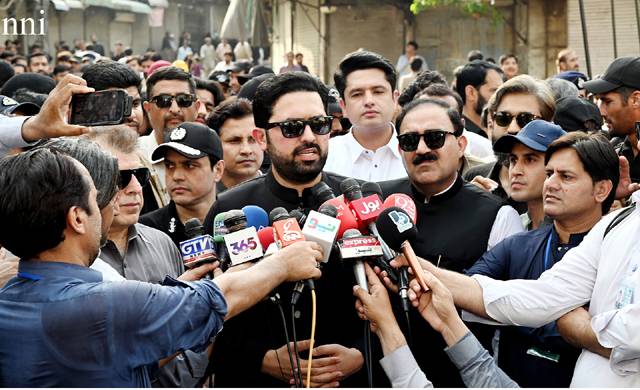
Speaking to reporters after visiting the central procession route, Afridi said the peaceful conclusion of Ashura reflected the professionalism, commitment and close coordination of all institutions involved in maintaining law and order.
The peaceful observance of Ashura demonstrates the dedication and collective efforts of all departments that fulfilled their responsibilities with efficiency and professionalism,” he said.
Reflecting on the significance of the day, the Chief Minister said Ashura symbolises truth, patience, perseverance and steadfastness in the face of oppression. He paid tribute to the sacrifices of Hazrat Imam Hasan (RA) and Hazrat Imam Hussain (RA), describing their legacy as a lasting source of inspiration for the Muslim Ummah and a model of courage, justice and unwavering commitment to truth.
He also commended the police, district administration, municipal authorities, Rescue 1122 and other departments for ensuring the peaceful conduct of Muharram processions and religious gatherings throughout the province.
During his visit to the Supreme Command Post, Afridi praised the close coordination among participating institutions, saying it had enabled effective monitoring, prompt decision-making and swift responses during Muharram. In recognition of their services, he announced an honorarium for personnel deployed at the command post.
The Chief Minister also announced that permanent gateways would be constructed at six main entry points to Peshawar’s Walled City under the Peshawar Revitalisation Plan, aimed at preserving the city’s historic character. Reaffirming his government’s commitment to strengthening public safety,
Afridi said improving the operational capacity of the police through modern equipment, advanced technology and enhanced resources had remained a priority since the beginning of his administration and would continue in the coming years.
Expressing optimism about the province’s future, he said the upcoming fiscal year would bring greater peace, development and prosperity, founded on unity, mutual respect and collective progress.
Officials briefing the Chief Minister said the Supreme Command Post had served as the province’s central coordination hub since the 1st of Muharram, facilitating continuous collaboration among 12 institutions, including the police, Rescue 1122, the Pakistan Army and intelligence agencies. Six additional command posts were established across Peshawar to strengthen operational oversight.
They said around 11,000 security personnel were deployed across the provincial capital. By the 8th of Muharram, 115 processions and 308 majalis had been held, while the 10th of Muharram witnessed the central Ashura procession along with 15 additional processions and 10 majalis.
According to the briefing, nearly 90 per cent of all processions and majalis took place within Peshawar’s historic Walled City, where multi-layered security arrangements were enforced. Religious gatherings were monitored through an integrated surveillance network using CCTV cameras and drone technology. For the first time, anti-drone systems were also deployed with the support of the provincial government to enhance aerial security.
Officials further informed the Chief Minister that uninterrupted sanitation, electricity and gas services were maintained throughout Muharram, while traffic was regulated under a comprehensive management plan.
Restrictions imposed under Section 144, including a ban on pillion riding, remained in force.
Emergency protocols were activated at hospitals across the city, staff leave was cancelled to ensure operational readiness, and representatives of all schools of thought remained present at the Supreme Command Post throughout Muharram to promote sectarian harmony and support coordinated peace efforts.