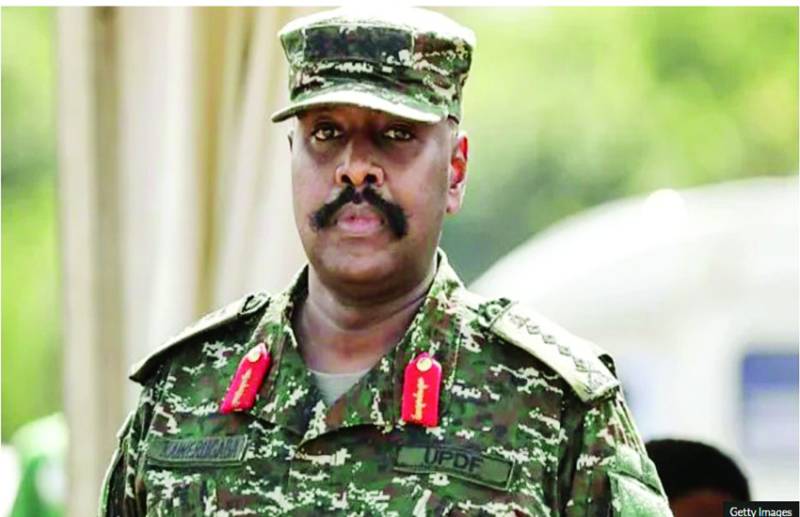
KAMPALA – Uganda’s military chief, who is also the president’s son, said on Sunday he had ordered the closure of two leading media outlets, declaring that he did “not believe in a free press.” Muhoozi Kainerugaba said the Daily Monitor – Uganda’s largest independent daily newspaper – and NTV Uganda, one of the country’s largest private broadcasters, would “not re-open without my permission.” “In Uganda, I do not believe in a free press! The press should be guided by cadres of the revolution,” Kainerugaba wrote in a series of pos ts on the X platform. He did not give specific reasons for closing the media outlets, both of which are owned by Nation Media Group (NMG) NMG.NR, a media conglomerate headquartered in Kenya and listed on the Nairobi stock exchange. The Daily Monitor reported on Sunday that military personnel had been deployed at NMG’s premises in the capital, Kampala, and that staff were being prevented from leaving or entering the premises.
NTV Uganda and other NMG TV and radio broadcasters in the country were all down as of Sunday morning. Ugandan government spokesperson Alan Kasujja did not immediately respond to a Reuters request for comment. Susan Nsibirwa, managing director for NMG in Uganda, said she did not have an immediate comment. Kainerugaba, who has been touted as a possible successor to his aging father, President Yoweri Museveni, is well known for his controversial social media posts including threats to behead the leading opposition leader Bobi Wine. In 2013, the government of Museveni, who has ruled the country since 1986, shut down the Daily Monitor for 10 days over reports regarding his succession. It is unclear what exactly led to the crackdown, but in posts on X, Gen Muhoozi Kainerugaba said: “I do not believe in a free press! The press should be guided by cadres of the revolution.” Opposition and human rights groups accuse Gen Kainerugaba of being a central figure in a highly repressive regime led by his father. Supporters of the president and his family say they have guaranteed stability in Uganda, and the economy has improved under their rule.
President Museveni, 81, is a former rebel leader who took power about 40 years ago. He won a record seventh term in disputed elections in January, with widespread speculation that he is grooming his son to succeed him one day. Gen Kainerugaba said on X that his “great father” had given him the “power to shut down any media house I want to”. He said that both NTV and Daily Monitor would “not re-open without my permission”.
“From now on ALL media in Uganda will follow the rules!” the general added. The Daily Monitor said on X that the newspaper and its fellow outlets were ordered to close “in a crackdown during the wee hours of Sunday”. It did not give reasons for the crackdown, but covered the story on its website.
It said staff had reported that “no-one was allowed to enter or leave the compound”, while NTV Uganda and Spark TV viewers “were met with blank screens displaying the message ‘video unavailable’.” The article pointed out that the Daily Monitor had also been raided by police in 2013 over the publication of a letter allegedly linking senior government officials to a succession plan dubbed the ‘Muhoozi Project’, while NTV had been forced off air in 2007 following accusations by the government that its news coverage was negative. “Over the years, Museveni has also repeatedly criticised the Daily Monitor, at one point referring to it as an ‘enemy and evil newspaper’ over its critical journalism,” the article said. Uganda’s National Broadcasters Association said it would seek clarification from the government over the shutdown, saying it was in violation of the constitution. Defeated opposition presidential candidate Bobi Wine, who is now in exile, said that Gen Kainerugaba had “moved to silence Uganda’s remaining independent voices”. “This is the harsh reality we now face, a country under open military rule, where fear replaces law and force replaces accountability,” he posted on X.
During January’s fiercely contested election, Gen Kainerugaba caused outrage when in posts which were subsequently deleted, he threatened to have the testicles of Bobi Wine removed.
Before the polls, opposition rallies were disrupted, with security forces at times opening fire.
The United Nations said the election was held in an “environment marked by widespread repression and intimidation against the political opposition”.
Election officials said the poll was free and fair.