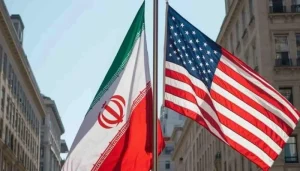
ISLAMABAD/TEHRAN – The United States and Iran have agreed to extend a 60-day ceasefire under the Islamabad Memorandum of Understanding as the agreement is set to expire on Aug 17, Pakistani government sources told the Turkish news agency Anadolu on Wednesday, without disclosing the duration of the extension.
“Both sides have conveyed their consent to the mediators to extend the deadline,” a source close to the mediation process said. The two countries were still exchanging messages over the duration, the source added. Neither Washington nor Tehran had publicly confirmed the reported agreement.
The Islamabad memorandum, signed on June 17, gave the two sides 60 days to negotiate a final agreement and allowed the period to be extended by mutual consent. Talks later stalled over security guarantees and freedom of navigation through the Strait of Hormuz.
There were no discussions between Iran and the United States on extending the ceasefire, a senior Iranian source tells Reuters.
The source says that from Tehran’s perspective, the deal had no start date, and therefore there is nothing to extend.
The source’s comments come after Turkey’s Anadolu news agency, citing Pakistani government sources, reported that Tehran and Washington agreed to extend a 60-day ceasefire under their interim deal signed in June.
“There is no talk of an extension because, from Iran’s perspective, there is no period that began and therefore nothing to extend. The United States violated the interim agreement 48 hours after it was reached and withdrew from it a few days later,” the source says.
“One of the issues that is being discussed via mediators is the US returning to the interim agreement and defining a timeframe for implementing the commitments. There has been absolutely no progress on this issue,” the source adds.
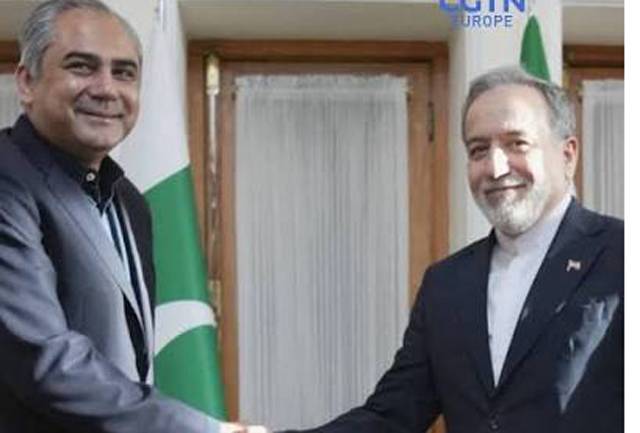
Iranian Foreign Minister Abbas Araghchi held talks Wednesday with Pakistan’s Interior Minister Mohsin Naqvi in the northeastern Iranian city of Mashhad for a second consecutive day, according to Iran’s official IRNA news agency.
Araghchi met Naqvi at Shahid Hasheminejad International Airport after arriving in Mashhad, IRNA reported, without providing details on issues discussed. The meeting comes amid mediation efforts to end the war between Iran and the US.
Pakistan’s Foreign Ministry spokesman Tahir Andrabi said Islamabad was making “all-out efforts” to return the parties to negotiations and would continue using direct and indirect channels to support dialogue.
The report followed a visit to Tehran by Pakistani Interior Minister Mohsin Raza Naqvi, who met Iranian President Masoud Pezeshkian and Foreign Minister Abbas Araghchi.
“Pakistan is making all-out efforts to bring the two parties to the negotiating table and the Islamabad MoU and pave the way for peace and stability in the region,” Andrabi told a weekly news briefing in Islamabad. Pakistan remains engaged alongside “brotherly states” in “sincere efforts” to work toward a resolution to the crisis, he added.
Pakistan’s Foreign Ministry spokesman Tahir Andrabi said Islamabad was making “all-out efforts” to return the parties to negotiations and would continue using direct and indirect channels to support dialogue.
The report followed a visit to Tehran by Pakistani Interior Minister Mohsin Raza Naqvi, who met Iranian President Masoud Pezeshkian and Foreign Minister Abbas Araghchi.
“Pakistan is making all-out efforts to bring the two parties to the negotiating table and the Islamabad MoU and pave the way for peace and stability in the region,” Andrabi told a weekly news briefing in Islamabad. Pakistan remains engaged alongside “brotherly states” in “sincere efforts” to work toward a resolution to the crisis, he added.
Storm flattens farming structures, damages crops in Mohmand
Islamabad will continue to “offset spoilers using direct and indirect channels” and ensure the continuation of constructive dialogue to resolve outstanding issues, Andrabi said.
The US and Iran agreed to a Pakistan-brokered ceasefire in April and later signed a memorandum of understanding on June 17, launching negotiations toward a final agreement. However, the talks later stalled over disagreements on security guarantees and freedom of navigation through the Strait of Hormuz, one of the world’s most strategic routes for global energy supplies and trade.
Between July 8 and July 24, the US and Iran exchanged military strikes, with Washington launching attacks on targets inside Iran and Tehran responding by striking what it described as US military facilities and equipment in several Arab countries, including Jordan, Bahrain and Kuwait.
Meanwhile, Iran’s Border Police Commander Brig. Gen. Ali Akbar Javidan dismissed reports of a possible US ground operation against Iran as “delusional,” telling Tasnim news agency that the country’s border forces were fully deployed and prepared for any attack.
On the other hand, a top adviser to the commander of Iran’s Islamic Revolutionary Guard Corps said Iran could “prolong” the war with the US until President Donald Trump is out of office.
“We have to attain deterrence so that the enemy never dares to attack us, so we can live with security,” Mohammad Reza Naqdi told PBS in an interview published yesterday. “One way is to prolong this war until we get to the next term of the presidency and cause attrition, so that if anyone else wants to attack Iran, they will know there is a cost.”
Naqdi served as coordinating deputy of the IRGC from 2019 to 2025, a senior headquarters position responsible for coordination across the organization. He is now a senior adviser to the IRGC commander, a position that carries less command authority but likely preserves access to the IRGC’s top leadership.
When asked if he believes Iran is currently in control of the war, Naqdi said: “Certainly, victory is on our side.”
Washington is conducting a “war without strategy,” he said. “Every two or three days, they announced a new objective,” including the invasion of Kharg Island and the reopening of the Strait of Hormuz,” Naqdi continued.
“The longer this war lasts, the more experience we gain. We had never seen a real war to gain real experience to learn how to fight with America. In these five months, we have learned how,” Naqdi added. “We have also seen how the American military is weaker than what we perceived.”
The adviser discussed his country’s bombardment of ships in the Strait of Hormuz, saying that if vessels are traveling through an area out of Iran’s control, “it could be that they’re transporting supplies for the enemy.”
On missiles, Naqdi said that Iran manufactures more of these weapons than it uses every day.
“If there comes a day when Iran has no more missiles left, that’s when we will be even more dangerous for America. Because America has thousands of economic interests throughout the world, and all of them can be easily destroyed,” he said.
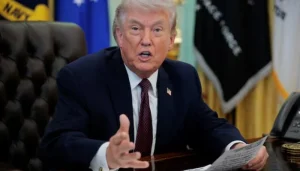
US President Donald Trump on Wednesday said the United States in is control of the Strait of Hormuz.
“The USA has total control over the Strait of Hormuz. I THINK WE WILL KEEP IT! Our Naval Blockade is being called, by everyone, “A WALL OF STEEL,” and there is nothing Iran can do about it,” he wrote on his Truth Social platform.
Deputy Prime Minister and Foreign Minister Ishaq Dar on Wednesday strongly condemned the Houthi attack on a non-combatant commercial vessel in the Red Sea, in which three Pakistani nationals have lost their lives and one has sustained injuries.
“I have learnt with deep concern about the unfortunate incident involving an attack on a commercial vessel in the Red Sea…Pakistan strongly condemns the Houthi attack on a non-combatant commercial vessel,” Deputy Prime Minister Dar wrote on his X timeline, extending his heartfelt condolences to the bereaved families.
He said that such attacks endangered innocent lives, constituted a violation of international law, and posed a serious threat to freedom of navigation, maritime security, and the safety of commercial shipping in the Red Sea.
He said that the Government of Pakistan was in contact with the relevant Saudi authorities, as well as the internationally recognized Government of Yemen, to ascertain further details of the incident and the circumstances surrounding it.
He directed Pakistan’s Embassy in Riyadh to immediately coordinate with the relevant authorities, and to strongly pursue all necessary measures for the retrieval and repatriation of the mortal remains of the deceased Pakistani nationals and for the provision of all possible assistance to the injured Pakistani national.
“We are closely following the situation and will continue to remain in close contact with the concerned authorities,” Deputy Prime Minister Dar added.
Iran seeks to take Pakistan ties to new heights: Mohsen Rezaei
Interior Minister Mohsin Naqvi held a meeting with Iran’s newly appointed Secretary of the Supreme National Security Council, Mohsen Rezaei, during which the two sides discussed bilateral relations, security cooperation and mutual interests.
Mohsen Rezaei said Iran wants to take bilateral cooperation with Pakistan to new heights and is committed to further strengthening security ties and mutual cooperation between the two neighboring countries.
The Iranian official said Tehran seeks exceptional progress in Iran-Pakistan relations and expressed a desire to further expand cooperation in areas of mutual interest.
Rezaei emphasised that Iran considers Pakistan and itself as each other’s “strategic depth,” underscoring the importance Tehran attaches to its relations with Islamabad.
Meanwhile, Pakistan on Wednesday reaffirmed its commitment to dialogue and diplomacy to promote peace and stability in the Gulf and Middle East, as the Foreign Office said Islamabad was maintaining sustained engagement with the parties amid continuing regional tensions.
At the weekly press briefing, Foreign Office spokesperson, Tahir Andrabi said Pakistan was making all-out efforts to bring the concerned parties back to the negotiating table, stressing that the Islamabad Memorandum of Understanding (MoU) had paved the way for peace and stability.
He said that although the Islamabad MoU might not have been fully implemented, the parties would return to negotiations whenever “the rationality of dialogue” overcame the logic of escalation. Pakistan, he added, would continue using direct and indirect channels to offset spoilers and facilitate constructive dialogue on outstanding issues.
The spokesperson said Bahrain’s Foreign Minister had expressed his intention to visit Pakistan following a telephone conversation with Deputy Prime Minister and Foreign Minister, Senator Mohammad Ishaq Dar on August 11. Dar welcomed the proposed visit and reaffirmed Pakistan’s commitment to dialogue and diplomacy.
Tahir Andrabi described the Makkah Joint Defence Agreement, signed during the Makkah Al-Mukarramah Summit as a natural step in the longstanding brotherly relations and strategic ties among the three countries. He said the accord reflected their shared commitment to strengthening collective security while promoting peace, security and stability in the region and beyon
According to the spokesperson, the agreement was purely defensive in nature and would enable the three countries to make unified efforts to confront threats and security challenges.
Responding to question about whether Parliament and other stakeholders had been taken into confidence before the signing of the Makkah Accord, Mr. Andrabi categorically rejected the impression that the agreement had been concluded without following internal procedures.
He pointed out that Prime Minister, Muhammad Shehbaz Sharif was the Leader of the House in the National Assembly and himself a signatory to the accord, while Deputy Prime Minister and Foreign Minister, Senator Ishaq Dar, an honorable member of the Upper House, was also present at the occasion. He said the agreement had been signed according to the wishes of the people, with the Prime Minister and Deputy Prime Minister, along with Chief of Defence Forces Field Marshal Syed Asim Munir, fully on board.
“There is no question of not taking any stakeholder on board,” the spokesperson said, adding that all internal procedures were followed in accordance with established rules and regulations.
He said DPM/FM Ishaq Dar, in a message to the nation on August 10, had described the Makkah Joint Defence Agreement as a historic milestone and credited Pakistan’s political, military and diplomatic leadership for helping bring the accord to fruition.
Meanwhile, he said Pakistan intensified its diplomatic contacts with regional and international partners. On August 10, Dar spoke separately with the foreign ministers of Saudi Arabia, Iran and Kuwait, discussing bilateral relations, regional developments, the Makkah Agreement and efforts to promote peace and stability.
Interior Minister, Mohsin Naqvi was also visiting Tehran for meetings with senior Iranian officials, with discussions expected to cover bilateral relations, security issues and regional developments.
He said the briefing also highlighted Pakistan-New Zealand political and economic engagement. The two countries held the fifth round of Political Consultations and third round of Joint Trade Committee meetings in Wellington on August 6.
Discussions covered trade, investment, agriculture, livestock, information technology, education, counterterrorism and people-to-people ties. An Education Cooperation Arrangement was also signed.
On the Red Sea, Pakistan strongly condemned an attack on a commercial vessel in the Bab al-Mandab area. Andrabi said three Pakistani nationals had been killed and another injured, according to information available to the government at the time.
Pakistan was coordinating with Saudi authorities and the internationally recognized Yemeni government to establish further details. Efforts were underway to retrieve and repatriate the remains of the deceased Pakistanis and provide medical assistance to the injured, the spokesperson added.
He said Pakistan supported freedom of navigation and maritime security in international waterways under international law and was a signatory to the maritime coalition announced by Saudi Arabia. Pakistan, he said, was ready to assist Saudi Arabia and other coalition partners in operationalizing the coalition’s communique to protect global supply chains and maritime traffic.
On India’s statements concerning Azad Jammu and Kashmir (AJK), Pakistan categorically rejected what it called “baseless” allegations. Andrabi accused India of attempting to politicize recent developments in AJK and said New Delhi should instead address its own record in Indian-administered Jammu and Kashmir.
He reiterated Pakistan’s stated commitment to the fundamental rights and democratic freedoms of the people of AJK and to the right to self-determination of the people of Jammu and Kashmir.
On the economy, the spokesperson said Pakistan had successfully completed three reviews under its ongoing IMF programme, which he said, was focused on structural reforms and improved fiscal management.
The spokesperson strongly condemned the attack on the non-combatant commercial vessel, stressing that such incidents endanger innocent lives, violate international law and pose a serious threat to freedom of navigation, maritime security and the safety of commercial shipping in the Red Sea. He said the Deputy Prime Minister and Foreign Minister had directed Pakistan’s mission in Riyadh to remain in contact with Saudi authorities and the internationally recognized government of Yemen to ascertain further details about the incident.
Andrabi said Pakistan was also coordinating with the concerned authorities for the retrieval and repatriation of the mortal remains of the deceased Pakistanis and for providing necessary medical assistance to the injured national. He added that Pakistan supported freedom of navigation and maritime security in international waterways and was ready to assist Saudi Arabia and other partners in operationalizing the maritime coalition announced by Riyadh to safeguard global supply chains and maritime traffic.