Pakistan does not have a shortage of governments. It has a shortage of governance.
The Constitution promises power to the people, but the money and the decisions stay locked in provincial capitals. A mother in Khuzdar waits for a hospital that Quetta forgot to fund. A father in Sahiwal sends his child to a school that Lahore never inspects.
The distance between the citizen and the state is not measured in miles. It is measured in files, signatures, and political mood.
The Constitution already knows this is wrong. Article 140A says every province shall devolve political, administrative, and financial responsibility to elected local governments.
That is it. 41 words.
There is no fixed tenure. No election deadline. No guaranteed funding. It is a promise written in smoke.
Because the promise is so thin, a single signature can dissolve a local government. Elections can be postponed indefinitely. A local budget can be reduced to zero overnight. In the last two decades, we have seen local governments dissolved by ordinance, elections delayed for years by stay orders, and mayors left with offices but no authority.
When the rules are this fragile, governance becomes impossible.
A mayor who can be fired by an ordinance tomorrow cannot sign a three-year contract to build a road today. A council that may not exist next year cannot hire a professional to run a hospital. A budget that arrives only if the provincial finance minister is in a good mood cannot pay for textbooks, vaccines, or diesel for a garbage truck.
This is not a failure of individuals. It is a failure of design.
The fix is not to invent a new system. The fix is to complete the one we already have in the Constitution. Article 140A must be amended to include three iron-clad guarantees.
First, a guaranteed term. Every elected local government must serve a full five-year term, synchronized with its provincial assembly. It cannot be dissolved by ordinance, notification, or executive order. The only way to remove it prematurely should be a two-thirds vote of no-confidence in the provincial assembly — a high threshold that ensures removal happens only through broad political consensus, not personal vendetta. When tenure is secure, local leaders can plan beyond the next political season.
Second, a guaranteed election. Local government elections must be held on the same day as provincial assembly elections. The voter who comes to vote for his MPA should vote for his union councilor on the same ballot, at the same polling station. The councilors thus elected should then elect the mayor or chairman. This does two things at once: it guarantees elections actually happen — on time, every five years, without delay or discretion — and it makes them financially viable by sharing the cost of the electoral exercise.
Third, guaranteed money. A fixed percentage of each province’s development budget — for example, 30 percent — must flow directly to districts through a transparent, constitutionally protected formula: population plus backwardness plus performance. The money must move automatically, through the Provincial Finance Commission Award, straight into the local government account. No approval required. No file to be moved. No delay permitted. If the formula is in the Constitution, no chief minister can choke a mayor from an opposing party.
With these three guarantees — term, election, and money — the district becomes what it was always meant to be: the primary unit of governance.
Imagine what changes. A mayor with a real budget and a real five-year horizon can fix the sewer on your street because he needs your vote in five years, not because he needs a minister’s favour next month. A tehsil council with secure tenure can hire a qualified engineer to repair a school roof instead of writing letters to the provincial secretariat for two years. A union council with an automatic health budget can keep a doctor in the rural clinic six days a week, not two.
This is not theory. This is how it works everywhere governance works. You empower the unit that is closest to the citizen, you give it the tools, and you make it accountable.
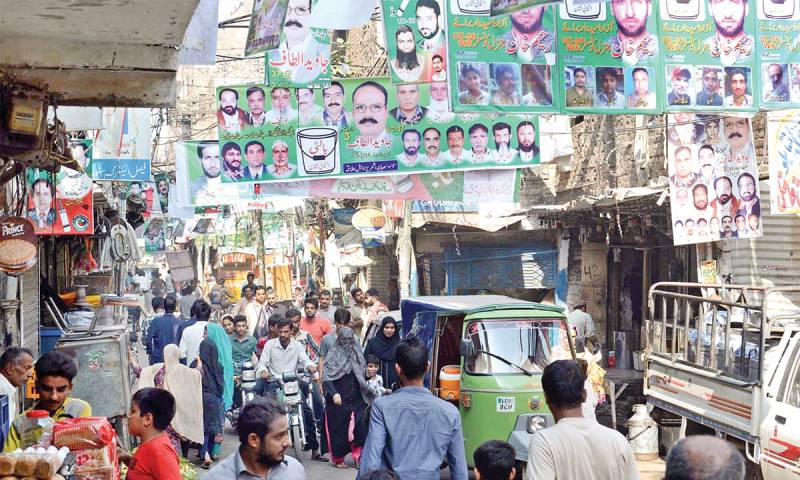
This reform matters across thousands of union councils and hundreds of tehsil councils, town committees and metropolitan corporations that already exist under provincial local government acts. From Karachi Metropolitan Corporation to the smallest town committee in Tharparkar, each one represents citizens who currently have a vote but no voice, a representative but no revenue.
The beauty of this model is its self-correction. In districts that deliver — where roads get built, schools get roofs, clinics get medicine, and the monthly accounts are published online — citizens will see something they have never seen before: a government that works because it is close enough to hear them and accountable enough to fear them.
In districts that fail — where the money disappears, the projects stall, and the accounts are blank — citizens will know exactly who failed, because the mayor’s name is on the ballot and the audit report is on the website. Accountability will no longer be an abstraction debated on TV. It will have a name, a face, and an address.
Pakistan has spent seven decades concentrating power in fewer and fewer hands and then complaining about the results. Whether or not new provinces are created — a debate that will take years — the answer to our governance crisis begins in the same place: with the districts that already exist.
We do not need to wait for a new map. We need to make the current map work.
Amend Article 140A. Give the district its money, its term, and its election.
The people of Pakistan deserve more than promises that dissolve with a signature. They deserve a government that earns its authority by delivering results, starting right where they live — on their own street.