Israel attacks major fuel storage facilities near Tehran Vows to kill any new leader, promises ‘surprises’ Iran says attack poisoning civilians, calls it a war crime Iranian drones strike Gulf states Bahrain desalination plant hit, fire engulfs Kuwait building Iranian FM says fighting must continue until ‘permanent end to war’ Abbas Araghchi confirms ongoing Iran-Russia cooperation.
DUBAI/JERUSALEM/TEHRAN – Israeli forces expanded their bombardment of Iran overnight, striking major fuel storage facilities near Tehran, as Iran and Israel traded fresh attacks across the region and the conflict entered its second week with growing fears of a wider Middle East war.
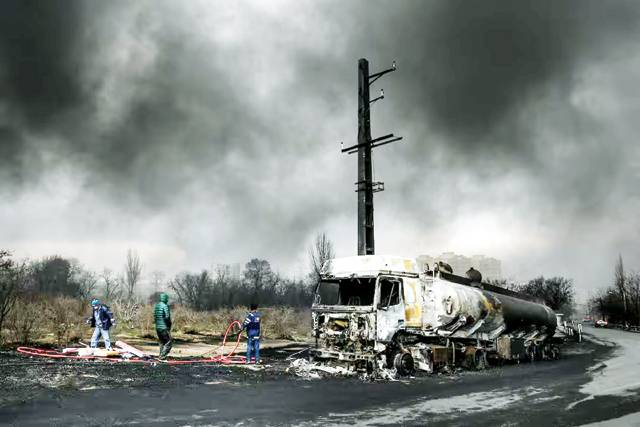
Thick black smoke hung over the Iranian capital on Sunday after strikes on oil storage depots lit up the night sky with large explosions and towering flames. The Israeli military said the facilities were used to support Iran’s military operations, including the production and storage of propellant for ballistic missiles.
Israeli Prime Minister Benjamin Netanyahu vowed the attacks would continue and warned that Israel would target Iran’s leadership without restraint. “We have an organised plan with many surprises to destabilise the regime and enable change,” he said in a video statement.The escalation comes days after the killing of Iran’s supreme leader Ali Khamenei early in the conflict. Iranian media reported that the Assembly of Experts could meet as soon as Sunday to appoint his successor, with indications that his son, Mojtaba Khamenei, is the leading candidate.
Israeli officials have warned that any new leader would also be considered a target if the conflict continues. Iran strongly condemned the latest strikes, describing them as a dangerous escalation. Foreign ministry spokesperson Esmaeil Baghaei said attacking fuel depots could release toxic substances into the air and endanger civilian lives.
“By targeting fuel depots, the aggressors are releasing hazardous materials and poisoning civilians while devastating the environment,” he said. Meanwhile, Iranian retaliatory attacks spread across the Gulf region, targeting countries hosting United States military installations. Authorities in Saudi Arabia, Kuwait, the United Arab Emirates and Bahrain reported intercepting Iranian drones and missiles overnight.
Bahrain said an Iranian drone strike caused material damage to a desalination plant, although water supplies were not disrupted. It marked the first reported attack on such a facility during the conflict. In Kuwait, authorities said fuel tanks at the country’s international airport were targeted in a drone strike, while a major fire engulfed a government office building in Kuwait City. Two Kuwaiti security officers were reported killed during response operations. The UAE said its air defence systems intercepted 16 ballistic missiles and more than 100 drones aimed at the country on Sunday. However, several drones managed to strike targets, killing four migrant workers, according to officials.
Iran said its operations were aimed at American military facilities located in Gulf states rather than the host countries themselves. Iranian President Masoud Pezeshkian apologised to neighbouring populations for disruptions caused by the strikes, while urging them not to support the US-Israeli campaign against Iran.
“We are forced to retaliate to attacks but this does not mean we have a dispute with neighbouring countries,” he said in televised remarks.
The conflict has also expanded into Lebanon, where Israeli forces intensified strikes against the Iran-backed group Hezbollah after it launched rockets and drones into Israel last week.
At least four people were killed when Israeli warplanes struck a hotel building in central Beirut on Sunday. Israel said the strike targeted Iranian commanders operating in the city, marking the first attack in the heart of the Lebanese capital since hostilities resumed.
Iran’s Foreign Minister Abbas Araghchi said Tehran would not accept a ceasefire unless the war ended permanently. In an interview with NBC News, he insisted that Iran must continue fighting for its security.
“There needs to be a permanent end to the war,” Araghchi said. “Unless we get to that, we need to continue fighting for the sake of our people and our security.”
He also confirmed ongoing cooperation between Iran and Russia but did not directly confirm reports that Moscow had provided intelligence on US military positions in the region.
In Washington, US President Donald Trump said he was not interested in negotiating an end to the war, suggesting the conflict could continue until Iran’s leadership and military capabilities were completely destroyed.
“At some point, I don’t think there will be anybody left maybe to say ‘We surrender’,” he told reporters aboard Air Force One.
According to Iran’s ambassador to the United Nations, Amir Saeid Iravani, US-Israeli strikes have killed at least 1,332 Iranian civilians and wounded thousands since the conflict began.
Iranian attacks have killed 10 people in Israel, while at least six US service members have died in regional strikes. Israel also confirmed that two of its soldiers were killed in southern Lebanon during fighting with Hezbollah forces.
The escalating conflict has sent global energy markets into turmoil, with oil prices surging as concerns grow over the security of the Strait of Hormuz, a vital route through which nearly a fifth of the world’s oil and gas supplies pass.
Iran’s Revolutionary Guards said the country was prepared to sustain an intense war with the United States and Israel for up to six months if necessary, signalling that the confrontation could continue despite mounting regional and economic pressures.