ISLAMABAD: Pakistan on Thursday urged the media against speculation regarding the schedule of the second round of negotiations between the United States and Iran, saying that the schedule for the upcoming talks has not been announced yet.
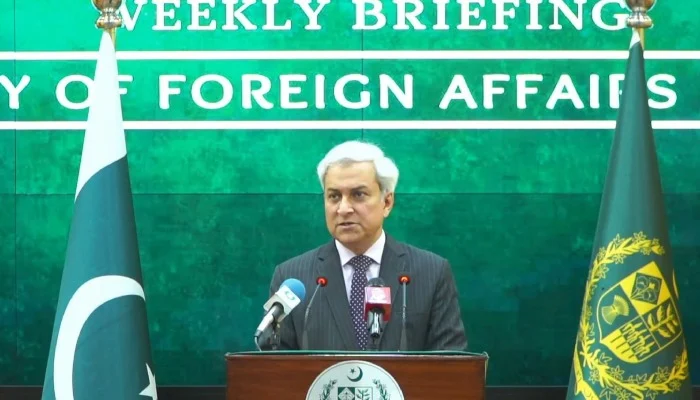
Addressing a weekly briefing, Foreign Office spokesperson Tahir Hussain Andarabi declined to share details of diplomatic engagements, emphasising the need for trust and confidentiality. “If we had shared such information, it would have been a breach of trust,” he said.
“The important thing is that both sides are willing to engage and dialogue continues,” he said, adding that details about delegations and participation were secondary and an internal matter of the concerned parties.
His remarks came amid reports that negotiating teams from the US and Iran could return to Islamabad later this week, five sources told Reuters, days after the highest-level inaugural talks between the two countries in decades ended inconclusively.
Meanwhile, US President Donald Trump said on April 14 that talks between Washington and Tehran could resume over the next two days and that “we’re more inclined to go” to Pakistan, reported The New York Post.
The previous meeting in Islamabad, held three days after last Wednesday’s ceasefire announcement, marked the first direct encounter between American and Iranian officials in more than a decade and the most senior engagement since Iran’s 1979 Islamic Revolution.
US Vice President JD Vance and Iranian Parliamentary Speaker Mohammad Baqer Qalibaf led their respective delegations in the last round of talks to work out a slew of issues, including the Strait of Hormuz, a major transit point for global energy supplies that Iran has effectively blocked but the US has vowed to reopen, as well as Iran’s nuclear programme and international sanctions on Tehran.
The trilateral ‘Islamabad Talks’ lasted nearly 21 hours after beginning on the afternoon of April 11, reflecting the complexity and high stakes involved.
Despite extensive discussions, the first round ended without a formal agreement. Officials in Islamabad, however, viewed the meeting as a significant step in opening direct channels of communication between Washington and Tehran.
Separately, a proposal has been shared with both Washington and Tehran to send delegations for the resumption of talks, Reuters reported, citing sources, as Islamabad continues coordinating with both sides on the timing of the next round, which could take place over the weekend.
These developments echo Prime Minister Shehbaz Sharif’s earlier remarks, in which he noted that although the first round of US-Iran talks in Islamabad remained inconclusive, Pakistan’s efforts to bridge differences between the two sides are continuing, with diplomatic channels actively engaged.
Pakistan’s push to get Iran and the United States to the negotiating table for their highest-level face-to-face talks in decades to end weeks of war has garnered international praise.
‘Neither breakthrough nor a breakdown’
Addressing the media today, FO spokesperson Andarabi said the negotiations between the United States and Iran continued in a “serious and constructive” manner, describing the outcome as neither a “breakthrough nor a breakdown”.
“There was neither a breakthrough nor a breakdown,” he said, adding that the two delegations engaged in 21 hours of continuous talks, while the overall negotiation process extended beyond 24 hours.
He added that nuclear issues remained among the key topics under discussion in the negotiations.
He noted that such prolonged engagement on complex issues reflected “extraordinary commitment” by both sides. “The seriousness, resolve and positive attitude of the participants should be appreciated,” he added, highlighting that leadership from both countries, along with mediating officials, remained present throughout.
Calling the round “historic in significance,” the spokesperson said the role played by the leadership of all three countries deserved recognition.
The spokesperson said Pakistan would continue to act as a mediator and facilitator, keeping communication channels open between Tehran and Washington.
“All diplomatic efforts, including the Islamabad talks, are part of a continuous process,” Andarabi said, noting that high-level engagements in Tehran and visits by delegations were also part of this broader effort.
He added that Pakistan had maintained contact with global leaders through telephone diplomacy ahead of the talks and would continue engaging international partners.
“Pakistan’s position remains in favour of peace, stability and prosperity,” he said, reiterating that Islamabad was taking its allies and friendly countries into confidence while welcoming support from global powers, including Russia.
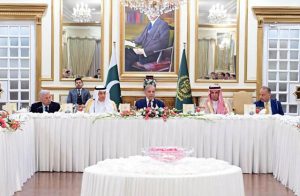
Highlighting Pakistan’s broader diplomatic outreach, he said the country had actively participated in the Shanghai Cooperation Organisation’s Regional Anti-Terrorist Structure (SCO-RATS) and hosted a meeting of senior officials from Saudi Arabia, Turkiye and Egypt in Islamabad.
He also confirmed that the Chief of Army Staff (COAS) Chief of Defence Forces (COAS) Field Marshal Asim Munir was in Iran as part of ongoing engagements.
Lebanon situation
The spokesperson strongly condemned Israeli attacks in Lebanon, calling for an immediate end to hostilities.
He said the Lebanon ceasefire was part of the negotiations and was being viewed within the broader context of the regional peace process.
“Signs of improvement on the Israel-Lebanon front over the past two days are encouraging,” he said, adding that de-escalation would help create a conducive environment for dialogue.
“Peace in Lebanon and an end to armed actions are essential,” she noted, stressing that reduced tensions could support progress in negotiations.
The wider conflict in the region began with US-Israeli strikes on Iran on February 28. Hezbollah opened fire in support of Tehran on March 2, sparking an Israeli offensive that has killed more than 2,000 people and forced 1.2 million from their homes, according to Lebanese authorities.
Iran says Israel’s campaign against Hezbollah in Lebanon must be included in any agreement to end the wider war in the Middle East. Washington has pushed back, saying there is no link between the two sets of talks.