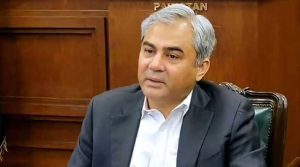
ISLAMABAD/LAHORE – Prime Minister Shehbaz Sharif on Monday announced a comprehensive fourteen point austerity plan to tackle economic severity stemming from war in the region.
He made the announcement in his televised address to the nation on Monday night after chairing a meeting on austerity measures. The prime minister said to avoid extra fuel consumption, fifty percent staff of all public and private sector institutes will work from home except for essential services departments.
He said there will be four working days except for banks, industries and agriculture sectors. Also, there will be a total ban on iftar parties and dinners, and online, video link modes will be prioritised for meetings.
The prime minister said schools will remain closed from the end of this week for next two weeks while higher educational institutes will shift on online classes.
He announced fifty percent reduction in fuel quota for public sector institutes for next two months except ambulances and public-use buses. Sixty percent transport used in government offices is also being closed for next two months.
The prime minister announced reduction in 20 percent expenditure of all government institutions except salaries and also banned procuring transport, Air Conditioners or other items.’He said no cabinet members will draw salary for next two months and a 25 percent deduction will be made in salaries of Members of Parliament. Deduction of two-day salary will also be made in pays of officers above grade 20 and this amount will be used for providing relief to common man.
The prime minister also declared ban on unnecessary official foreign tours of Federal cabinet members, provincial Chief Ministers or Governors except those inevitable for national interest.
As part of the austerity scheme, seminars and conferences will be held in government buildings instead of hotels.
On the occasion, the prime minister warned hoarders and other mafias of strict action if they try to exploit the economic situation. He said regional situation and war has affected our hard-gained economic stability but the government is making every effort to prevent burdenising the common man.
The prime minister said in a world of changing alliances and new challenges, Pakistan once again needs a renewed commitment for national unity, fraternity and responsibility.
He briefed the nation about his engagements with leaderships of brotherly regional countries and said Pakistan has reaffirmed its solidarity with the brotherly countries.
Punjab announces austerity measures to save energy
Punjab Chief Minister Maryam Nawaz on Monday announced a series of extraordinary austerity measures to cope with the severe economic challenges triggered by the ongoing regional conflict and the resulting petroleum crisis, including the closure of all public and private schools, colleges and universities across the province from March 10 to March 31.
In a major decision, the chief minister also ordered the immediate suspension of official fuel allocations for provincial ministers until the petroleum crisis is resolved. She further approved a 50 per cent reduction in petrol and diesel allowances for government officers’ official vehicles.
Also, the government has imposed a ban on multiple protocol vehicles accompanying provincial ministers and senior officials. Under the new policy, only one vehicle will be allowed with ministers and senior bureaucrats for unavoidable security purposes.
To reduce fuel consumption and limit movement, the chief minister directed government departments to adopt a “work from home” policy, allowing only essential staff to attend offices.
All public and private educational institutions will remain closed from March 10 to March 31, though examinations will be conducted according to schedule. Schools, colleges and universities will be allowed to hold online classes during the closure.
Despite the restrictions, citizen services will continue through digital platforms. The government said services under e-business initiatives and the “Maryam Ki Dastak” programme will remain operational for public convenience.
Official meetings will largely be held online through video conferencing and teleconferencing, while all government outdoor events have been banned. The provincial government has also postponed the cultural festival of the Horse and Cattle Show in view of the prevailing crisis.
To ensure the availability of petroleum products, the chief minister directed the formation of District Petroleum Monitoring Committees in every district to oversee supply and prevent hoarding. She also tasked the Punjab Information Technology Board (PITB) with developing a track-and-trace system for petroleum products. The system will involve representatives from district administrations, police and other relevant institutions.
Clarifying the work-from-home arrangement, Maryam Nawaz said that only the movement of additional support staff will be curtailed, while official work in government departments will continue without disruption.
The chief minister also directed authorities to issue an advisory to the private sector encouraging businesses to adopt work-from-home arrangements, avoid unnecessary events and call only essential staff to offices.
She further instructed district administrations to strictly monitor public transport fares and take legal action against operators charging excessive or illegal fares. Authorities have also been directed to closely monitor the supply and demand of essential food items across Punjab.
Appealing to citizens to cooperate during the crisis, Maryam Nawaz urged the public to avoid outdoor functions, refrain from late-night shopping and not engage in unnecessary buying or hoarding of essential goods.
The chief minister paid tribute to Prime Minister Shehbaz Sharif and Asim Munir for what she termed “courageous decisions during an extremely difficult crisis”.
She warned that the government would deal with an iron hand against anyone attempting to exploit the situation for profiteering. “Brave nations confront difficult times with unity, patience and wisdom,” the chief minister said, urging the public to stand together during the challenging period.
PM Shehbaz Sharif on Monday chaired a high-level meeting to review the country’s economic situation in light of the prevailing regional developments.
The meeting was attended by Deputy Prime Minister and Foreign Minister Ishaq Dar, Chief of Army Staff and Chief of Defence Forces Field Marshal Syed Asim Munir, Defence Minister Khawaja Asif, Planning Minister Ahsan Iqbal, Commerce Minister Jam Kamal Khan, Law and Justice Minister Azam Nazeer Tarar, Finance and Revenue Minister Muhammad Aurangzeb, Economic Affairs Minister Ahad Khan Cheema, Climate Change Minister Musadik Malik, Information and Broadcasting Minister Attaullah Tarar, Power Division Minister Sardar Awais Ahmad Khan Leghari, IT and Telecom Minister Shaza Fatima Khawaja, Petroleum Minister Ali Pervaiz Malik, Adviser to the Prime Minister on Political Affairs and Inter-Provincial Coordination Rana Sanaullah, Minister of State for Finance and Railways Bilal Azhar Kayani, Chief Minister Punjab Maryam Nawaz, Chief Minister Sindh Murad Ali Shah, Chief Minister Balochistan Sarfaraz Bugti, Prime Minister of Azad Jammu ans AJK PM Faisal Rathore , Chief Minister Gilgit-Baltistan Haji Gulbar Khan, and Adviser to the Chief Minister Khyber Pakhtunkhwa Muzammil Aslam, along with senior government officials. During the meeting, participants were briefed on a comprehensive strategy aimed at promoting energy conservation across the country.
In view of the regional situation, the meeting held detailed discussions on measures to ensure economic stability, including austerity, simplicity in government expenditures, and energy-saving initiatives. Several important decisions were taken in this regard.