US Central Command (CENTCOM) said Tuesday that American forces have completed a series of “self-defense strikes” against Iranian military targets in response to the downing of a US Army Apache helicopter on Monday.
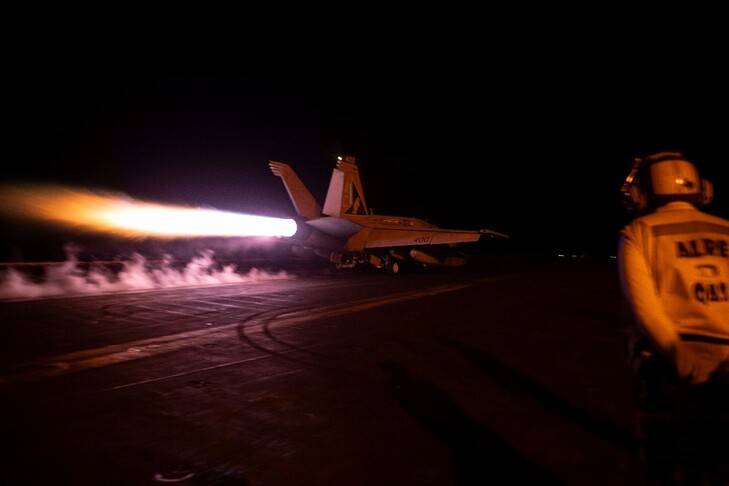
“CENTCOM forces struck Iranian air defense, ground control stations, and surveillance radar sites near the Strait of Hormuz with precision munitions from U.S. Air Force and Navy fighter jets,” the command said in a statement.
The command announced that its forces began conducting “self-defense strikes” against Iranian military targets at approximately 5 pm Eastern Time (2100GMT) on Tuesday.”The operation was a proportional response to recent attacks on U.S. forces and international commercial ships transiting regional waters,” it said, adding that US forces remain “vigilant and postured” to defend against “unjustified Iranian aggression.”
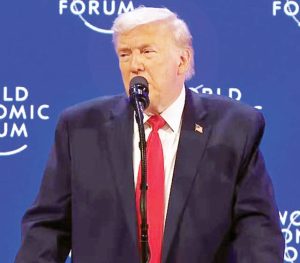
Earlier, US President Donald Trump said that Washington is compelled to respond to an alleged Iranian attack that brought down a US military helicopter.
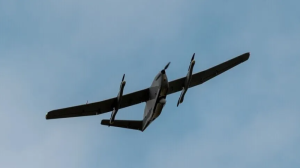
“I have just been informed by our great military that last night the Iranians shot down one of our highly sophisticated Apache Helicopters while patrolling over the Strait of Hormuz,” Trump wrote on his social media platform Truth Social.
He said both pilots were rescued and are uninjured, but “the United States must, of necessity, respond to this attack.”
‘I believe the response should be very strong, very powerful’
The incident followed several days of fluctuating tensions in the region, during which Israel and Iran traded military strikes before pulling back, underscoring the fragility of a ceasefire.
Trump described the strikes as a “very strong” and “very powerful” response to Iran.
“I think it’s very important to respond. They shot down a helicopter, and we are responding as we speak,” he told ABC News reporter Jonathan Karl.
“This is a response to what they did with our helicopter last night, and I believe the response should be very strong, very powerful, and that’s what this one is,” Trump was quoted as saying.
Separately, the Axios news site, citing a senior American official, reported that US military forces attacked several Iranian air defense batteries and radar systems around the Strait of Hormuz.
Axios said a second round of strikes in Iran were taking place “now” targeting air defense and radar systems.
Later, Axios reported that a third wave of attacks against Iran are “underway now.”
Citing a senior White House official, Politico reported Tuesday that Trump thinks an Iran deal is “still close” despite the retaliatory strikes.
“Nothing changes where the deal stands right now,” said the official.
‘Proportional and limited’ strikes
US House Speaker Mike Johnson said the strikes were “proportional and limited.”
“The White House and Pentagon have announced and said ‘it’s against unjustified Iranian aggression.’ They did notify me as leader of the House before this began, and it’s targeted strikes to the radar, missile and command and control sites, and it is defensive in nature,” he said at a news conference.
Johnson said he was at the White House earlier Tuesday with Trump, Vice President JD Vance, Secretary of State Marco Rubio, Secretary of Defense Pete Hegseth and others.
“We were with the president, and we talked about, you know, Iran,” he added.
Meanwhile, Iran’s Foreign Minister Abbas Araghchi said the US opted to test Tehran’s determination.
“Our Powerful Armed Forces will leave no attack or threat unanswered. Leave our region if you want to be safe,” Araghchi said on X.