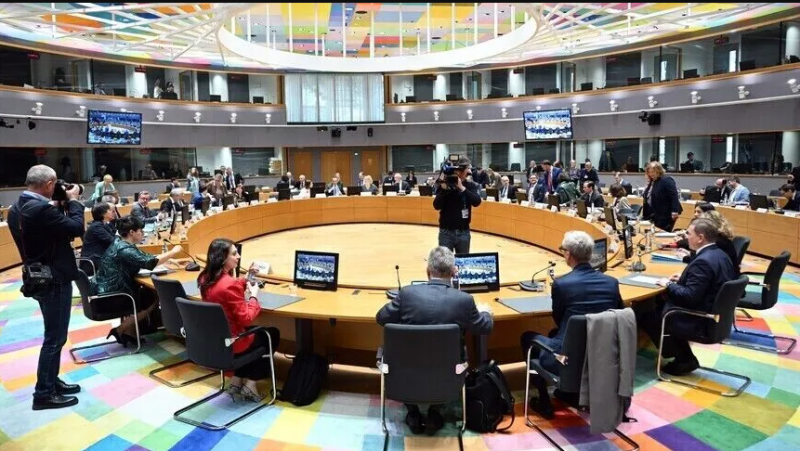
Several European leaders voiced concern Wednesday about US sanctions targeting officials of the International Criminal Court (ICC), including its president and a senior lawyer in the prosecutor’s office.
European Commission President Ursula von der Leyen and European Council President Antonio Costa said they stood firmly with the court, ICC President Tomoko Akane of Japan and officials who uphold the court’s mission.
“The ICC helps deliver justice to the victims of some of the world’s most horrific crimes. To carry out this essential work, its judges and officials must be able to act independently and without external pressure,” they wrote in a statement on US social media platform X.
EU foreign policy chief Kaja Kallas reiterated the bloc’s “unwavering support” for the ICC, highlighting that it is “a cornerstone of the international criminal justice system and the global fight against impunity.”
“The EU deeply regrets the decision by the United States to impose sanctions against International Criminal Court President Judge Tomoko Akane and Senior Trial Lawyer Abdoulaye Seye,” Kallas said in a statement issued by the European External Action Service (EEAS) — the bloc’s diplomatic arm.
She stressed that the court’s independence, impartiality and ability to carry out its mandate must be free from “pressure, intimidation or interference.”
“Sanctions against the Court, its officials and personnel undermine its work. The EU stands firmly with the ICC and will continue to provide its full support to ensure the protection of the Court and its staff against external pressures or threats,” Kallas added.
In a statement to Anadolu, the British Foreign Office also stressed that the UK supports the court’s independence.
A spokesperson for the Foreign Office noted that the UK is “determined that those responsible for the most serious international crimes are held to account.”
German Foreign Ministry deputy spokesman Martin Giese told a news conference in Berlin that Germany stands by the ICC and its president.
“The ICC has exposed heinous crimes against humanity. It has held accountable those guilty of the gravest crimes. It is thus fulfilling its mandate exactly as intended,” he said.
Giese noted that, like any institution, the ICC can face criticism for its shortcomings. But he stressed that the flaws are “under no circumstances” grounds to fundamentally question the court or its achievements.
“On the contrary, for Germany, it is of central importance to defend and protect the International Criminal Court as an independent institution,” he said.
The Spanish Foreign Ministry also deplored the sanctions, underlining that they “constitute a flagrant attack on the independence, integrity and impartiality of the International Criminal Court, whose mandate derives from the mandate granted by the States Parties to the Rome Statute.”
A statement by the ministry underscored the court’s “indispensable role” in ensuring accountability for the most serious crimes and contributing to the protection of and reparations for victims.
“The Netherlands disapproves of the latest sanctions against officials and staff of the International Criminal Court. International courts and tribunals must be able to freely carry out their mandates,” Foreign Minister Tom Berendsen wrote on X.
France condemned the new sanctions, saying they undermine the ICC and its 125 states parties, and are contrary to the principle of judicial independence.
“France condemns any form of threat or coercive measures against the Court, its staff and civil society organizations that support it,” the French Foreign Ministry said in a statement.
It said France expressed solidarity with the judges targeted by the sanctions and reaffirmed its “unwavering support” for the ICC and its staff.
UN High Commissioner for Human Rights Volker Turk urged the US to lift the “unacceptable” new sanctions.
He also urged states to defend institutions created to uphold human rights and the rule of law, and to protect court officials targeted by the measures.
The latest US designations target Akane and Abdoulaye Seye of Senegal, a senior trial lawyer at the Office of the Prosecutor, the Hague-based court said in a statement.
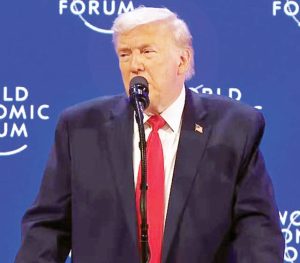
The measures are part of sanctions against the ICC imposed by US President Donald Trump in February 2025.
Earlier Wednesday, the ICC strongly rejected the new sanctions, describing them as “flagrant attacks” on judicial independence.
The court added that nine of its 18 judges, both deputy prosecutors, its former prosecutor and one staff member are under US sanctions.