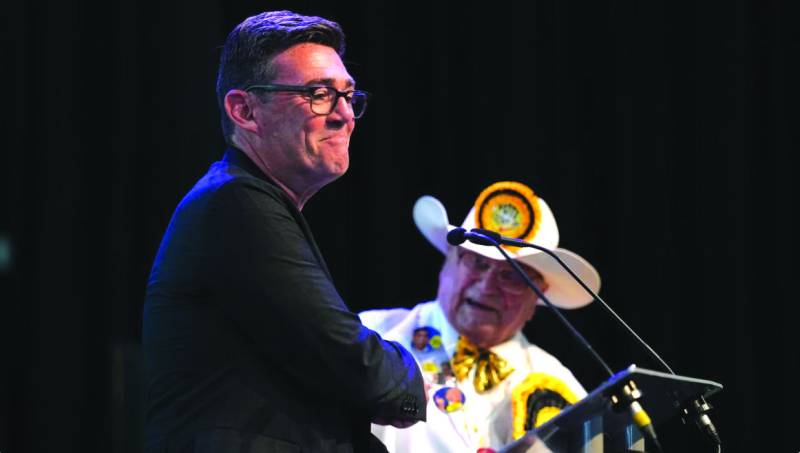
LONDON – Greater Manchester Mayor Andy Burnham is poised to challenge British Prime Minister Keir Starmer for the country’s premiership after resoundingly winning a special election in Makerfield, northwest England, and securing his return to parliament.
Thursday’s by-election – the equivalent of a special election in the US – was triggered with the sole purpose of providing a path to 10 Downing Street for Burnham, who is widely seen as the Labour politician best placed to unseat the embattled Prime Minister.
In the early hours of Friday morning, with all votes counted, that risk paid off. Burnham secured 55% of the vote, a comfortable lead over Robert Kenyon of the right-wing populist party Reform UK, who came in second place with 35%.
While Burnham plots his next move, the UK government now enters a new period of uncertainty, potentially facing a sixth prime minister in seven years. Starmer confirmed on Friday to the BBC that he will run in any leadership contest, indicating that any transition of power could be more volatile than Burnham might hope.
Meanwhile, Burnham alluded to but did not explicitly reference his leadership ambitions in a speech on Friday.
“This now is the change moment,” he said, standing in front of his supporters. “We have an opportunity to turn the tide, to make the country feel like it’s working again, to make people see that politics can make a positive difference to make people feel hope again.”
Burnham, a former cabinet minister who’s been Mayor of Greater Manchester for the best part of a decade, now re-enters parliament at a pivotal moment for his party. Since winning a landslide victory in 2024 that ushered in the first Labour government in the UK in 14 years, the center-left party under Starmer has suffered a precipitous drop in popularity. This culminated in devastating losses in local council elections in early May, with Reform seeing massive gains.
Growing numbers of Labour MPs called for Starmer to quit, but with Burnham unable to run as party leader – and hence prime minister – since rules and convention state that only serving MPs can do so, no one was willing or able to launch an official challenge. The leader of the party that has a working majority in parliament is automatically invited by the monarch to form a government, so would not need to call a general election.
On May 14, Labour MP for Makerfield Josh Simons announced he would be stepping aside “so that Andy Burnham can return to his home, fight to re-enter Parliament, and if elected, drive the change our country is crying out for.” Labour’s powerful National Executive Committee, which blocked a previous attempt by Burnham to run for parliament, cleared him to stand.
And so, for five weeks, the Makerfield constituency, a set of small former coal-mining towns on the outskirts of Manchester, northwest England, has become the nation’s kingmaker. Politicians from around the country along with journalists from all over the world descended to witness how roughly 75,000 registered voters would decide the political future of 70 million British citizens.