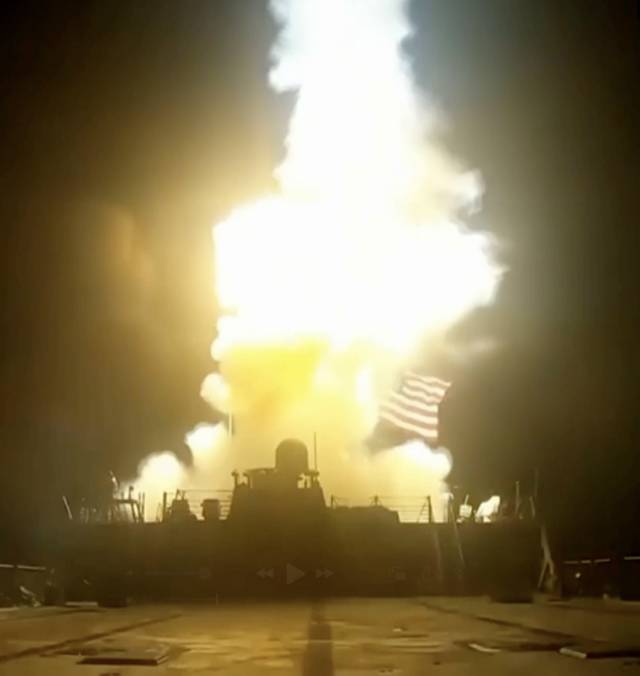
DUBAI – The United States launched a fresh wave of large-scale airstrikes against Iran on Sunday, targeting Revolutionary Guard (IRGC) military infrastructure and coastal defence installations in retaliation for an Iranian drone and missile attack on a US military base in Jordan that killed two American service members, left another missing and wounded four others.
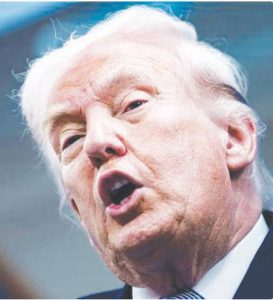
The strikes, ordered by President Donald Trump, marked the eighth consecutive night of US military operations against Iran since the collapse of an interim ceasefire agreement last week. According to US Central Command (CENTCOM), the operation was aimed at further degrading Iran’s military capabilities, particularly its ability to threaten commercial shipping in the Strait of Hormuz, while delivering what it described as a swift punishment to IRGC forces responsible for the attack on American troops in Jordan.
CENTCOM said the latest operation focused on Iranian military coastal surveillance systems, air defence sites and other strategic installations linked to the IRGC’s operations around the Strait of Hormuz. The waterway, through which nearly one-fifth of the world’s oil supplies normally pass, has become one of the principal flashpoints in the conflict after Iran restricted shipping following the outbreak of hostilities.Iranian state media reported multiple explosions across southern Iran during the early hours of Sunday. The Islamic Republic News Agency (IRNA) said areas near Sirik, Hajiabad and Bandar Abbas in Hormozgan Province came under attack, while strikes also hit Qeshm Island inside the Strait of Hormuz. The Tasnim News Agency reported additional attacks near Shadegan in Khuzestan Province. Iranian authorities said emergency services and security teams were deployed to assess the damage, though officials initially reported no significant civilian casualties.
The United States announced the latest strikes only hours after confirming its first troop fatalities from direct Iranian military action since the conflict entered a new phase. According to CENTCOM, the two American service members were killed during Friday night’s Iranian drone and missile attack on a US military installation in Jordan, while another soldier remains missing. The latest casualties brought the total number of US service members killed since the war began to 16, with more than 420 others wounded.
US Defence Secretary Pete Hegseth paid tribute to the fallen troops, saying their sacrifice would only strengthen America’s determination to continue military operations against Iranian forces. The Pentagon reiterated that the United States would continue targeting military assets threatening American personnel and international maritime security.
Iran, meanwhile, accused Washington of violating international law by attacking civilian and strategic infrastructure. The Atomic Energy Organisation of Iran said US forces struck the under-construction Darkhovin Nuclear Power Plant in the country’s southwest. The organisation described the attack as a “terrorist and criminal act” and called the facility a symbol of Iran’s scientific progress and national self-reliance.The International Atomic Energy Agency (IAEA) said it was reviewing reports of the attack. The UN nuclear watchdog later stated that the Darkhovin plant was still in the early stages of construction and contained no nuclear material during its last inspection, meaning there was no immediate radiological danger. Nevertheless, IAEA Director General Rafael Grossi renewed his appeal for all parties to avoid military operations near nuclear facilities because of the potentially catastrophic consequences.
Iran responded to the latest US strikes by expanding its military operations across the Gulf region. Iranian state television reported that the country’s armed forces launched drone attacks targeting US military assets at Kuwait’s Al-Adiri Camp and Ali Al Salem Air Base. Both installations host American military personnel and have played an important logistical role in regional operations.
Kuwait also reported another Iranian attack on a major electricity generation and water desalination facility, the second such strike within 48 hours. The Ministry of Electricity, Water and Renewable Energy said the attack triggered fires at several generating units, forcing authorities to activate emergency response plans to maintain the stability of the national power grid. Firefighters worked throughout the day to contain the blaze while engineers assessed the extent of the damage. Kuwait relies heavily on desalinated water for its drinking supply, making such facilities particularly vulnerable during military conflicts.
Jordan also came under renewed Iranian attack on Sunday. Jordanian military officials said the country’s air defence systems intercepted three Iranian missiles while a fourth landed in an unpopulated desert area without causing casualties. Following the attack, Jordan’s Foreign Ministry summoned the Iranian chargé d’affaires in Amman to deliver what it described as a strongly worded protest, warning that Jordan’s security and sovereignty constituted a red line that would not be tolerated.
Regional tensions extended into Iraq, where a drone struck a base belonging to the Kurdistan Freedom Party, an Iranian Kurdish opposition group near Irbil, wounding eight fighters. Residents of the Kurdish regional capital also reported hearing explosions as air defence systems responded to additional aerial threats. The Kurdish region has repeatedly been targeted during the current conflict because of the presence of both US military forces and Iranian Kurdish dissident groups.
Maritime security also remained under pressure. Iran’s Revolutionary Guard Navy announced that two commercial vessels encountered what it described as an “incident” while navigating through the Strait of Hormuz. The IRGC claimed the ships had disabled their navigation systems and failed to follow Iranian instructions regarding designated shipping lanes. Tehran warned that vessels ignoring its regulations risked accidents while transiting the strategic waterway.
Iranian military leaders vowed to intensify resistance against the United States. Major General Ali Abdullahi, commander of Iran’s Khatam al-Anbiya Central Headquarters, warned that any further American aggression would receive a “decisive and devastating response.” He accused Washington of attempting to divide the Iranian people and said the country’s armed forces were prepared to impose far heavier costs on the United States than in previous conflicts.
Diplomatic tensions also continued to rise. US President Donald Trump urged congressional Republicans to broaden pending sanctions legislation against Russia by including Iran, arguing that Tehran’s oil revenues should face tougher economic restrictions. The proposed legislation would enable Washington to impose tariffs on countries purchasing oil from sanctioned states, further increasing pressure on Iran’s economy.
Meanwhile, the crisis prompted renewed diplomatic activity across the Middle East. Lebanese President Joseph Aoun was scheduled to visit Washington for talks with President Trump, while US Secretary of State Marco Rubio met Lebanese officials to discuss regional security and implementation of the US-backed ceasefire framework between Lebanon and Israel.
The latest exchange of attacks has significantly heightened fears of a broader regional conflict involving multiple Gulf states. With the Strait of Hormuz remaining under severe pressure, energy markets continue to monitor developments closely as any prolonged disruption could have serious consequences for global oil supplies and international trade. International organisations, including the United Nations and the IAEA, have continued to call on both sides to exercise restraint and pursue diplomatic efforts to prevent the conflict from expanding further.