Pakistan’s top political leadership on Friday called for political and economic stability, institutional reforms and peaceful resolution of regional disputes as the nation marked its 80th Independence Day with traditional zeal and fervour.
The day began with a 31-gun salute in Islamabad and 21-gun salutes at provincial capitals, while special prayers were offered at mosques across the country for peace, solidarity and prosperity.
A Change of Guard ceremony was also held at Mazar-e-Quaid in Karachi.
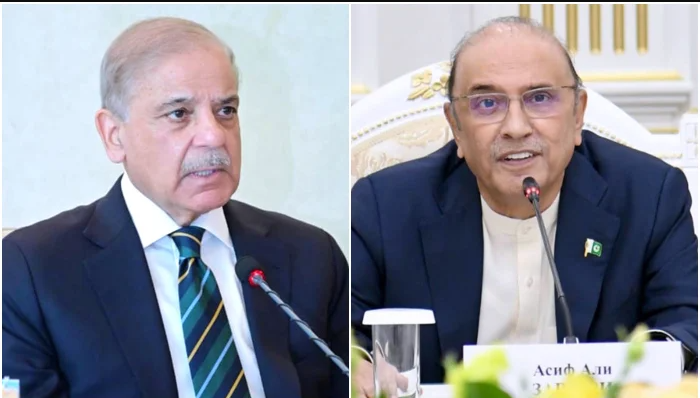
In his Independence Day message, President Asif Ali Zardari paid tribute to Quaid-e-Azam Muhammad Ali Jinnah, the leaders and workers of the Pakistan Movement and those who sacrificed their homes, security and livelihoods for the creation of Pakistan.
He said independence was not merely a historic achievement but a responsibility that every generation must carry forward.
“The Pakistan that was created through the democratic will of its people must continue to grow stronger, more secure and more prosperous,” the president said, stressing the need to build on the achievements of previous generations through hard work and reforms.
Referring to Marka-e-Haq, President Zardari said the episode demonstrated that Pakistan desired peace but possessed the resolve and capability to defend its sovereignty and national interests.
He stressed that a country capable of defending itself must also use its strength to prevent conflict, safeguard peace and serve its people.
The president paid tribute to the martyrs of the armed forces, law enforcement agencies and police, saying their courage had helped protect the country from external aggression and terrorism.
On foreign policy, he said Pakistan had used its diplomatic channels, geographical position and diplomatic capital to promote dialogue and de-escalation amid growing tensions in the Middle East.
“Pakistan’s approach is clear. We believe that disputes, no matter how serious, must ultimately be addressed through dialogue and diplomacy,” he said.
President Zardari said Pakistan’s security was closely linked to peace and stability in the region and the wider world, adding that Islamabad would continue supporting efforts aimed at reducing tensions and promoting regional cooperation.
On the domestic front, the president called for strengthening the economy, creating greater opportunities for young people and improving state institutions through governance, economic and social reforms.
He described the youth as Pakistan’s greatest strength and said the government must provide them with education, skills and opportunities to realise their potential.
President Zardari also reaffirmed Pakistan’s solidarity with the people of Indian Illegally Occupied Jammu and Kashmir, saying Islamabad would continue supporting a peaceful settlement of the dispute in accordance with the aspirations of the Kashmiri people and relevant United Nations resolutions.
He also said Pakistan had always respected Afghanistan’s sovereignty but expressed concern over the presence of militant groups operating from Afghan soil.
PM vows to protect national interests
In his message, Prime Minister Shehbaz Sharif said it was an honour for Pakistan that the freedom struggle had been led by Quaid-e-Azam, Allama Muhammad Iqbal and other distinguished leaders.
He paid tribute to the sacrifices made by the country’s forefathers and said Pakistan’s journey towards development and prosperity was moving forward despite numerous challenges.
The prime minister said the country had achieved economic stability over the past two and a half years and was now moving towards the goal of becoming a developed economy.
He said remittances from overseas Pakistanis had increased by $11.3 billion over the past two years, describing the rise as a reflection of their confidence in government policies.
PM Shehbaz identified information technology, innovation-driven industrial and agricultural development and skills training as key government priorities.
He also praised the armed forces for safeguarding the country’s defence, saying they had demonstrated unity, resolve and courage during Marka-e-Haq under the leadership of Chief of Defence Forces and Chief of Army Staff Field Marshal Syed Asim Munir.
Pakistan, he said, remained prepared to make every sacrifice to defend its national interests, including its “inalienable right to water resources”.
The prime minister also highlighted Pakistan’s role as a responsible and stabilising state in promoting regional cooperation and global peace.
He cited the Makkah Joint Defence Agreement between Pakistan, Saudi Arabia and Turkiye as evidence of Islamabad’s growing strategic role in the region.
PM Shehbaz reiterated Pakistan’s support for the Palestinian people and the people of IIOJK, saying lasting peace in South Asia depended on a diplomatic resolution of the Kashmir dispute in accordance with UN resolutions, international law and the aspirations of the Kashmiri people.
Paying tribute to the martyrs of the armed forces and law enforcement agencies, the premier called on the nation to renew its resolve to work together for development, prosperity, peace, stability, harmony and national unity.
He also urged political parties and all segments of society to join hands and work constructively for national integrity and the protection and advancement of Pakistan’s interests.