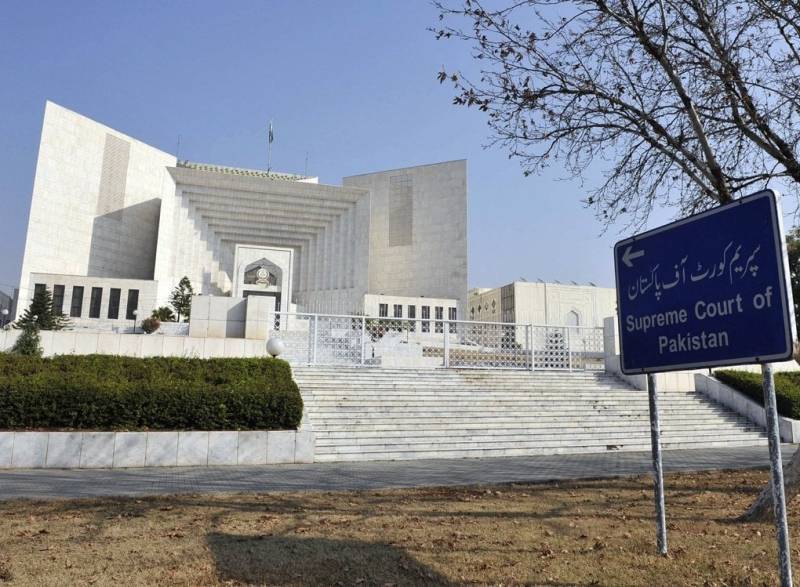
The Supreme Court has reaffirmed women’s inheritance rights by setting aside decades-old court rulings that had deprived a mother and her daughters of their lawful share in ancestral property.
A two-member bench headed by Justice Shahid Bilal Hassan issued a 14-page judgment on an appeal filed by Noor Muhammad, declaring void judicial decisions that had denied the women their inheritance for 71 years.
The court ruled that inheritance is a legal and Shariah-based right that automatically devolves upon the heirs after a person’s death and is not a privilege granted by male family members.It held that fabricated oral gifts, fraudulent transfers, deception, family pressure or customary practices cannot be used to deprive women of their lawful inheritance.
According to the judgment, following the death of the family patriarch in 1955, two brothers transferred the inherited property into their own names, relying on an alleged oral gift to exclude their mother and sisters from the estate.
The bench observed that courts must carefully scrutinise transactions and agreements that have the effect of depriving women of their inheritance to ensure that their legal rights are protected.
Justice Hassan wrote that women’s inheritance shares are mandatory legal entitlements and cannot be denied in the name of family honour, tradition or social customs.
The judgment further stated that the state, judiciary and revenue authorities share the responsibility of safeguarding women’s inheritance rights and ensuring they receive their lawful share in practice, not merely on paper.
The court also held that the burden of proving an oral gift rests with the party relying on it, adding that the trial court had erred by treating the alleged gift itself as proof, contrary to established legal principles.Observing that the findings of the trial court, appellate court and high court were inconsistent with both the facts and the law, the Supreme Court also rejected the argument that the claim was barred by delay, ruling that the burden of proof remained on those who benefited from the disputed transfer despite the passage of time.
The judgment further noted that official records showed the mother and sisters continued to receive a share of the land’s income for several years after the alleged oral gift, suggesting they had not been aware of the claimed transfer.
Allowing the appeal, the Supreme Court set aside the earlier judgments and directed the relevant revenue authorities to amend the inheritance record in accordance with the law.