US envoy says talks with Iran ‘happening at every level’ Mojtaba says Lebanon’s territorial integrity, termination of Israeli aggression ‘primary conditions’ to end war Houthi rebels say they downed a Saudi drone over northwest of Yemen Yemen PM says Houthi Red Sea attacks serve ‘Iranian agenda’ Iran says progress in Oman talks on Hormuz strait management.
Tehran, Washington – Iran said on Sunday it had halted retaliatory attacks against US allies in the Middle East after Washington stopped its strikes on the country for the past two nights.
The Iranian declaration came after Washington paused a war nearing its fifth month and reports emerged that concerns over dwindling munitions were restraining plans for further escalation.
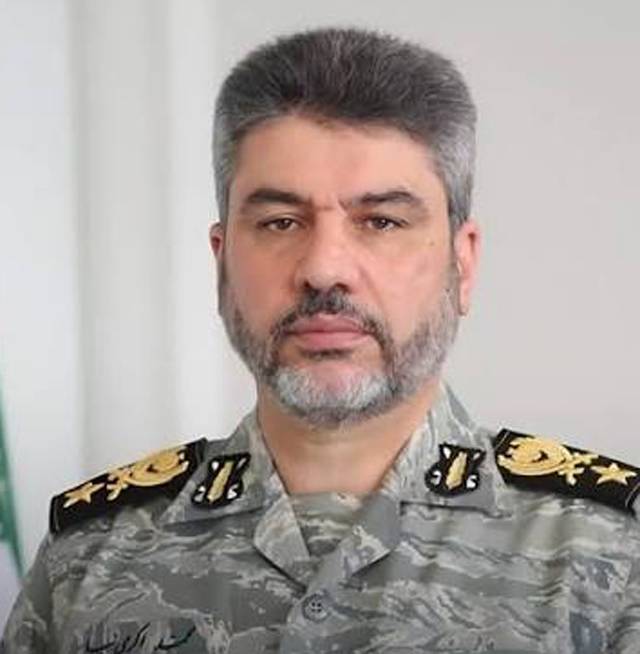
“These attacks continued until two nights ago, but over the past two nights the Americans have stopped their attacks,” said army spokesman Mohammad Akraminia.
“Since… our strategy has essentially been retaliatory, we have also halted our retaliatory operations.” Fighting over the strategic Strait of Hormuz derailed diplomatic efforts between Washington and Tehran, but the conflict then expanded beyond the vital energy corridor to include attacks on US bases, regional shipping and Gulf allies.
But the recent lull has revived hopes of a return to negotiations after nearly two weeks of consecutive nightly US bombardments, although US media reported the pause could also reflect pressure on stockpiles of Patriot interceptors and other defensive weapons.
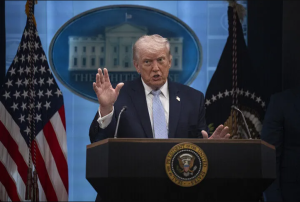
Meanwhile, US operations against Iran were “on a hold”, CNN reported, quoting an unidentified Pentagon source, even as US President Donald Trump threatened a “much higher level” of strikes on Friday. Plans to escalate the campaign have been shelved in part because of those shrinking supplies, The New York Times reported, citing two people briefed on the matter.
Trump also faces the risk of a wider Middle East war, the estrangement of vulnerable Gulf allies and further shocks to the global economy, the newspaper said.
Vice President JD Vance and top US general Dan Caine both raised concerns about escalation at a White House meeting on Friday, CNN reported.
Caine told Trump the military could carry out the options available to him successfully but warned of the possible implications, according to the network.
Iran’s army, however, warned on Sunday that the war would widen even further if the US chose to restart its attacks, ahead of a visit by Israeli Prime Minister Benjamin Netanyahu to Washington on Tuesday.
Trump said on Friday he had not decided whether to return to an all-out operation. “We’re talking to them right now. I think they’re getting more and more serious,” he told journalists.
Trump said Iran faced a choice between a deal and strikes at a “much higher level”.
The war that Trump once predicted would last four or five weeks is now nearing its fifth month, and is weighing on the Republican’s approval ratings ahead of crucial US midterm elections in November.The Pentagon had presented Trump with a plan for a 14th night of strikes, but he declined to authorise it in favour of a push for talks, Axios reported.
On Sunday, locals in Iranian capital Tehran carried on with a normal morning, dealing with heavy traffic jams on their way to work, an AFP journalist said.
Shops and restaurants were open as usual as the city suffered a heatwave.
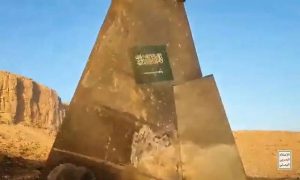
Fighting has meanwhile spread to a new front. Houthi rebels on Sunday said they downed a Saudi drone over the northwest of Yemen, a day after the Yemeni group claimed it attacked oil facilities in the Gulf kingdom.
A day earlier, the Houthis had said they struck Saudi Aramco sites in Jizan and Yanbu, after Riyadh bombed Houthi targets on Friday.
A surface-to-air battery operated by Greek personnel in Saudi Arabia downed two ballistic missiles and a drone over Yanbu, the Greek air force media office said.
Yemen’s Prime Minister Shaeed Mohsen al-Zandani said Sunday the Houthi militia’s continued targeting of commercial vessels and threats to Red Sea security demonstrate it’s executing an Iranian agenda, Al Jazeera reported.
In a post on X, al-Zandani said the attacks jeopardise freedom of navigation, disrupt global supply chains and trade, and undermine UN regional and international peace efforts.
“The protection of freedom of navigation and maritime security is a collective responsibility,” the prime minister said, calling on the international community to take a firmer stance to deter Houthi behaviour and dry up its sources of support.
Al-Zandani also stressed that his government will continue close coordination with the Saudi-led coalition supporting Yemen’s “legitimate government”.
Ayatollah Mojtaba Khamenei said Sunday that “preservation of Lebanon’s territorial integrity and the absolute, unconditional termination of the Zionist regime’s aggression are the primary conditions for any agreement to end the imposed war against the aggressive US”.
Foreign Minister Abbas Araghchi said Iran could not be blamed for the escalation and offered to broker talks between the Houthis and Riyadh, saying “there is no military solution”.
On Sunday, Iran’s armed forces stopped six vessels attempting to transit the Hormuz Strait over the past 24 hours after warnings, according to state television.
Tehran’s effective blockade of the waterway remains the central flashpoint with Washington.
Iran said on Sunday it had made progress in talks with Oman on management of the Strait of Hormuz, the strategic waterway crucial for oil and gas trade that both countries border.
The latest talks come after the United States resumed attacks on Iran in an effort to end Tehran’s control of the strait, following a June memorandum of understanding aimed at ending the war that had briefly eased tensions.
Foreign ministry spokesman Esmaeil Baqaei said several rounds of negotiations were held in Iranian capital Tehran on Friday and Saturday between Iranian and Omani deputy foreign ministers.
The discussions focused on “common principles and operational mechanisms” for ensuring the safe passage of shipping through the strait while respecting the sovereign rights of the two states, Baqaei said.
He described the talks as “useful” and said progress had been made, adding that “technical and political consultations between the two sides were continuing”.
In June, Oman and Iran said they would discuss imposing service fees, a move Washington opposes.
But Muscat also said ships could transit Hormuz via its waters, angering Tehran, which responded with a pattern of escalation.
Iran said on Saturday that it had not recorded any US attacks after nearly two weeks of strikes.
According to news site Axios, the Pentagon presented US President Donald Trump with a plan for a 14th consecutive night of strikes, but he declined to authorise it in favour of renewed talks.
The report said Trump made the order to hold fire after an Omani delegation arrived in Tehran “for talks on a new arrangement to reopen the Strait of Hormuz”.
Responding to a separate question, Baqaei said there had been “no change” in the status of shipping traffic through the Strait of Hormuz.
US Ambassador to the United Nations Mike Waltz said Sunday that talks between Washington and Tehran are “happening at every level”.
Speaking to NBC News, he said, “What we are constantly seeing though, is on the Iranian regime’s side, they are divided; there is internal fighting…“
Iranian President Masoud Pezeshkian has ordered the accelerated reconstruction and rebuilding of strategic infrastructure, such as rail networks and international transit corridors, after US attacks on the country, Al Jazeera reports, citing Iran’s Mehr News Agency.
Pezeshkian was briefed on the damage during a visit to the Ministry of Roads and Urban Development.
He highlighted infrastructure links with neighbouring countries as strategic priorities.
“The completion and connection of rail networks with neighbours could play an effective role in boosting economic resilience, developing international transit corridors and maximising Iran’s geopolitical capacities,” Pezeshkian said.
Ayatollah Mojtaba Khamenei has said that “preservation of Lebanon’s territorial integrity and the absolute, unconditional termination of the Zionist regime’s aggression are the primary conditions for any agreement to end the imposed war against the aggressive US”.
Mojtaba Khamenei said that Lebanon’s Hezbollah stands as “an unyielding rock” against the aggression of the Zionist regime.
“This steadfastness has become an inspiring message for the world’s free nations’ quest for liberation from Global Arrogance,” he said in a message shared on X.
Mojtaba Khamenei said that Lebanon’s Hezbollah stands as “an unyielding rock” against the aggression of the Zionist regime.
“This steadfastness has become an inspiring message for the world’s free nations’ quest for liberation from Global Arrogance,” he said in a message shared on X.
Israeli Prime Minister Benjamin Netanyahu warned Tehran that any attack on Israel – direct or via proxies – would be “a terrible mistake” and would be met with a “very, very forceful” response, Al Jazeera reports.
In an interview with Fox News, Netanyahu said ending the war requires either Iran’s government to fall or Tehran to accept the cost of “wreaking economic chaos” and “shooting at everyone” – naming Saudi Arabia, Bahrain, Qatar, Kuwait, the UAE, Israel and Jordan as its targets.
Netanyahu said he “fully backed” Trump’s diplomatic efforts but insisted Iran’s nuclear programme must end “with a deal or without a deal”.
Iran’s FM Abbas Araghchi held a telephone conversation with his Russian counterpart Sergey Lavrov.
The two ministers discussed and consulted on the latest regional and international developments, Iran’s state media IRIB reports.
Iran’s Islamic Revolutionary Guard Corps (IRGC) said Sunday it’s moving to “nip in the bud” separatist and opposition groups it accuses of trying to infiltrate the country’s northwest, casting recent military operations there as a pre-emptive strike against US-backed unrest, Al Jazeera reports.
IRGC spokesperson Brigadier-General Hossein Mohebbi said Tehran is alert to what he called an “enemy plan” to reorganise anti-government factions, including the exiled Mojahden-e-Khalq, to reignite deadly protests that swept Iran in December and January.
“What we are doing in the northwest is to nip them in the bud before they enter,” Mohebbi told the semi-official Tasnim news agency.
He said the IRGC’s focus on the Strait of Hormuz, where it has been locked in a confrontation with the United States, had not left it blind to other threats.