ISLAMABAD – The political heat has intensified as the Azad Jammu and Kashmir (AJK) elections have sparked a three-way confrontation, exposing fresh fault lines within the country’s political landscape. While the Pakistan Peoples Party (PPP) has accused the Pakistan Muslim League-Nawaz (PML-N) of orchestrating widespread electoral rigging, senior PML-N leaders have publicly turned their guns on Interior Minister Mohsin Naqvi over his remarks on governance, transforming an election dispute into a broader political showdown involving coalition partners and key state institutions.
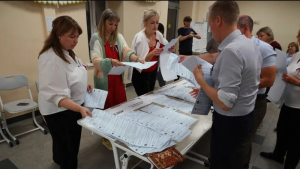
The immediate trigger has been the ongoing AJK elections, where the PPP has alleged widespread rigging, violence, voter intimidation and administrative interference. PPP chief Bilawal Bhutto Zardari accused the AJK Election Commission of failing to address complaints from the first phase of polling, arguing that its inaction had undermined the credibility of the second phase. He warned that the party reserved the right to protest and demand re-elections in constituencies where it believed the public mandate had been compromised.
The PPP also claimed that constituencies where it enjoys strong public support were deliberately targeted through manipulation of the electoral process. Party Central Information Secretary Nadeem Afzal Chan said more than 15 formal complaints had been submitted regarding alleged ballot stuffing, voter intimidation and administrative bias, insisting that the PPP would not accept an election marred by coercion or manipulation.
Former prime minister Raja Pervaiz Ashraf further escalated the party’s campaign, accusing the PML-N of carrying out a systematic plan to occupy polling stations, intimidate opposition workers and manipulate voting during the second phase of the elections. According to the PPP, the alleged irregularities were part of a coordinated effort to influence the outcome. The dispute dates back to the first phase of the AJK elections in Mirpur division, where the PML-N emerged as the leading party. The PPP rejected the results, alleging ballot stuffing, forcible removal of polling agents, polling station takeovers and manipulation of results. The PML-N dismissed the allegations and maintained that the PPP was attempting to discredit an electoral defeat.
The confrontation intensified during the second phase as both parties traded allegations of violence and electoral malpractice. While PPP leaders accused PML-N activists, allegedly backed by sections of the local administration, of interfering with polling, the PML-N countered by alleging that PPP workers attempted to disrupt the voting process.
Despite the escalating rhetoric, both parties remain coalition partners in the federal government, making the confrontation politically significant. The public exchanges have prompted efforts by senior leaders from both sides to prevent the dispute from spilling over into the federal coalition. At the same time, another front has opened within the ruling camp itself. Defence Minister Khawaja Asif publicly challenged Interior Minister Mohsin Naqvi after the latter declared that Pakistan’s governance system had “collapsed” and required sweeping institutional reforms.
While largely agreeing with Naqvi’s assessment, Asif urged the interior minister to begin reforming institutions under the Interior Ministry instead of merely diagnosing national problems. He argued that broader structural reforms should be pursued through parliament and the federal cabinet, both forums of which Naqvi is a member, marking an unusual public rebuke from a senior PML-N leader.
Naqvi’s remarks came as his ministry was already under scrutiny over the security environment during the AJK elections, further intensifying the political debate. The overlapping disputes have turned the AJK elections into more than a contest for local political power. They have evolved into a broader test of coalition cohesion, institutional credibility and governance, with the PPP confronting the PML-N over alleged electoral manipulation while senior PML-N figures openly question Mohsin Naqvi’s handling of governance, exposing fresh cracks within the country’s ruling structure.