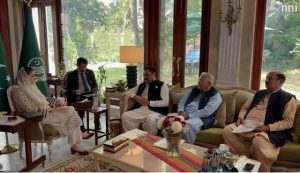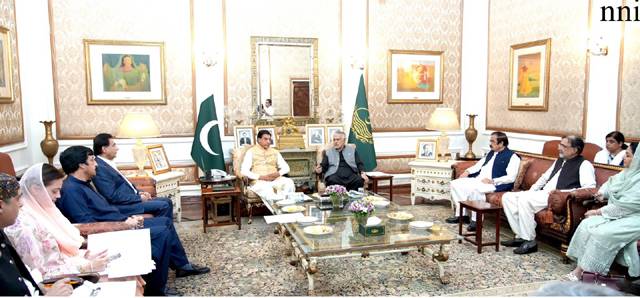
LAHORE – The coordination committees of the Pakistan Muslim League-Nawaz (PML-N) and Pakistan Peoples Party (PPP) held their meeting at Governor House here on Saturday after a long hiatus, agreeing to strengthen mutual contacts and continue consultations on matters concerning the coalition government.
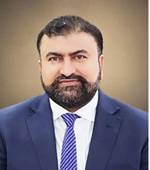
The PPP coordination committee comprised former National Assembly speaker Raja Pervaiz Ashraf, Punjab Governor Sardar Saleem Haider Khan, parliamentary leader in the Punjab Assembly Syed Ali Haider Gilani, Qamar Zaman Kaira and Ali Qasim Gilani.
The PML-N committee was represented by Deputy Prime Minister and Foreign Minister Ishaq Dar, National Assembly Speaker Ayaz Sadiq, Adviser to the Prime Minister on Political Affairs Rana Sanaullah, former federal minister Khawaja Saad Rafique and Punjab Chief Minister Maryam Nawaz’s senior colleague Marriyum Aurangzeb. Punjab Inspector General Rao Abdul Karim was also present at the meeting.
The participants discussed the implementation of previous decisions as well as the future roadmap for coordination between the two parties. They agreed to further strengthen political contacts and cooperation and reiterated their commitment to maintaining the consultation process on matters related to the coalition government.
Speaking to reporters at PML-N’s party office in Model Town, Prime Minister’s advisor Rana Sanaullah said the two parties had held a meeting attended by senior leaders to discuss matters on which they had developed an understanding.
He said the meeting took place after a gap of two to three months, although the two sides had originally agreed to meet every month. Besides formal discussions, he said, there was also informal interaction between the leaders.
He said the bitterness that had emerged between the two parties during the recent Azad Jammu and Kashmir elections had considerably eased.
The meeting was considered an important development in relations between the two coalition partners, as the two sides reviewed progress on decisions taken at their previous meeting and discussed a future course of action.
Both parties expressed satisfaction over the implementation of mutually agreed decisions taken at the previous meeting and agreed to move forward together in the larger national interest.
The two sides also agreed to make coordination and communication between their leaderships more effective and reaffirmed their resolve to continue consultations regularly on political and governance matters.
The meeting reviewed the overall coordination and cooperation between the two allied parties, with particular focus on implementation of earlier decisions and the mechanism for resolving issues through mutual consultation.
The participants agreed that differences, if any, would be addressed through dialogue and consultation rather than allowing them to affect the functioning of the coalition government.
The meeting comes amid the need for closer coordination between the two parties, which are partners in the federal government as well as in Punjab. The resumption of the formal coordination committee meetings after a lengthy interval was seen as an effort to provide a more structured mechanism for addressing issues between the coalition partners.
The two sides expressed their resolve to keep meeting regularly and work together to ensure political stability and effective functioning of the government.