WASHINGTON/ISLAMABAD – Senior administration officials were seen arriving at the White House on Saturday as the situation with Iran approaches a critical juncture, with a ceasefire set to expire in three days and the president saying Iran got “a little cute” as negotiations for a deal continue.
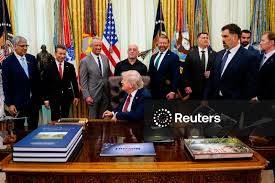
US president Donald Trump remained in Washington over the weekend, hosting an Oval Office event where he signed an executive order on psychedelic treatments, as key members of his national security team cycled through the White House.
Iran swiftly reversed course on reopening the Strait of Hormuz on Saturday, reimposing restrictions on the critical waterway after the US said it would not end its blockade of Iran-linked shipping.
Iran’s joint military command said that “control of the Strait of Hormuz has returned to its previous state … under strict management and control of the armed forces.”
It warned that it would continue to block transit through the strait as long as the US blockade of Iranian ports remained in effect.
Commercial ships came under fire and threats from Iran’s military as they tried to cross the Strait of Hormuz, security monitors said.
IRGC gunboats fired on a tanker in the strait northeast of Oman, the UK Maritime Trade Operations Centre (UKMTO) said in an online statement, adding the vessel and crew were safe. Vanguard identified the tanker as the India-flagged tanker Sanmar Herald. It cited the captain as saying two IRGC patrol boats approached it with no radio contact and “shots were fired, resulting in damage to the bridge windows.”
Vanguard said separately that the Malta-flagged cruise ship Mein Schiff 4 reported a splash nearby while crossing near Oman, on the far side of the strait from Iran.
The ship “confirmed VHF (radio) traffic from IRGC units stating ‘we are carrying out operation, we will fire and destroy you,’” but no damage was reported, Vanguard said.
In a third incident, the UKMTO said that it also received a report of a container ship in the same area “being hit by an unknown projectile which caused damage to some of the containers” but no fire.
Hours earlier, speaking to reporters, US President Donald Trump had cited “some pretty good news” about Iran, declining to elaborate. But he also said fighting might resume without a peace deal by Wednesday, when a two-week ceasefire expires. On Friday evening, he had posted on Truth Social that “Iran has agreed to never close the Strait of Hormuz again.”
Iran’s announcement came after Trump said Friday that even though Tehran announced the strait’s reopening, the American blockade “will remain in full force” until Tehran reaches a deal with the US, including on its nuclear program.
The ongoing conflict over the strait has threatened to deepen the energy crisis roiling the global economy after oil prices began to fall again on Friday, on hopes that the US and Iran were drawing closer to an agreement.
Roughly one-fifth of the world’s oil passes through the strait and further limits would squeeze already constrained supply, driving prices higher once again.
Shipping sources said at least two vessels reported coming under fire and being hit while trying to transit the waterway. India later said the Iranian ambassador in New Delhi had been summoned and that it had expressed deep concern to him that two Indian-flagged ships had come under fire in the strait.
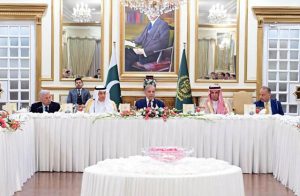
State media in Iran quoted the Supreme National Security Council as saying Iranian control over the strait included demanding the payment of costs related to security, safety and environmental protection services. State television also quoted the Supreme National Security Council as saying the U.S. had put forward new proposals after talks mediated by Pakistan in recent days. Tehran was considering them but had not yet responded, it said.
US President Donald Trump was meeting with his top advisers to discuss Iran’s renewed closure of the Strait of Hormuz, Channel 12 news reported.
Iran will “give priority” to vessels paying a toll to transit the Strait of Hormuz, a senior Iranian official tells CNN. “Given the limitation on the number of vessels that will be allowed to pass,” the official tells the US outlet, “Iran has decided to give priority to those vessels that respond more quickly to the new Strait of Hormuz protocols and pay the costs of security and safety services.”
Those who do not pay will have their transit “postponed,” says the official.
Iran reimposed restrictions on passage through the strait on Saturday.
A Pakistani source aware of mediation efforts had said a meeting between Iran and the U.S. could produce an initial memorandum of understanding, followed by a comprehensive peace agreement within 60 days.
Separately, a senior Iranian official said Tehran hoped a preliminary agreement could be reached in the coming days.