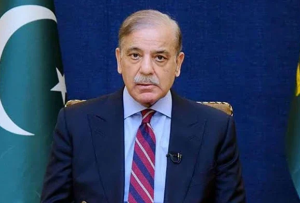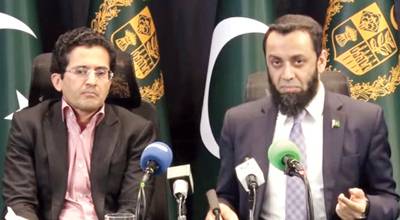
ISLAMABAD – Prime Minister Shehbaz Sharif on Friday urged participants of the URAAN Overseas Pakistan Summer Scholars Program to utilise their education, research, and global experience for the country’s development and prosperity.
The prime minister met with the scholars here. The participants are currently undergoing a six-week internship under the Ministry of Planning, Development, and Special Initiatives to research issues facing Pakistan.
The prime minister welcomed the Pakistani students studying in leading universities of the world to avail internships in the country, and underlined that the youth plays a key role in national development as they are bringing laurels to the country all over the world.
The prime minister briefed the scholars on the government’s reform agenda and responded to their questions. “In the past, when the country was on the verge of default, economic stability was achieved through emergency economic reforms. The comprehensive reforms include digitization of the FBR and increasing revenue, ease of doing business, increasing productivity, development of the agricultural sector, empowerment of youth, promotion of renewable energy and sustainable economic development reforms,” he said.
PM Shehbaz Sharif added that the Federal Board of Revenue (FBR) collected more than Rs 800 billion in additional revenue during the last fiscal year as a result of effective enforcement measures. The government’s economic reforms aimed to lay the foundation for a strong, self-sufficient and export-oriented economy, he said.
The prime minister also paid tribute to the Field Marshal Asim Munir for his leadership and strong support of the nation that helped Pakistan defeat India in May 2025 conflict. He added that Pakistan’s role in mediating in stopping the ongoing war between the US and Iran is a prominent chapter in Pakistan’s diplomatic history.PM Shehbaz said Pakistan’s diplomatic efforts resulted in the signing of the Islamabad Memorandum of Understanding (Islamabad MoU), which is a significant step forward for world peace.
In the meeting, students expressed their views on improvements in various fields.
The meeting was attended by Federal Ministers Ahsan Iqbal, Attaullah Tarar, Ali Pervez Malik, Minister of State for Finance Bilal Azhar Kayani, Minister of State for National Education and Professional Training Wajiha Qamar and senior officers of relevant institutions.
Also, Prime Minister Shehbaz Sharif on Friday hailed the signing of nine agreements worth around US$ 440 million between Pakistani and Chinese private enterprises in the pharmaceutical sector, describing the development as a major step towards strengthening bilateral economic cooperation and advancing the next phase of the China-Pakistan Economic Corridor (CPEC 2.0).
Addressing the Pakistan-China Pharmaceutical Business-to-Business Conference, the prime minister expressed confidence that the agreements would turn into practical projects, saying they would boost investment in pharmaceutical manufacturing, vaccines, research and development, and help Pakistan emerge as a regional centre for the production and export of life-saving medicines.
“I think this will ultimately result into manufacturing life saving medicines, vaccines, research and development and become a center of excellence for exporting our wonderful products to neighboring countries,” he said.
He said China had consistently stood by Pakistan during difficult times and had already invested more than US$ 30 billion under first phase of China Pakistan Economic Corridor (CPEC), calling the new partnerships another milestone in expanding economic cooperation.
The prime minister congratulated Pakistani and Chinese entrepreneurs on the agreements and praised the efforts of Health Minister Syed Mustafa Kamal, Special Assistant to the Prime Minister Haroon Akhtar Khan, Pakistan’s Ambassador to China Khalil Hashmi, Chinese Ambassador Jiang Zaidong, government institutions and business leaders for making the conference a success.
The prime minister also highlighted Pakistan’s role in promoting regional peace, saying Islamabad had played an important mediating role during the recent regional crisis with the support of friendly countries, particularly China.
He appreciated the contributions of President Xi Jinping, Premier Li Qiang and other Chinese leaders, while also acknowledged the efforts of Field Marshal, Syed Asim Munir, and Deputy Prime Minister, Ishaq Dar in diplomatic engagements.
Reaffirming Pakistan’s commitment to Chinese investors, he said the security of Chinese nationals working in Pakistan remained the government’s highest priority and assured them of comprehensive protection.
Earlier, PM Shehbaz Sharif witnessed the sighing of agreements worth US$ 440 million between the two sides in the pharmaceutical sector.
Health Minister, Syed Mustafa Kamal said the conference was held on the vision of Prime Minister Shehbaz Sharif, adding that weeks of intensive meetings had paved the way for the business-to-business engagements. He said Pakistan’s ambassador in Beijing had also played an important role in facilitating the initiative.
Chinese Ambassador, Jiang Zaidong said Pakistan’s large and growing population had created significant demand for healthcare, making the country’s pharmaceutical sector an attractive destination for investment and cooperation. He said the embassy had worked as a bridge between enterprises of both countries to promote business partnerships.
The ambassador welcomed Pakistan’s improving economic indicators under Prime Minister Shehbaz Sharif’s leadership and appreciated Islamabad’s constructive role in recent regional developments.
Meanwhile, Prime Minister Shehbaz Sharif on Friday directed the relevant authorities that the implementation of the government’s policy initiatives and the Ease of Doing Business Act, 2025 be expedited.
Chairing a review meeting regarding ease of doing business, the prime minister instructed that third-party validation by international organizations be ensured to assess the effectiveness and implementation of the ease of doing business measures.
He said that fully utilizing Pakistan’s vast potential for both domestic and foreign investment remained one of the government’s top priorities.
He also directed that a comprehensive report on the implementation of ease of doing business policy measures be prepared and submitted at the earliest.
The prime minister appreciated the efforts of the Ministry of Law and Justice, the Special Investment Facilitation Council (SIFC), the Board of Investment, the Ministry of Commerce, the Ministry of Industries and Production, and all other relevant institutions for their work on legislation and policymaking to facilitate business.
The meeting was briefed on the progress made in implementing the reforms and on the future course of action.
Participants were informed that work had been completed on 558 reforms aimed at reducing regulatory requirements, paperwork, and approval procedures for businesses. Of these, 71 policy measures have already been implemented, while implementation of 272 measures is progressing rapidly. The reforms are being introduced across various sectors in seven phases. It was stated that these measures are expected to generate estimated savings of Rs468.7 billion for the business community by reducing compliance costs associated with regulatory requirements.
The meeting was further informed that eliminating unnecessary and complex paperwork and regulations would help boost exports, attract greater foreign direct investment, and create new employment opportunities.
The prime minister directed that the implementation of ease of doing business measures and the employment opportunities generated as a result should be treated as key performance indicators in the evaluation of officials of the relevant institutions.
The meeting was attended by Federal Ministers Azam Nazeer Tarar, Qaiser Ahmed Sheikh, Jam Kamal Khan, Ahad Khan Cheema, Syed Mustafa Kamal; Minister of State Bilal Azhar Kayani; Adviser to the Prime Minister Muhammad Ali; Special Assistant Haroon Akhtar; Attorney General Mansoor Awan; and senior officials from the relevant departments.
Governor of the State Bank of Pakistan Jameel Ahmad, the chief secretaries of all four provinces, Gilgit-Baltistan, and Azad Jammu and Kashmir, as well as internationally renowned experts in the field, participated in the meeting via video link.