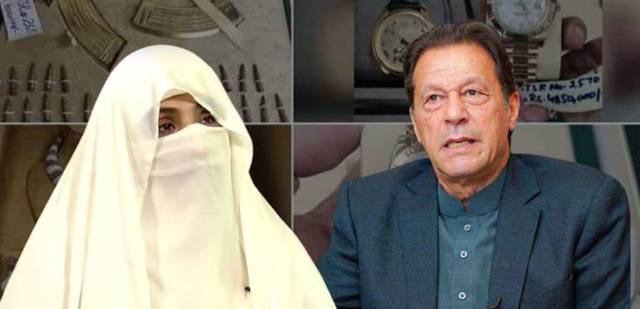
ISLAMABAD – The Islamabad High Court (IHC) Tuesday directed the jail authorities not to keep Pakistan Tehreek-e-Insaf (PTI) founder Imran Khan and his wife Bushra Bibi in solitary confinement.
A single bench of IHC comprisingon Aug 6, and held that the petitions were maintainable in light of the principles laid down in the Begum Nusrat Bhutto and Begum Shamim Afridi cases? Justice Khadim Hussain Soomro announced the verdict, which had been reserved.
The petitions were filed by Aleema Khanum on behalf of Imran and Mubashra Khawar Maneka, the daughter of Bushra Bibi, against the alleged solitary confinement of the former prime minister and first lady. In its verdict, the court also directed jail authorities to facilitate a meeting between Imran and Bushra in accordance with prison rules. It further ordered that Imran’s family members be allowed to meet him as permitted under the jail rules and directed authorities to make arrangements for phone calls between him and his sons.
At the same time, the court directed that phone calls be withdrawn if the recordings of these conversations were being used for political purposes. The court also directed jail authorities to provide Imran with newspapers and books daily and ensure that he receives medical facilities in accordance with the applicable prison rules.
The superintendent of Adiala jail was specifically directed to ensure that Bushra Bibi was not kept in solitary confinement and to submit an implementation report to the court within 15 days.
The IHC directed the superintendent of Adiala jail to ensure strict compliance with the court’s directions and disposed of the applications accordingly.
Justice Khadim wrote, “In these circumstances, it may not be appropriate, on the material presently available, to record an unqualified finding that the prisoners are undergoing “solitary confinement” in its strict statutory sense. However, the court cannot lose sight of the practical effect of prolonged restricted human interaction. The distinction between lawful separation for security purposes and de facto isolation lies not merely in the size of the enclosure or the number of rooms available to a prisoner, but also in whether reasonable and meaningful human interaction remains available to him. Security requirements may regulate such interaction; they cannot extinguish it altogether.” It added, “This conclusion receives substantial support from the medical material produced by the jail authorities themselves. The Consultant Cardiologist who examined Imran Ahmad Khan Niazi on 01.08.2026 recorded fluctuating blood pressure, palpitation, headache, and restlessness, and associated his stress, inter alia, with infrequent meetings with his wife, family, and social contacts, and the non-availability of newspapers and television. The Medical Board, which examined him on 10.08.2026, recorded marked Anxiety and recommended a one-hour daily walk, relaxation in the existing prison conditions, provision of magazines, newspapers, television and reading books, and more frequent human interaction with immediate family members and spouse.