DUBAI/Washington/Tehran – Iran fired on US allies in the Gulf early Wednesday following a night of American bombardment that Iranian state media says included a deadly strike on a wedding party.
The latest violence came after a month long lull in fighting. The six-month war has led to a spike in oil prices, roiled the global economy and posed increasing political problems for U.S. President Donald Trump’s Republican Party ahead of November midterm elections.
Fighting has escalated since the American military hit Iranian rocket launchers on an island in the Strait of Hormuz over the weekend, saying Iran was planning to use them to lay mines. Iran retaliated by firing missiles at American bases in Jordan that were intercepted.
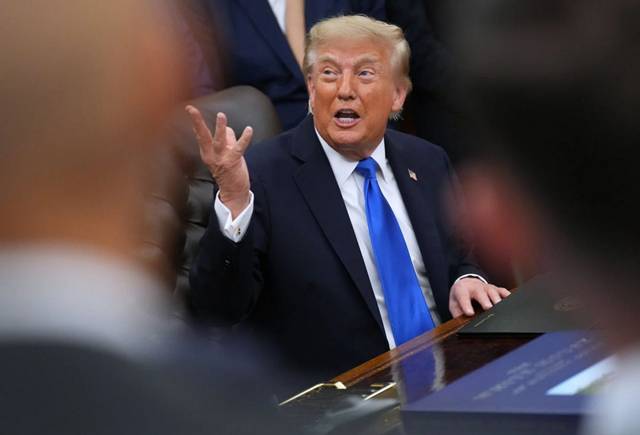
US President Donald Trump said Wednesday that Washington is prepared to launch another attack on Iran “any time we want,” after claiming US forces carried out a heavy strike against Iranian military equipment.
Speaking to reporters at the Oval Office, Trump said the US has “controlled, and we are controlling the Hormuz Strait” and is bringing oil tankers through the strategic waterway without major difficulties.
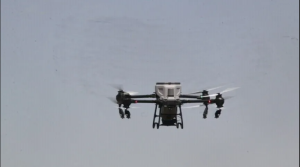
“We are, for the most part, doing it without trouble. Every once in a while, they shoot a drone and knock it down, but we have very strong control,” he said.
Trump claimed Iran had been attempting to rebuild radar and missile systems and develop equipment capable of laying mines in the strait.
“We got rid of all the mines,” he said, adding that Tehran was “trying to build a rocket that drops mines.”
Trump said US forces detected Iran’s efforts and destroyed newly built equipment along the waterway.
“We hit them hard last night, very hard. They gave a little love tap, but we hit them very hard last night,” he said.
“We took out all of the new equipment that they tried to build along the Strait of Hormuz,” Trump added, saying the systems included both defensive and offensive capabilities.
He said the US was prepared to strike again and reiterated that Iran cannot obtain a nuclear weapon.
“Iran cannot have a nuclear weapon,” Trump said. “As soon as it’s over, which I don’t think will be very much longer, I don’t know how much more they can take.”
Asked about renaming the Strait of Hormuz the “Trump Strait,” Trump replied: “I was just throwing that out.”
The US Central Command (CENTCOM) announced late Tuesday that it had launched strikes against IRGC targets in Iran.
Following the announcement, Iranian media reported explosions on Qeshm Island, as well as in Bandar Abbas, Sirik, Chabahar and Konarak.
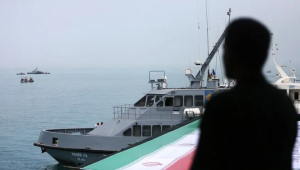
Iran’s Islamic Revolutionary Guard Corps (IRGC) said that it had attacked several US military facilities in neighboring countries, including Kuwait, the UAE, Jordan, Bahrain and Iraq.
The latest flare-up in violence came as the standoff seemed to be shifting slightly more in the U.S.’ favor, with the price of oil around $80 a barrel and Iranian leaders talking about growing economic hardships, said Sascha Bruchmann, an analyst with the International Institute for Strategic Studies’ Middle East office in Bahrain.
“The U.S. is trying to reinstall some kind of confidence into the global oil markets … and the Iranians had to respond to that by reinserting insecurity and doubt,” Bruchmann said.
Since the fighting resumed, the price of Brent crude oil, the international standard, has climbed to around $95, up more than 30% from the start of the war.
U.S. Secretary of State Marco Rubio said Iran will “continue to feel the squeeze” from the United States until it drops any nuclear weapons ambitions and ends support for armed groups in the Middle East. Iran has always insisted its nuclear program is peaceful.
U.S. allies in the region fend off Iranian attacks
Following the strikes on Jordan, U.S. Gulf allies Kuwait and Bahrain said they had also come under attack, without reporting any casualties.
“You will soon see that Iran’s new strategy on the battlefield, in diplomacy, and in confronting the economic blockade will shatter your foundations,” the recently appointed head of Iran’s powerful Supreme National Security Council, Mohsen Rezaei, said on X.
In Iraq, where Iranian-backed forces are active, Kurdish authorities said they had intercepted 10 drones laden with explosives in the Irbil area. Iranian television reported that American bases in Irbil had been targeted.
Israel’s military also said that Iran-backed Hezbollah fired two explosive drones at its soldiers in southern Lebanon, without causing casualties.
The U.S. Central Command said Tuesday’s strikes focused on Iranian military targets, including air defense sites, radar systems and maritime assets.
Saudi Arabia has condemned what it said was an Iranian attack on a Saudi-owned supertanker on Monday night that killed two Filipino sailors.
The Saudi national shipping company, Bahri, confirmed on Wednesday that its vessel Sidr was “involved in a security incident while transiting the Strait of Hormuz”.
Sidr was hit by projectiles north of Oman’s Musandam Peninsula, according to maritime security firms. A South Korean-owned supertanker, Senegal Prosperity, was reportedly struck east of Musandam around the same time.
Iran has not responded to the Saudi allegation. But it said earlier that two tankers had caught fire after hitting mines while using an unauthorised route through the strait.
The news of the sailors’ deaths came after the US military carried out a wave of air strikes on Iran and Iranian forces targeted US bases in neighbouring Arab states with missiles and drones in their biggest exchange of fire since July.
On Wednesday Iran’s health minister said 18 people were killed and 108 injured in the US attacks. Iran has accused the US of a “war crime” over a strike that killed four people including two children at a wedding party in the southern city of Sirik. The US military said it was looking into the reports.
Shipping company Bahri’s statement said the unspecified “security incident” affecting Sidr happened in the Strait of Hormuz at around 23:40 local time (19:40 GMT) on Monday.
One U.S. strike hit a home hosting a wedding in Kuhestak, a small coastal town overlooking the Strait of Hormuz, according to Iranian state media.
Four people were killed — two women and two children, aged 4 and 16 — and at least 68 were wounded, the state news agency IRNA and state TV said Wednesday. Just after the strike, Ahmad Nafisi, the province’s deputy governor, had told Iranian state television that five people were killed. There was no explanation for the change.
Several heavy explosions shook Kuhestak, with fireballs that lit up the night sky, according to security camera footage carried by the semiofficial Fars news agency.
Images from Iran’s semiofficial Tasnim news agency showed several hospitalized children being treated for injuries at a hospital in the nearby town of Minab, where a U.S. missile strike on the opening day of the war hit a primary school, killing more than 100 children.
Footage from the Iranian Red Crescent showed rescue workers entering a damaged home in the wake of the strike. It showed a hole in the roof of one house in a neighborhood of densely packed homes.