WASHINGTON/ISLAMABAD/TEHRAN/TEL AVIV – US President Donald Trump said on Wednesday that the United States may have to attack Iran even harder but will wait and see if a deal is reached, reprising the “either/or” rhetoric he has used since announcing a ceasefire six weeks ago.
“We’ll see what happens,” Trump said during a commencement address at the U.S. Coast Guard Academy. “We hit them very hard. We may have to hit them even harder – but maybe not.”
“We will not let Iran have a nuclear weapon. It’s very simple,” Trump told the cadets.
He said Iran’s military might is largely gone and the only question is whether the US goes back to finish the job or will Iran sign a deal.
“Everything’s gone. Their navy’s gone. Their air force is gone. Just about everything. The only question is, do we go and finish it up? Are they going to be signing a document? Let’s see what happens,” Trump said in a commencement address at the U.S. Coast Guard Academy.
Trump said earlier on Wednesday that negotiations with Iran were in the final stages, while warning of additional attacks unless Iran agrees to a deal on its nuclear program.
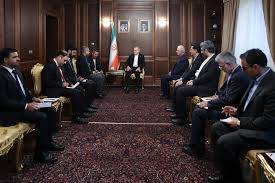
Amid the tension, Pakistan’s interior minister headed to Iran on Wednesday for the second time this week, Iranian state media reported.
“Mohsin Naqvi traveled to Tehran to meet officials from the Islamic Republic,” Iran’s official IRNA news agency reported, citing diplomatic sources in Islamabad.
Pakistan has been mediating between Iran and the US, with Naqvi previously in Tehran on Saturday to “facilitate” the process, according to Iranian media.
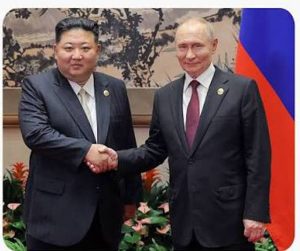
Chinese President Xi Jinping, meanwhile, said further hostilities in the Middle East would be “inadvisable,” calling for a ceasefire, as he spoke with his Russian counterpart Vladimir Putin in Beijing on Wednesday, according to Chinese state media.
“A comprehensive ceasefire is of utmost urgency, resuming hostilities is even more inadvisable and maintaining negotiations is particularly important,” Xi told Putin, the Xinhua news agency reported.
Also, Trump asserted Wednesday that Prime Minister Benjamin Netanyahu will do “whatever I want” when it comes to a potential military strike on Iran.
Trump was asked by reporters about his recent phone call with the Israeli premier. “He’s a very good man, he’ll do whatever I want him to do. And he’s a great guy… Don’t forget he was a wartime prime minister,” Trump responded.
Asked by The Times of Israel in March whether he alone would decide when the war with Iran ends or if Netanyahu would also have a say, Trump claimed that it would be a “mutual” decision,” but when a ceasefire was announced several weeks later, Jerusalem was reportedly caught off guard.
President Trump and Israeli Prime Minister Benjamin Netanyahu discussed a new effort to reach a deal with Iran in a difficult call on Tuesday, three sources said, with one source saying Netanyahu’s “hair was on fire” after the call.
Iran’s foreign ministry said Wednesday that negotiations were ongoing “based on Iran’s 14-point proposal,” and that Pakistan’s interior minister was in Tehran to help the mediation. That’s the second visit by the interior minister in less than a week.
Iran’s foreign ministry spokesperson said that in order for talks to succeed, the U.S would have to end its “piracy” against Iranian ships and agree to release frozen funds, while Israel would have to end its war in Lebanon.
Asked if he is open to a limited Iran deal that would only open the Strait of Hormuz and extend the ceasefire, Trump said he is in no rush to reach an agreement: “We’d have to open the strait that would open immediately, so we’re gonna give this one shot. I’m in no hurry. Everyone is saying, ‘Oh, the midterms.’ I’m in no hurry… Ideally I’d like to see few people killed, as opposed to a lot.”
Hours earlier, though, he told reporters that the war “will end very quickly.
Iran’s Islamic Revolutionary Guard Corps issued its own warning to Trump on Wednesday, threatening major repercussions if the US resumes the war.
“If the aggression against Iran is repeated, the promised regional war will this time spread far beyond the region, and our devastating blows will crush you,” said the IRGC, in a statement on its Sepah News website.
“The American-Zionist enemy… must know that despite the offensive carried out against us using the full capabilities of the world’s two most expensive armies, we have not deployed the full power of the Islamic revolution,” it continued.