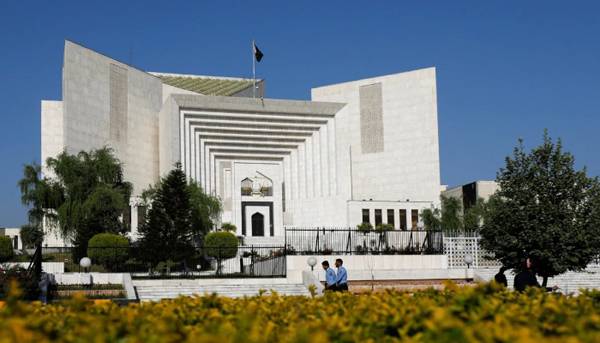
ISLAMABAD – The Supreme Court of Pakistan has reaffirmed that the doctrine of “complete justice” empowers courts to rise above procedural technicalities to ensure fairness and prevent injustice, observing that laws are made for people and not the other way around. In an eight-page judgment authored by Justice Muhammad Ali Mazhar in a service promotion case, the apex court held that justice must remain the ultimate objective, even if strict adherence to technical procedures would perpetuate a wrong.
The court observed that the doctrine of complete justice is a broad and inclusive principle aimed at ensuring fairness at all costs. It stressed that procedural rigidity should not override the cause of justice and that courts have a duty to rectify unlawful actions and decisions whenever they come to light.
The judgment further noted that service laws and regulations not only provide for disciplinary action but also protect the rights of employees. Failure to follow these rules amounts to illegality and infringement of employees’ rights.
The case concerned an employee who was appointed as Assistant Chemist and Metallurgist (BPS-17) on contract in 2009 and later secured regular appointment through the Federal Public Service Commission in 2011. He was assigned additional charge of a higher post, CC&M (BPS-18), in March 2012 and continued performing those duties for nearly eight years before receiving regular promotion in August 2020.
After his request for antedated promotion was rejected departmentally, he approached the Federal Service Tribunal (FST), which ruled in his favour. The government department challenged the decision before the Supreme Court.
A division bench observed that stopgap arrangements, including ad hoc, acting, look-after and additional-charge appointments, are temporary measures meant to ensure continuity of public services until regular appointments are made. Such arrangements do not automatically confer a right to promotion.
However, the court held that stopgap arrangements cannot continue indefinitely. It described prolonged ad hoc or additional-charge postings as a form of exploitation that undermines the spirit of service laws and keeps employees in a state of uncertainty.
The judgment stated that the Constitution obliges the state to ensure social and economic justice, transparency and fairness in the civil service structure. It also cited Article 3 of the Constitution, which requires the elimination of all forms of exploitation.
The court emphasized that administrative authorities must act fairly, transparently and within the bounds of law. It warned against misuse of power, procedural irregularities and arbitrary administrative actions that undermine employees’ rights.
Referring to the doctrine of reasonable time, the court observed that appointments and promotions should ordinarily be finalized within three to six months and not be left pending indefinitely. It noted that the respondent remained in a stopgap arrangement for eight years in violation of applicable appointment, promotion and transfer rules.
Dismissing the government department’s petition, the Supreme Court upheld the Federal Service Tribunal’s ruling and reaffirmed that good governance can only be achieved through fairness, transparency and adherence to constitutional principles.