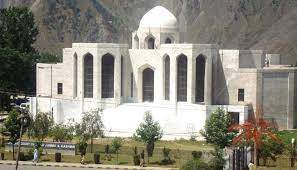
ISLAMABAD – The Supreme Court of Azad Jammu and Kashmir (AJK) has endorsed the government’s position on refugee seats, ruling that the 12 reserved seats are constitutionally protected and cannot be altered through administrative measures.
The opinion was issued in response to a presidential reference filed by the AJK President under Article 46-A of the Constitution on the advice of the government, seeking the court’s guidance on the legal status of refugee seats.
In its detailed opinion, the apex court held that the 12 refugee seats are safeguarded under Article 22 of the Constitution and that any modification to their status would require a constitutional amendment under Article 33.
The court observed that the historical foundation of the refugee seats is rooted in legislation enacted in 1960, 1964 and 1970, and remains intrinsically linked to the interim constitutional framework, the 1974 Constitution and the 1975 Act governing Azad Kashmir.
Emphasising the primacy of constitutional governance, the court declared that constitutional supremacy—not street protests—is the ultimate authority in Azad Kashmir. It further upheld the government’s decision to leave unresolved constitutional matters to the elected Legislative Assembly.
The Supreme Court noted that constitutional amendments can only be introduced through public mandate, parliamentary deliberation and the prescribed constitutional process. It also stressed that timely elections are mandatory under Article 22(4) and cannot be delayed or obstructed by protests or political disputes.
Clarifying the scope of Articles 22(3) and 22(4), as well as the powers and tenure of the Legislative Assembly, the court stated that the state bears a constitutional obligation to conduct elections and maintain law and order.
While recognising peaceful protest as a fundamental constitutional right, the court ruled that activities disrupting normal public life do not enjoy constitutional protection. It added that the exercise of one individual’s rights cannot come at the expense of the rights of others.
The court further underscored that the administration is duty-bound to preserve public order, uphold constitutional governance and ensure adherence to the rule of law throughout the region.
Meanwhile, Azad Jammu and Kashmir Police have sealed the head office of the banned Joint Awami Action Committee.
The AJK government is taking vigorous action against the group trying to create chaos in the state under the guise of an action committee for so-called public rights.
During the raid, the police recovered a sub-machine gun, rifle and pistol. Despite the presence of a large number of people outside the head office, no protests or sloganeering were seen.
According to experts, such legal actions are inevitable for the implementation of state writ, rule of law and protection of public order.