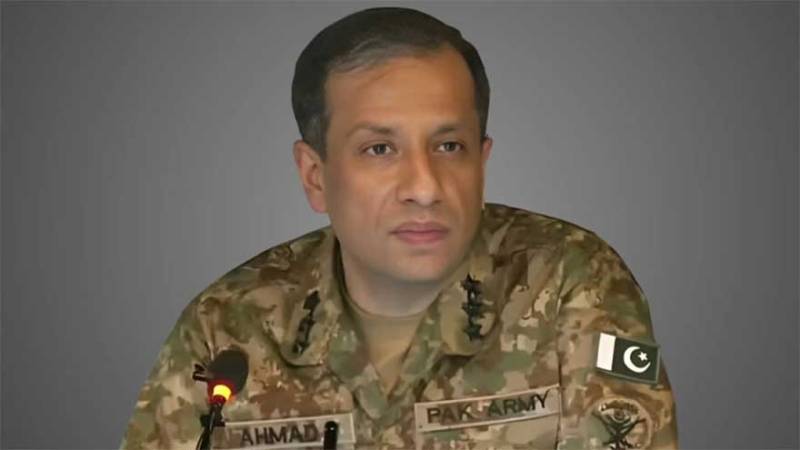
ISLAMABAD: Inter-Services Public Relations (ISPR) Director General Lieutenant General Ahmed Sharif Chaudhry has said that Pakistan’s long-term security depends not only on military strength but also on effective governance, stressing that structural and administrative reforms should be considered if required to improve public service delivery.
Speaking at a press conference on the country’s security situation on Friday, the military spokesperson said governance remained a critical pillar of national stability and that many of Pakistan’s longstanding challenges could not be resolved without strengthening the country’s administrative framework.
Lt Gen Ahmed Sharif Chaudhry said good governance was essential to national security, adding that meaningful improvements in the way the state functioned were necessary to address the challenges faced by the country.
He pointed out that Pakistan’s population had increased significantly over the decades, while its administrative structure had remained largely unchanged.
“In 1972, our population was around 70 to 80 million. Today, it has reached about 250 million,” he said, adding that despite the substantial increase in population, Pakistan continued to have the same four provinces.
The DG ISPR said the country’s changing demographic realities required serious consideration of whether the existing governance model remained suitable for Pakistan’s present and future needs.
He stressed that any administrative reforms or restructuring must be carried out within the framework of the Constitution.
“If an administrative reset is required to achieve good governance, then it should take place,” he said.
Lt Gen Chaudhry added that decisions regarding governance reforms should be made through constitutional mechanisms, with public opinion playing a central role.
“If the people are satisfied with the existing governance system, then that is their decision. If they are not satisfied, then the matter should also be resolved according to the Constitution,” he said.
The military spokesperson maintained that constitutional processes provided the appropriate framework for addressing governance challenges and determining future administrative arrangements.
He reiterated that strengthening governance was directly linked to improving public services, national stability and Pakistan’s overall security. Effective administration, he said, could help address many of the issues faced by citizens while reinforcing state institutions.
His remarks came during a broader briefing on Pakistan’s security environment, counterterrorism operations and the situation in Balochistan, where he also highlighted the importance of constitutional governance and public confidence in state institutions.
The remarks follow Federal Interior Minister Mohsin Naqvi’s recent call for governance reforms and a review of Pakistan’s administrative structure. Naqvi had urged broad political consensus to improve public service delivery and strengthen governance across the country.