Saudi crown prince, Egypt’s Sissi hold closed-door meeting in Cairo Saudi Arabia vows to defend sovereignty, protect vital interests 13 civilians injured in Houthi attacks on three Saudi cities Houthi official says Saudi airstrikes leave 3 dead US, Israeli and Arab military chiefs held secret meeting on Iran: Media report.
RIYADH/SANAA/ CAIRO – Thirteen civilians were injured and seven homes and two vehicles were damaged in Houthi attacks on three Saudi cities, the Coalition to Support Legitimacy in Yemen said early Tuesday.
The latest Houthi missiles and drones strike targeting Saudi cities shows that the campaign is moving closer to the city toward which Muslims everywhere turn in prayer. Saudi Civil Defense sounded early-warning sirens in Makkah before announcing that the danger had passed on Tuesday. Similar warnings were activated and later lifted in Jeddah and Taif.
Saudi authorities dint not disclose the nature or source of the threat to Makkah, but the warning did not occur in isolation. The Houthis have sharply escalated attacks on the Kingdom, using ballistic missiles and drones against civilian areas and infrastructure.
A Houthi official said Tuesday that Saudi warplanes struck Yemen, killing three people, including two children, while Human Rights Watch accused the Houthi rebels of possible war crimes with its attacks on commercial vessels.
The renewed fighting in Yemen is endangering civilians and threatening shipping through the Red Sea, a route that has become more important due to disruptions in the Strait of Hormuz since the U.S. launched its war against Iran.
The Associated Press could not independently verify the Houthi official’s claim. The official did not say what the Saudi warplanes had targeted.
Top military commanders from the US, Israel and several Arab countries met last week in Germany to discuss the war with Iran and broader tensions in the region, two Israeli officials told Axios.
Why it matters: The private retreat, organized by Commander of U.S. Central Command (CENTCOM) Adm. Brad Cooper, was not officially announced by any of the participating countries.
According to Saudi media reports, Makkah is not simply another point on a military map. It is home to the Grand Mosque and the Holy Kaaba, the qibla of Muslims worldwide. Bringing warfare and its dangers toward its surroundings exposes the gulf between a movement that invokes Islam in its political messaging and military actions that can place Muslim civilians — and the wider security environment surrounding Islam’s holiest city — at risk. The sirens eventually fell silent. The contradiction they exposed did not.
Coalition spokesman Maj. Gen. Turki Al-Maliki said the Houthis launched ballistic missiles and drones at civilian areas in Khamis Mushait, Abha and Taif on Monday. He said the attacks left 13 civilians with minor to moderate injuries and caused damage to seven residential homes and two vehicles.
Al-Maliki said the continued deliberate and repeated attacks demonstrated the Houthis’ escalating approach and continued targeting of civilians and civilian objects.
He said the coalition would respond to the attacks responsibly and firmly to protect Saudi sovereignty, civilians and civilian infrastructure, in accordance with Article 51 of the UN Charter, the principle of self-defense and international humanitarian law.
Al-Maliki added that the coalition would take all necessary operational measures to deter further attacks and counter what he described as the Houthis’ hostile actions.
Also, the Council of Ministers on Tuesday strongly condemned the continued heinous and deliberate attacks by the terrorist Houthi militia targeting civilians and civilian assets in Saudi Arabia.
The Cabinet session, chaired by Crown Prince and Prime Minister Mohammed bin Salman in Jeddah, affirmed that the security of the country and the safety of its territory and assets constitute a firm and inviolable principle.
The Council reiterated Saudi Arabia’s legitimate right to defend itself and protect its sovereignty, citizens, expatriates, and vital interests, in accordance with the UN Charter and international law.
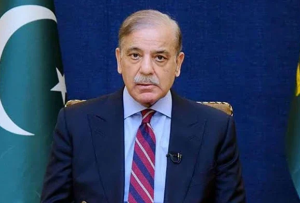
At the outset of the session, the Crown Prince briefed the Cabinet on the content of the phone call he received from Pakistan’s Prime Minister Muhammad Shehbaz Sharif, as well as the outcomes of his meeting with Commander of the US Central Command Admiral Brad Cooper, which included discussions on the latest developments in the region.
In a statement to the Saudi Press Agency following the session, Minister of Media Salman Al-Dossary said the Cabinet reviewed regional and international developments and Saudi Arabia’s ongoing efforts to consolidate peace and security through dialogue and cooperation with the international community to address shared global challenges.
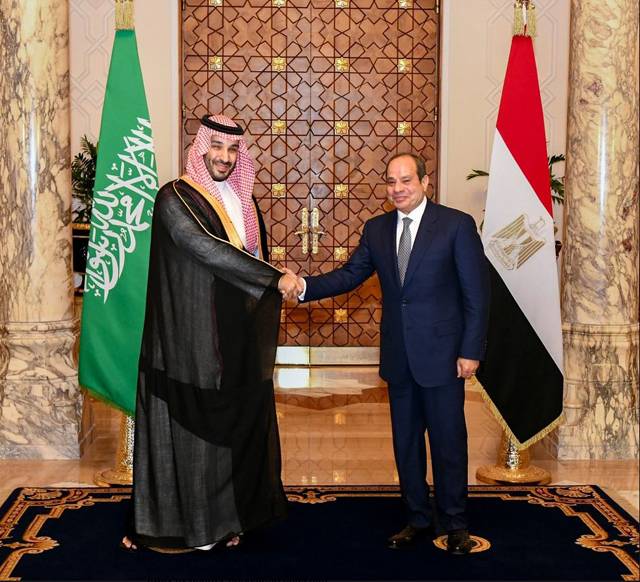
Saudi Crown Prince and Prime Minister Mohammed bin Salman and Egyptian President Abdel Fattah El-Sisi affirmed Tuesday that Saudi Arabia and Egypt share the same interests and goals and have an absolute understanding on issues concerning both countries.
The two leaders made the remarks during talks in Cairo as part of the Crown Prince’s working visit to Egypt, according to the Egyptian presidency.
Crown Prince and Egyptian President affirmed that the security of Saudi Arabia and the Gulf states is an integral part of Egypt’s national security.
The two leaders held a closed-door meeting in Cairo, followed by expanded talks attended by delegations from both countries as part of the Crown Prince’s working visit to Egypt.
Egyptian presidential spokesman Ambassador Mohamed El-Shennawy said the talks reflected full agreement that Saudi-Egyptian relations should remain a model within the Arab world and that the current circumstances require greater solidarity and coordination between the two countries.
Egypt expressed its “complete rejection and condemnation” of any attacks or threats against Saudi Arabia’s sovereignty, stability and territorial integrity, as well as threats to freedom of navigation in international waterways.
El-Sisi stressed Egypt’s support for measures taken by Saudi Arabia to protect its security and stability. Crown Prince Mohammed bin Salman, for his part, expressed appreciation for Egypt’s solidarity with the Kingdom in confronting recent geopolitical challenges and for Cairo’s efforts to promote regional peace and stability.
The two leaders reaffirmed their commitment to ensuring the freedom and security of maritime navigation through the Strait of Hormuz, Bab Al-Mandab and the Red Sea. They also stressed the importance of reaching a comprehensive and sustainable political solution to the crisis in Yemen.
On bilateral relations, the Crown Prince and El-Sisi agreed to intensify efforts to develop and implement practical measures to expand cooperation and remove obstacles to increasing trade and investment between the two countries.
The two sides said economic relations should be elevated to a level reflecting the historic ties and strategic proximity between Saudi Arabia and Egypt.
El-Sisi welcomed the Crown Prince’s visit and praised the depth of relations between the two countries. He conveyed his greetings to Custodian of the Two Holy Mosques King Salman and congratulated the Saudi leadership and people ahead of the Kingdom’s National Day on Sept. 23.
The Crown Prince thanked El-Sisi for the congratulations and hospitality, conveyed King Salman’s greetings and highlighted the continued development of bilateral relations and the two countries’ shared commitment to exploring new areas of cooperation.
The talks also covered the Palestinian issue, with the two leaders reaffirming their support for a just and comprehensive settlement based on the two-state solution and international legitimacy.
They called for implementation of the second phase of the US president’s peace plan and UN Security Council Resolution 2803, sufficient humanitarian aid deliveries to Gaza, and an end to Israeli violations in Gaza, the West Bank and East Jerusalem.